
How Much Water Should I Drink a Day? A Complete Guide to Daily Hydration
Water is essential for almost every function in the human body. It helps regulate body temperature, transport nutrients, remove waste, lubricate joints, and maintain normal blood volume. Because we lose water throughout the day through urine, sweat, breathing, and bowel movements, we need to replace it regularly.
But how much water should you actually drink each day?
The answer is not the same for everyone. The commonly repeated advice to drink exactly eight glasses of water a day can be a useful reminder, but it is not a universal medical rule. Your ideal fluid intake depends on factors such as your age, body size, activity level, climate, diet, pregnancy status, and overall health.
How Much Water Do You Need Each Day?
For healthy adults, a useful general guideline comes from the National Academies of Sciences, Engineering, and Medicine. They estimate average total daily water intake at about 2.7 liters (91 ounces) for women and 3.7 liters (125 ounces) for men.
Importantly, these figures refer to total water from all beverages and foods, not simply the amount of plain water you drink. Food can contribute a significant portion of your daily water intake. Fruits, vegetables, soups, yogurt, and other foods contain water that contributes to your overall hydration.
This means you do not necessarily need to drink 91 or 125 ounces of plain water every day.
For some people, considerably less may be enough, while others need more.
Is Eight Glasses of Water a Day Enough?
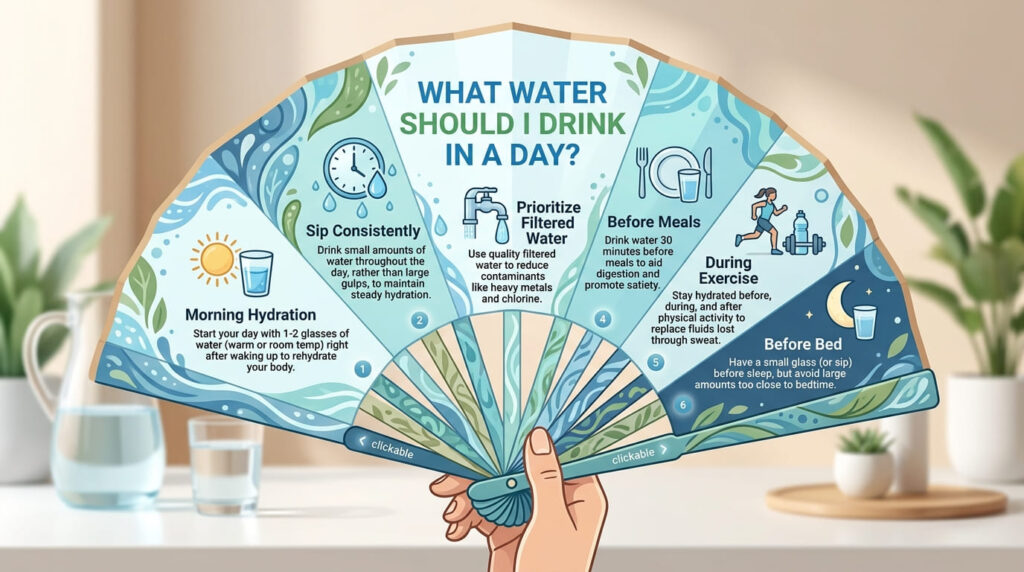
You have probably heard the advice to drink eight 8-ounce glasses of water per day, which equals about 64 ounces, or 1.9 liters.
There is nothing wrong with using this as a simple starting point, but it should not be treated as a strict requirement for every person.
Someone who is small, inactive, and spending the day in a cool environment may need less fluid than someone who is exercising outdoors in hot weather. Similarly, a person who eats many water-rich foods may obtain more water from their diet than someone who eats mostly dry or processed foods.
Instead of focusing only on a specific number, pay attention to your body’s fluid needs.
Factors That Affect How Much Water You Need
Your daily water requirement can change significantly depending on your circumstances.
1. Physical Activity
Exercise increases water loss through sweat and breathing. The longer and more intensely you exercise, the more fluid you may need.
If you exercise for a short period in moderate conditions, drinking water before and after your workout may be sufficient. During longer or particularly intense workouts, especially in hot conditions, you may need to drink regularly during exercise as well.
For prolonged exercise involving substantial sweating, replacing electrolytes may also become important.
2. Hot or Humid Weather
Your body loses more water when you sweat to cool itself in hot or humid conditions. If you spend several hours outside on a hot day, your fluid requirements may be higher than usual.
Do not wait until you feel extremely thirsty before drinking. Take regular drinks throughout the day, particularly during prolonged outdoor activity.
3. Pregnancy and Breastfeeding
Fluid requirements can increase during pregnancy and breastfeeding. The body needs additional water for physiological changes during pregnancy, while breastfeeding involves substantial fluid transfer through breast milk.
People who are pregnant or breastfeeding should discuss individual hydration needs with their healthcare professional, particularly if they have a medical condition that affects fluid balance.
4. Illness
Fever, vomiting, and diarrhea can cause significant fluid loss. Drinking enough fluids during illness can help replace those losses.
However, severe vomiting or diarrhea can also lead to electrolyte disturbances and dehydration. If you cannot keep fluids down, have signs of significant dehydration, or are seriously ill, seek medical care.
5. Diet
Your food choices also affect your hydration.
Water-rich foods such as watermelon, oranges, strawberries, cucumbers, tomatoes, lettuce, soups, and many other fruits and vegetables can contribute substantial amounts of water.
A diet containing plenty of these foods can therefore contribute to your total daily fluid intake.
How Can You Tell If You Are Drinking Enough Water?
One of the simplest ways to monitor hydration is to pay attention to thirst and urine color.
For many healthy people, pale yellow urine generally suggests adequate hydration, while consistently dark yellow urine can be a sign that you may need more fluids.
However, urine color is not a perfect hydration test. Certain foods, vitamins, medications, and medical conditions can change urine color.
Thirst is another useful signal. If you regularly feel very thirsty, especially along with a dry mouth, headache, dizziness, fatigue, or unusually dark urine, you may need to increase your fluid intake.
Older adults may not always experience thirst as strongly, so they may need to be more intentional about drinking regularly.
What Happens If You Do Not Drink Enough Water?
When your body loses more fluid than it replaces, dehydration can occur.
Mild dehydration may cause symptoms such as:
- Thirst
- Dry mouth
- Fatigue
- Headache
- Dizziness
- Darker urine
- Reduced urination
More serious dehydration can cause confusion, weakness, rapid heartbeat, very little urination, or loss of consciousness. Severe dehydration can be a medical emergency.
Dehydration can occur more quickly during intense exercise, hot weather, fever, vomiting, or diarrhea.
For this reason, hydration is especially important when you are sick or physically active.
Can You Drink Too Much Water?
Yes. Although dehydration is much more common, drinking an excessive amount of water can also be dangerous.
Consuming very large quantities of water in a short period can overwhelm the body’s ability to remove excess water. This can cause the sodium concentration in the blood to become dangerously low, a condition called hyponatremia.
Symptoms can include headache, nausea, confusion, vomiting, muscle weakness, and, in severe cases, seizures or loss of consciousness.
The goal is therefore not to drink as much water as possible. The goal is to maintain an appropriate fluid balance.
Avoid forcing yourself to drink huge amounts of water simply because you believe more water is always healthier.
Does Coffee or Tea Count Toward Hydration?
Yes. Coffee and tea contain water and can contribute to your daily fluid intake.
Caffeine has a mild diuretic effect, but the fluid in caffeinated beverages generally still contributes to overall hydration when consumed in typical amounts.
Water is an excellent everyday choice because it provides hydration without added sugar or calories. But you do not need to obtain all of your daily fluids from plain water.
Milk, unsweetened tea, and other beverages can contribute to total fluid intake as well.
Sugary drinks, however, are generally best consumed in moderation because they can add substantial amounts of sugar and calories without providing the nutritional benefits of whole foods.
What About Water During Exercise?
Hydration becomes particularly important during exercise because sweating increases fluid loss.
A practical approach is to begin exercise adequately hydrated, drink according to thirst during activity, and replace fluids afterward.
For prolonged exercise or heavy sweating, especially in hot weather, electrolyte-containing beverages may sometimes be useful.
However, drinking excessive amounts during exercise can also be dangerous. Athletes participating in long-duration events should develop a hydration strategy appropriate for their activity and environment rather than simply trying to drink as much water as possible.
Should You Drink Water Before Bed?
There is no general requirement to drink a large glass of water immediately before going to sleep.
If you are thirsty, drinking some water is reasonable. However, consuming a large amount right before bed may cause you to wake during the night to urinate, which can interfere with sleep.
A better approach is to stay adequately hydrated throughout the day rather than trying to catch up on fluids at bedtime.
People with certain medical conditions may have specific fluid recommendations from their healthcare providers.
Does Body Weight Determine How Much Water You Need?

Body size can influence fluid requirements, but there is no single scientifically established formula that tells every person exactly how many ounces of water they should drink based only on body weight.
Online recommendations sometimes suggest drinking a fixed number of ounces per pound of body weight. These formulas can be useful as rough estimates in some situations, but they should not be treated as universal medical rules.
Your activity, environment, diet, health status, and fluid losses are also important.
Tips for Staying Hydrated
If you find it difficult to drink enough fluids, a few simple habits can help:
Carry a reusable water bottle. Having water nearby makes it easier to drink throughout the day.
Drink with meals. Having water with breakfast, lunch, and dinner can create a consistent hydration routine.
Drink before and after exercise. Pay particular attention to hydration when you expect to sweat heavily.
Eat water-rich foods. Fruits, vegetables, soups, and other foods can contribute to your daily water intake.
Use thirst as a guide. For most healthy people, thirst is a useful signal that the body needs fluids.
Limit excessive sugary beverages. Choose water or other low-sugar options frequently.
Increase your intake when conditions demand it. Hot weather, strenuous exercise, fever, vomiting, and diarrhea can increase fluid needs.
The Bottom Line
So, how much water should you drink a day?
There is no single amount that is right for everyone. A commonly cited average is about 2.7 liters of total water per day for women and 3.7 liters for men, including water from both food and beverages. Your personal needs may be higher or lower.
Rather than obsessing over a specific number, drink regularly, respond to thirst, pay attention to your urine, and increase fluid intake when you are exercising, sweating heavily, or exposed to hot conditions.
Water is essential for good health, but more is not always better. The healthiest approach is to maintain a balanced fluid intake that matches your body’s needs.
If you have kidney, heart, liver, or other medical conditions that affect fluid balance, or if a healthcare professional has instructed you to restrict or increase fluids, follow their individualized recommendations rather than general hydration advice.
for more details you can find the link https://www.urmc.rochester.edu/.