
If you or your child has an ear infection, one of the first questions you may ask is, “Are ear infections contagious?” The good news is that most ear infections themselves are not contagious. However, some illnesses that can lead to an ear infection, such as colds, flu, and other respiratory infections, can spread from person to person.
Understanding the difference between an ear infection and the illness that may cause it can help you protect yourself and your family. In this guide, we’ll explain whether ear infections spread, what causes them, how long they may last, and how you can reduce your risk.
Are Ear Infections Contagious?
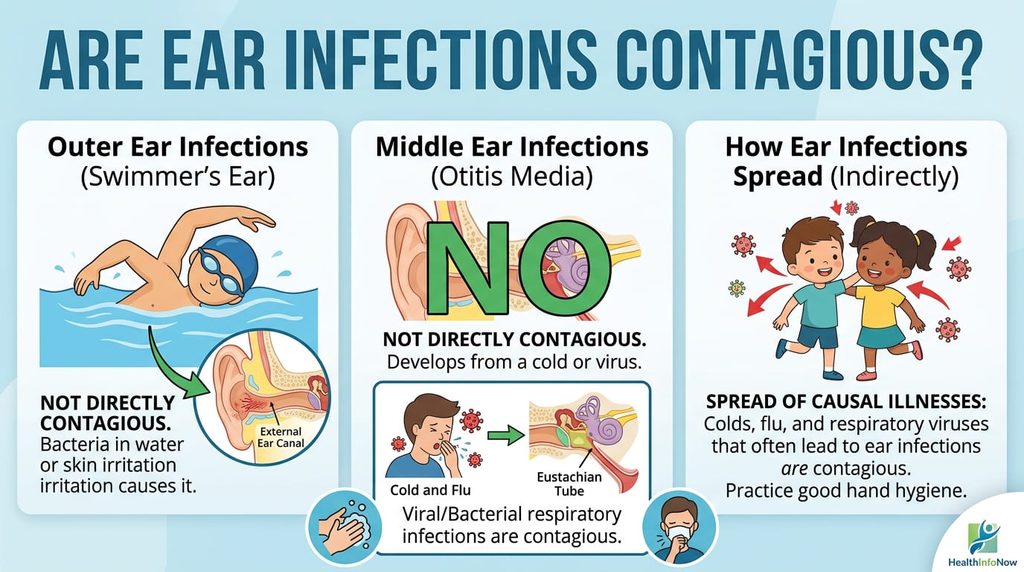
Generally, ear infections are not contagious. You cannot usually get an ear infection simply by being around someone who has one.
An ear infection often develops when fluid becomes trapped behind the eardrum, allowing viruses or bacteria to multiply. The infection may occur after a cold, flu, allergy, or another condition causes swelling and blocks the Eustachian tube.
Although the ear infection itself does not usually spread between people, the virus or bacteria responsible for the original respiratory illness may be contagious.
For example, if someone develops an ear infection after having a cold, you cannot “catch” their ear infection. However, you could catch their cold virus and potentially develop your own complications.
What Causes Ear Infections?

Ear infections can have several causes. They are especially common in young children because their Eustachian tubes are smaller and positioned differently than those of adults.
Common factors include:
- Colds and other respiratory infections
- Flu
- Allergies
- Sinus congestion
- Fluid buildup behind the eardrum
- Blocked Eustachian tubes
- Exposure to cigarette smoke
- Certain bacterial infections
There are different types of ear infections, including middle ear infections (otitis media) and outer ear infections, commonly called swimmer’s ear.
The cause and type of infection can affect the symptoms and appropriate treatment.
Are ear infections contagious in adults?
No. Ear infections are not contagious, but the colds or flu that trigger them are.
Are ear infections contagious through headphones?
No. Ear infections themselves cannot travel through headphones.
However, sharing headphones can spread bacteria or fungi directly into the ear canal, increasing your risk of developing an outer ear infection (Swimmer’s Ear).
Quick Safety Tips:
Keep your ears and earpieces dry.
Avoid sharing earbuds or headphones with others.
Clean and wipe down your earpieces regularly.
No. The ear infection itself is not contagious, even if you have a fever.
However, the fever-causing virus or bacteria (like the flu, COVID-19, or a bad cold) that led to the infection is contagious and can spread to others.
10 Common Problems Related to “Are Ear Infections Contagious?”
The following questions address some of the most common concerns people have about ear infections and spreading illness:
| # | Common Problem / Question | Quick Answer |
|---|---|---|
| 1 | Are ear infections contagious from person to person? | Usually no. The ear infection itself generally does not spread. |
| 2 | Can you catch an ear infection from someone else? | Not directly, but you can catch a contagious illness that may cause one. |
| 3 | Are ear infections contagious in children? | The ear infection itself is generally not contagious, although colds can spread easily among children. |
| 4 | Can a cold cause a contagious ear infection? | A cold can contribute to an ear infection, but the ear infection itself is not usually contagious. |
| 5 | How long is an ear infection contagious? | The ear infection itself is generally not contagious; contagiousness depends on the underlying illness. |
| 6 | Can ear infections spread through coughing or sneezing? | Ear infections do not normally spread this way, but respiratory viruses can. |
| 7 | Should you stay away from someone with an ear infection? | Usually not because of the ear infection, but avoid close contact if they have a contagious cold or flu. |
| 8 | Can adults catch an ear infection from children? | They generally cannot catch the ear infection itself, but they can catch respiratory infections. |
| 9 | Are bacterial ear infections contagious? | Most ear infections are not directly contagious, even when bacteria are involved. |
| 10 | How can you prevent infections that may lead to an ear infection? | Handwashing, avoiding sick contacts, and practicing good respiratory hygiene can help. |
Can You Catch an Ear Infection From Someone Else?
In most cases, you cannot catch an ear infection directly from another person.
Ear infections usually develop because of changes inside the ear, such as fluid buildup, inflammation, or blockage of the Eustachian tube. These processes do not typically spread through casual contact.
However, if a person has a contagious respiratory infection at the same time, they can spread that illness to you. If you become infected, you could potentially develop an ear infection as a complication.
This is particularly important for families with young children, who frequently come into contact with respiratory viruses at daycare or school.
Are Ear Infections Contagious in Children?

Ear infections are extremely common in children, but the ear infection itself is generally not contagious.
Children can, however, easily spread colds and other respiratory infections. These illnesses can cause congestion and inflammation around the Eustachian tubes, increasing the chance of fluid becoming trapped in the middle ear.
If your child has an ear infection along with a fever, cough, runny nose, or other symptoms of an infectious illness, it is sensible to follow normal precautions to reduce the spread of that illness.
Teach children to wash their hands regularly, cover coughs and sneezes, and avoid sharing personal items when they are sick.
Can a Cold Lead to an Ear Infection?
Yes. A cold can increase the risk of developing an ear infection.
During a cold, the tissues around the nose and throat can become swollen. This swelling can interfere with the Eustachian tube, which normally helps drain fluid from the middle ear.
When the tube becomes blocked, fluid may accumulate behind the eardrum. Viruses or bacteria can then grow in the trapped fluid, potentially causing an ear infection.
The important distinction is that the cold may be contagious, while the resulting ear infection generally is not.
Can Ear Infections Spread Through Coughing or Sneezing?
An ear infection does not normally spread through coughing, sneezing, touching, or breathing near another person.
However, coughing and sneezing can spread respiratory viruses and bacteria. These infections may contribute to ear problems in some people.
For this reason, practicing good respiratory hygiene is still important when someone has an ear infection accompanied by cold or flu symptoms.
Cover your mouth and nose when coughing or sneezing, wash your hands frequently, and avoid close contact with vulnerable people while you are actively sick.
Should You Stay Away From Someone With an Ear Infection?
Usually, you do not need to avoid someone simply because they have an ear infection.
However, consider the underlying cause. If they also have symptoms such as:
- Cough
- Runny nose
- Sneezing
- Fever
- Sore throat
- Body aches
they may have a contagious respiratory infection.
In that situation, limiting close contact can help reduce the risk of spreading the underlying illness.
Children should generally follow their school’s or childcare center’s policies regarding fever and other contagious illnesses.
How Long Does an Ear Infection Last?
The duration of an ear infection varies depending on its type, cause, and severity.
Some mild ear infections improve on their own, while others may require medical treatment. Symptoms can include ear pain, pressure, reduced hearing, fever, irritability, or fluid drainage.
If symptoms are severe, persistent, or getting worse, it is important to speak with a healthcare professional. Young children may need evaluation sooner, particularly when they have significant pain or fever.
How Can You Prevent Ear Infections?

Flat vector illustration banner for a health article titled “Preventing Ear Infections”. Clean minimalist design featuring a stylized human ear protected by a subtle glowing shield. Surrounding modern icons depict keeping ears dry, avoiding cotton swabs, and using swim plugs. Bright medical palette with teal, white, and soft orange accents, high resolution, professional medical blog header.
You cannot prevent every ear infection, but several habits may reduce your risk.
1. Wash Your Hands
Regular handwashing can reduce the spread of viruses and bacteria that cause respiratory infections.
2. Avoid Close Contact With Sick People
When someone has a cold or flu, reducing close contact can lower your chances of becoming infected.
3. Practice Good Cough Hygiene
Cover coughs and sneezes with a tissue or your elbow rather than your hands.
4. Avoid Cigarette Smoke
Exposure to cigarette smoke can increase the risk of ear infections, particularly in children.
5. Keep Vaccinations Up to Date
Recommended vaccinations can help protect against certain infections that may contribute to respiratory illness and related complications.
6. Manage Allergies
For people who experience frequent congestion from allergies, appropriate allergy management may help reduce Eustachian tube blockage.
When Should You See a Doctor?

Many ear infections improve without serious complications, but some situations require medical attention.
Contact a healthcare professional if you or your child has severe or persistent ear pain, significant hearing changes, repeated ear infections, or symptoms that are getting worse.
Seek prompt medical care if there is swelling or redness behind the ear, severe illness, unusual drainage, or other concerning symptoms.
For babies and young children, medical advice may be appropriate sooner because they may have difficulty communicating how they feel.
Final Thoughts
So, are ear infections contagious? In most cases, no. The ear infection itself generally does not spread from one person to another.
The important point is that the illness that triggers an ear infection can sometimes be contagious. Colds, flu, and other respiratory infections can spread through respiratory droplets and close contact. These illnesses may cause congestion and Eustachian tube blockage, which can contribute to an ear infection.
If you are concerned about spreading illness, focus on good hand hygiene, covering coughs and sneezes, avoiding close contact while sick, and keeping vaccinations up to date. If ear pain or other symptoms are severe or persistent, consult a healthcare professional for appropriate evaluation and treatment.