

If you have a sinus infection, you may wonder, “Are sinus infections contagious?” This is an important question, especially if you live with family members, work around other people, or spend time with children.
The short answer is: a sinus infection itself is usually not contagious, but the viruses that can cause sinus symptoms may be contagious. Sinusitis can develop for several different reasons, including viral infections, bacterial infections, allergies, and irritation. Understanding the cause can help you know whether you could spread an illness to someone else.
In this guide, we will explain what sinus infections are, whether they can spread, the common symptoms, and how you can reduce the risk of passing respiratory germs to others.
What Is a Sinus Infection?
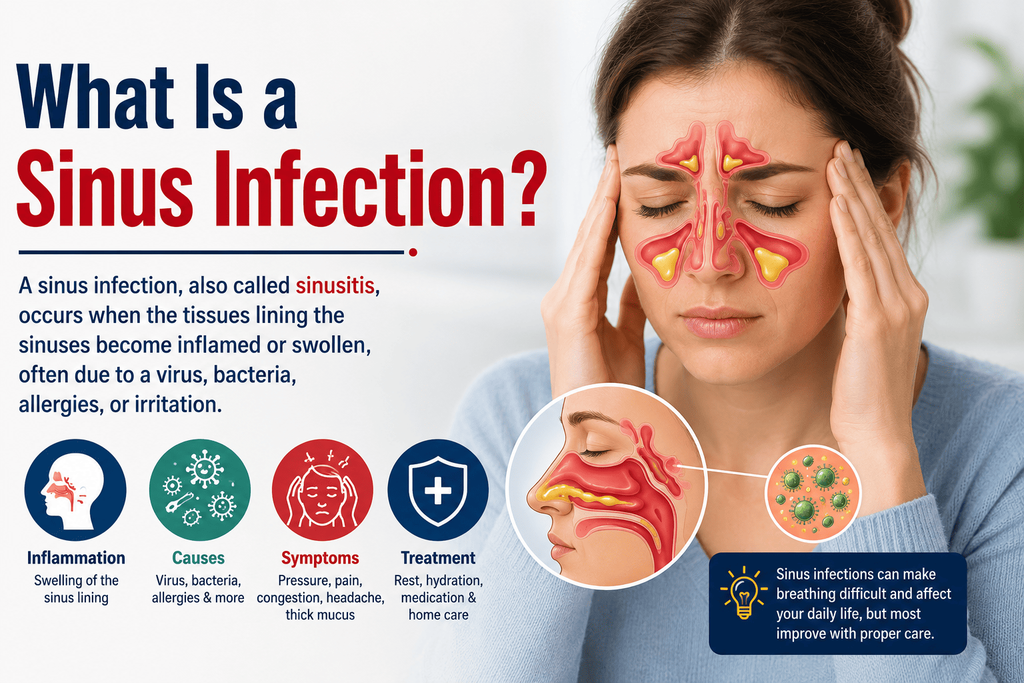
A sinus infection, also called sinusitis, occurs when the tissues lining the sinuses become inflamed or swollen. The sinuses are air-filled spaces located around the nose, cheeks, forehead, and eyes.
When these passages become inflamed, mucus may not drain normally. This can result in congestion, facial pressure, headaches, and other uncomfortable symptoms.
Sinusitis can be caused by different factors. A viral respiratory infection, such as a common cold, is a frequent cause. In some cases, a bacterial infection may develop after a viral infection. Allergies and other conditions can also contribute to sinus inflammation.
Are Sinus Infections Contagious?
Generally, sinusitis itself is not considered contagious. You cannot usually “catch” sinusitis from another person simply by being near them.
However, the situation can be different when a virus is responsible for the symptoms. Viruses that cause colds and other respiratory infections can spread from one person to another through respiratory droplets and contaminated hands or surfaces.
For example, someone may have a viral infection that causes a stuffy nose, mucus, coughing, and sinus pressure. The virus can spread to another person even though sinusitis itself is not directly transmitted.
This is why it is important to distinguish between the underlying infection and sinus inflammation.
10 Common Problems and Questions About Sinus Infections
| # | Problem / Question | Brief Explanation |
|---|---|---|
| 1 | Are Sinus Infections Contagious? | It depends on the underlying cause, such as a virus, bacteria, or allergies. |
| 2 | Can Viral Sinus Infections Spread? | Viral infections that cause sinus symptoms can spread from person to person. |
| 3 | Are Bacterial Sinus Infections Contagious? | Most bacterial sinus infections are not directly contagious. |
| 4 | Can a Cold Cause a Sinus Infection? | A common cold can cause sinus symptoms and spread through respiratory germs. |
| 5 | Can Coughing and Sneezing Spread Germs? | Coughing and sneezing can release respiratory droplets and spread infectious germs. |
| 6 | Can Sinus Infections Cause Nasal Congestion? | Swollen sinus passages can cause a stuffy or blocked nose. |
| 7 | Can Sinusitis Cause Facial Pain? | Inflammation and pressure can cause discomfort around the face, nose, forehead, or eyes. |
| 8 | Can Sinusitis Cause Postnasal Drip? | Excess mucus can drain into the throat and cause irritation or coughing. |
| 9 | How Can You Prevent Spreading an Infection? | Handwashing, covering coughs and sneezes, and limiting close contact can reduce germ transmission. |
| 10 | When Should You See a Doctor? | Medical advice may be needed when symptoms are severe, persistent, or getting worse. |
Viral Sinus Infections and Contagion
Viral infections are one of the most common reasons people develop sinus symptoms. A cold or another respiratory virus can cause inflammation in the nasal passages and sinuses.
The important point is that the virus can be contagious. If you have a viral infection, you may spread the virus to another person through close contact, respiratory droplets, or contaminated hands.
The other person may develop a cold or respiratory infection rather than exactly the same sinus symptoms.
Common signs associated with a viral respiratory infection may include:
- Runny or stuffy nose
- Sneezing
- Coughing
- Sore throat
- Mild fever
- Headache
- Facial pressure
- Fatigue
If your sinus symptoms started after a cold, taking precautions around others can help reduce the spread of the underlying virus.
Should I stay away from people if I have a sinus infection?
If your sinus infection is caused by a virus, it’s best to limit close contact until you feel better. If it’s caused by allergies, you don’t need to stay away from people.
What kills a sinus infection naturally?
There’s no natural remedy that reliably “kills” a sinus infection. Rest, fluids, steam, and saline nasal rinses may help relieve symptoms while your body recovers.
What drink opens sinuses?
Warm drinks like herbal tea, warm water with honey, or clear broth can help loosen mucus and ease sinus congestion.
Are Bacterial Sinus Infections Contagious?
Bacterial sinusitis generally does not spread directly from one person to another in the same way that a cold virus can.
Sometimes a bacterial sinus infection develops after a viral infection. When this happens, the bacteria may be growing in the sinuses because of blocked drainage and inflammation.
That does not normally mean that another person will catch your sinus infection through casual contact.
However, because symptoms can begin with a contagious viral illness, it is still wise to practice good hygiene when you are sick.
Can Allergies Cause Sinus Problems?
Not every sinus problem is caused by an infection.
Allergies can cause inflammation and swelling in the nasal passages. This may result in congestion, sneezing, a runny nose, and sinus pressure.
Allergies are not contagious. If your sinus symptoms are caused by pollen, dust, pet dander, or another allergen, you cannot spread the allergy to another person.
This is one reason identifying the underlying cause of sinus symptoms is important.
Common Symptoms of a Sinus Infection
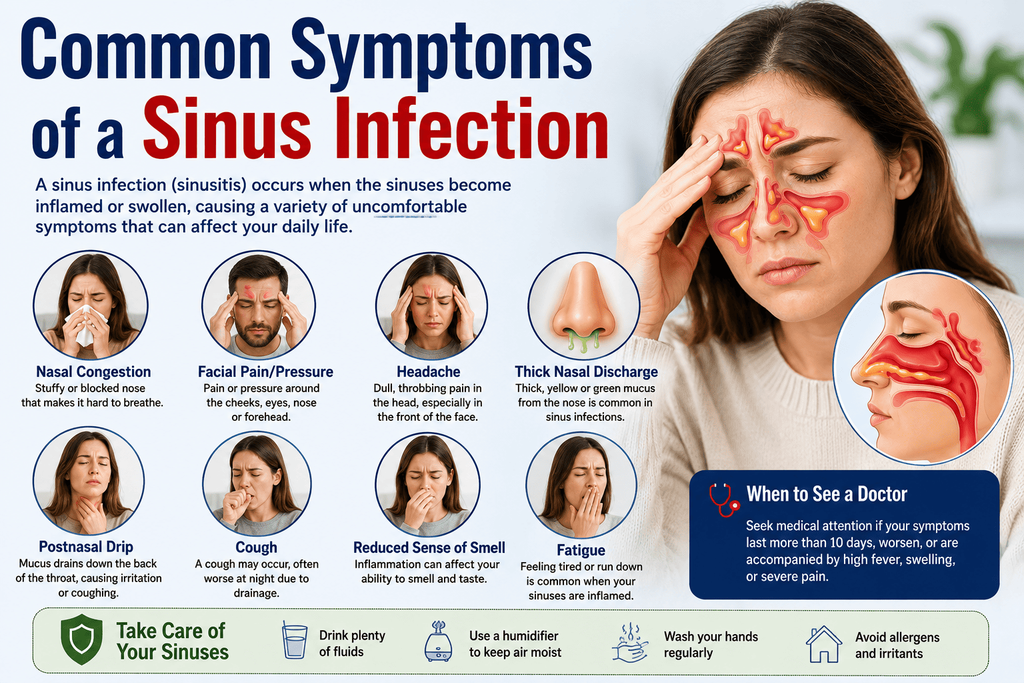
Sinus infections can produce several uncomfortable symptoms. The exact symptoms can vary depending on the cause and severity.
Common symptoms include:
1. Nasal Congestion
Swelling inside the nasal passages can make it difficult to breathe through your nose. You may feel as though your nose is blocked or stuffed.
2. Facial Pressure
Inflammation in the sinuses can create pressure around the cheeks, forehead, nose, or eyes.
3. Headache
Some people experience headaches along with sinus pressure and congestion.
4. Thick Nasal Mucus
Sinus inflammation may cause thicker mucus or drainage from the nose.
5. Postnasal Drip
Mucus can drain from the back of the nose into the throat. This may cause throat irritation or coughing.
6. Cough
A cough can occur when mucus drains into the throat, particularly at night.
7. Reduced Sense of Smell
Nasal congestion and inflammation can temporarily affect your ability to smell.
8. Tiredness
Being sick can leave you feeling tired or lacking energy.
How Do Sinus-Related Viruses Spread?

When sinus symptoms are caused by a contagious respiratory virus, the virus can spread through normal respiratory transmission.
For example, germs can be released when an infected person:
- Coughs
- Sneezes
- Talks closely with someone
- Touches shared surfaces after touching their nose or mouth
Close contact with someone who is sick can increase the chance of exposure.
Practicing good hygiene is especially important when you have symptoms that could be caused by a contagious respiratory infection.
How to Reduce the Risk of Spreading Germs
If you have sinus symptoms and think they may be related to a cold or another respiratory infection, several simple steps can help.
Wash Your Hands
Wash your hands regularly with soap and water, especially after coughing, sneezing, blowing your nose, or touching your face.
Cover Coughs and Sneezes
Use a tissue or your elbow when coughing or sneezing. Dispose of used tissues properly and wash your hands afterward.
Avoid Sharing Personal Items
Avoid sharing items such as drinking glasses, utensils, or towels when you are sick.
Limit Close Contact
If you have symptoms of a contagious respiratory infection, consider limiting close contact with others until you are feeling better.
Clean Frequently Touched Surfaces
Cleaning commonly touched surfaces can help reduce the spread of respiratory germs.
When Should You See a Doctor?

Many sinus symptoms improve with time, particularly when they are caused by a viral infection. However, you should consider speaking with a healthcare professional if your symptoms are severe, persistent, or worsening.
Medical advice may be especially important if you experience severe facial pain, significant swelling, difficulty breathing, persistent fever, or symptoms that do not improve.
A healthcare professional can evaluate your symptoms and determine whether they are more consistent with a viral infection, bacterial sinusitis, allergies, or another condition.
Can You Go to Work or School With a Sinus Infection?
Whether you should go to work or school depends on the cause of your symptoms and how you feel.
If your symptoms are caused by allergies, there is no contagious infection to spread. If they are associated with a cold or another respiratory virus, you may be able to spread the underlying virus to other people.
If you are experiencing significant respiratory symptoms, staying home when appropriate, practicing good hygiene, and avoiding close contact with vulnerable people can help reduce transmission.
Frequently Asked Questions
Are sinus infections contagious?
Usually, sinusitis itself is not contagious. However, a virus that causes sinus symptoms can be contagious and may spread to other people.
Can you catch a sinus infection from someone?
You generally cannot catch sinusitis itself from another person. However, you can catch a contagious respiratory virus that may cause cold or sinus symptoms.
Are bacterial sinus infections contagious?
Most bacterial sinus infections are not considered directly contagious.
Can allergies cause sinus symptoms?
Yes. Allergies can cause nasal congestion, inflammation, sneezing, and sinus pressure. Allergies themselves are not contagious.
How can I prevent spreading germs when I have sinus symptoms?
Regular handwashing, covering coughs and sneezes, avoiding close contact when sick, and not sharing personal items can help reduce the spread of respiratory germs.
Should I kiss my boyfriend when I have a sinus infection?
If you have a viral sinus infection, it’s best to avoid kissing until you feel better because the virus can spread through close contact. If your symptoms are caused by allergies, kissing is generally safe because allergies aren’t contagious.
Can you get sick from being around someone with a sinus infection?
Usually, you can’t catch a sinus infection itself from someone. However, if their sinus symptoms are caused by a contagious virus, such as a cold, you can catch the virus and become sick.
Are sinus infections dangerous gave me relavient ans and shorter?
Usually, sinus infections are not dangerous and often improve with time. However, severe or persistent symptoms should be checked by a doctor to prevent complications.
What happens if a sinus infection is left untreated?
Most sinus infections improve on their own, but if symptoms persist untreated, the infection can worsen or rarely cause complications. Persistent or severe symptoms should be evaluated by a doctor.
Final Thoughts
So, are sinus infections contagious? In most cases, the sinus infection itself is not contagious. The answer becomes more complicated when a contagious virus is responsible for the symptoms.
Viral respiratory infections can spread between people, while bacterial sinusitis and allergy-related sinus problems generally do not spread in the same way. Understanding the cause of your symptoms can help you take the right precautions.
If your symptoms are severe, persistent, or getting worse, consider consulting a healthcare professional for an appropriate evaluation. Good hygiene, handwashing, and limiting close contact while sick can also help protect the people around you.