
MIND Diet for Brain Health: A Practical Guide to Eating for a Healthier Brain
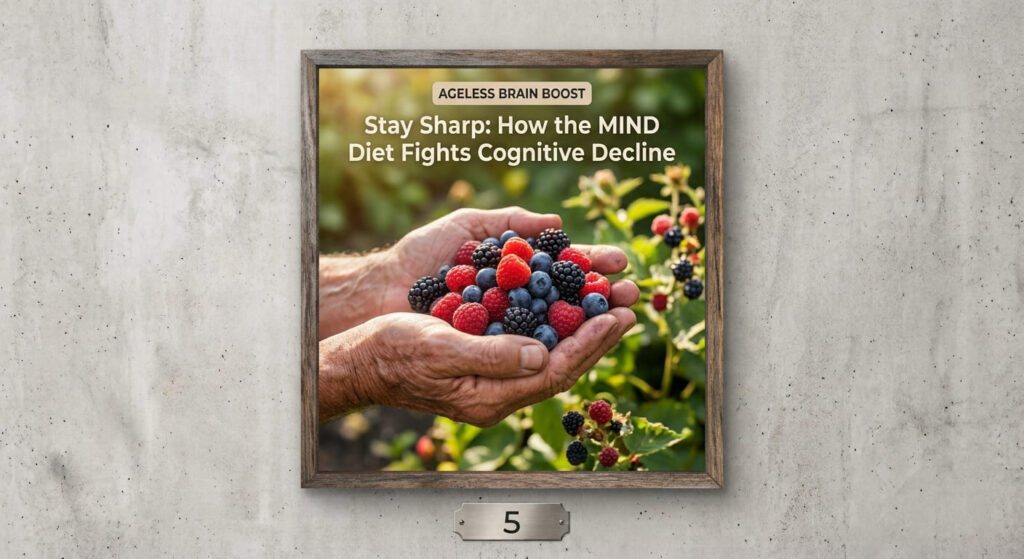
Finding food to eat close to me can be easy when you choose fresh, balanced options. Look for restaurants offering vegetables, lean proteins, whole grains, and fresh fruit. Drink enough water throughout the day, because The Hydration Lie can make us underestimate our fluid needs. Choose nourishing meals that support overall wellness.
A healthy brain depends on more than mental exercise, sleep, and stress management. What we eat also plays an important role in supporting the brain throughout life. The MIND diet is a dietary pattern specifically designed around foods associated with brain health. Its name comes from Mediterranean-DASH Intervention for Neurodegenerative Delay, and it combines principles from the Mediterranean diet and the DASH diet while emphasizing foods that may help protect cognitive function.
The MIND diet does not require complicated recipes, expensive ingredients, or strict calorie counting. Instead, it encourages people to eat more vegetables, berries, nuts, whole grains, beans, fish, poultry, and olive oil while limiting foods such as red meat, butter, cheese, sweets, and fried foods. The goal is to create an overall eating pattern that supports cardiovascular and metabolic health, which are closely connected with brain health.
What Is the MIND Diet?
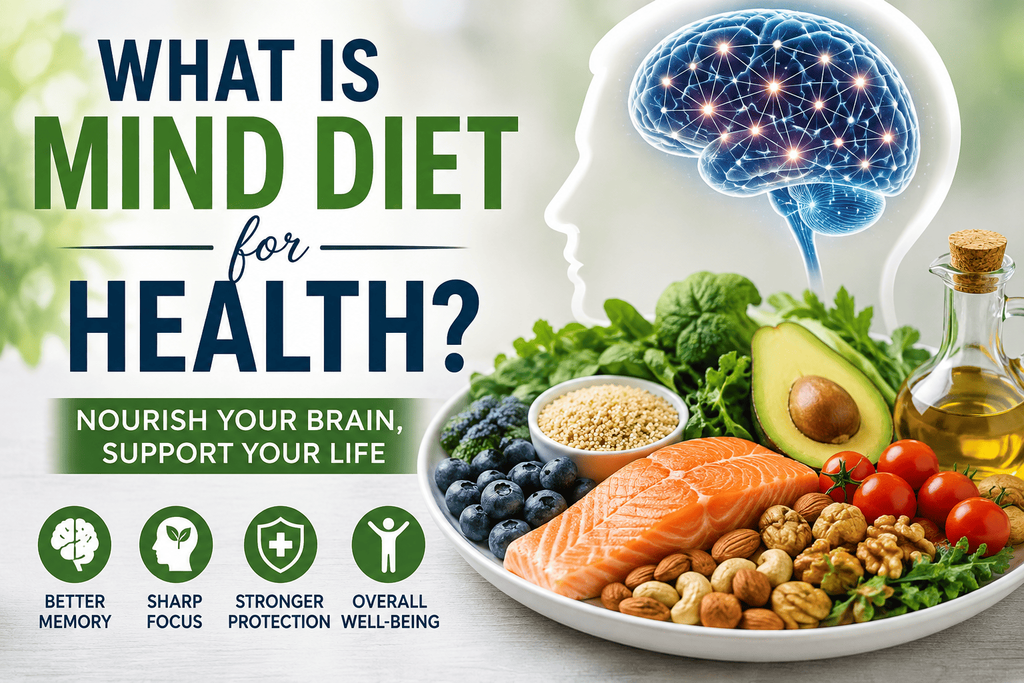
The MIND diet was developed by researchers at Rush University Medical Center as a way of combining dietary habits associated with better brain health. It draws heavily from the Mediterranean and DASH eating patterns but places particular emphasis on foods that provide antioxidants, healthy fats, fiber, vitamins, and other nutrients.
Rather than treating individual foods as miracle cures, the MIND diet focuses on a consistent pattern of eating. This is important because brain health is influenced by many factors, including age, genetics, physical activity, sleep, blood pressure, diabetes, smoking, and cardiovascular health.
The MIND diet is therefore best understood as a long-term healthy eating pattern rather than a medical treatment or guaranteed method of preventing dementia.
How Can the MIND Diet Support Brain Health?
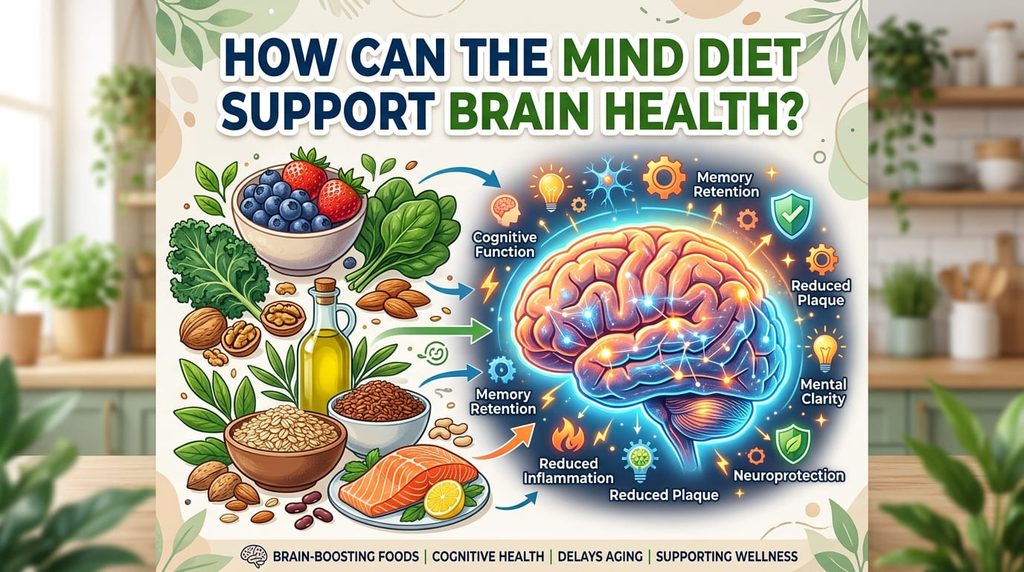
One reason the MIND diet is considered promising for brain health is that many of its recommended foods contain nutrients and plant compounds that support normal body functions.
1. It emphasizes antioxidant-rich foods
Berries, leafy green vegetables, and other colorful plant foods contain antioxidants and phytochemicals. These compounds help the body manage oxidative stress, a natural process that can contribute to cellular damage when it becomes excessive.
Berries such as blueberries and strawberries are particularly emphasized in the MIND diet because they contain flavonoids and other plant compounds being studied for their potential relationship with cognitive health.
2. It supports cardiovascular health
The brain depends on a continuous supply of oxygen and nutrients through the bloodstream. High blood pressure, high cholesterol, diabetes, and other cardiovascular risk factors can affect blood vessels and are also associated with cognitive decline.
The MIND diet encourages whole grains, vegetables, beans, fish, nuts, and unsaturated fats while limiting foods high in saturated fat and added sugars. These choices can fit into an overall eating pattern that supports heart and blood-vessel health.
3. It provides healthy fats
Fish, nuts, and olive oil are important components of the MIND diet. Fatty fish such as salmon, sardines, trout, and mackerel provide omega-3 fatty acids, including DHA, which is an important structural component of the brain.
Olive oil and nuts provide predominantly unsaturated fats. Replacing some sources of saturated fat with unsaturated fats can be beneficial for cardiovascular health.
4. It increases fiber-rich foods
Beans, whole grains, vegetables, and berries provide dietary fiber. Fiber supports digestive health and contributes to a healthy gut microbiome. Researchers are increasingly studying connections among the gut, immune system, metabolism, and brain.
Although research into the gut-brain relationship is still developing, eating a varied, fiber-rich diet is already an established part of a healthy eating pattern.
The Main Foods to Eat
The MIND diet highlights ten food groups.
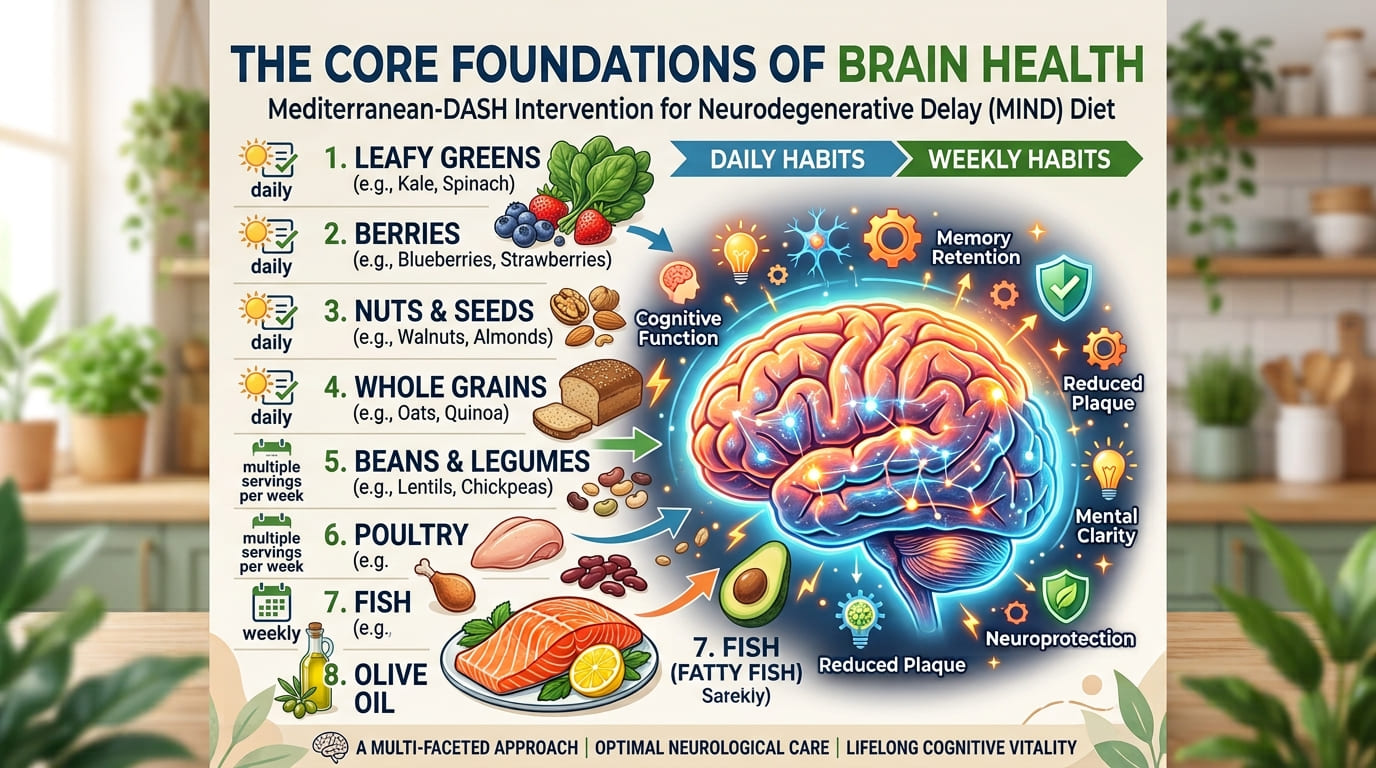
Leafy green vegetables: Aim to include foods such as spinach, kale, collard greens, and other dark leafy vegetables regularly. They provide folate, carotenoids, vitamin K, and other nutrients.
Other vegetables: Include a variety of vegetables rather than relying on one type. Broccoli, carrots, peppers, tomatoes, squash, and other colorful vegetables can add different nutrients and plant compounds.
Berries: Strawberries, blueberries, raspberries, and blackberries are useful choices. Fresh or frozen berries can be added to oatmeal, yogurt, or smoothies.
Nuts: Almonds, walnuts, pistachios, and other unsalted nuts provide healthy fats, protein, fiber, and several micronutrients. A small handful makes a convenient snack.
Beans: Beans, lentils, and chickpeas provide plant protein, fiber, folate, and other nutrients. They can be added to salads, soups, stews, and grain bowls.
Whole grains: Oatmeal, brown rice, quinoa, barley, and whole-grain bread provide fiber and complex carbohydrates. They can help make meals more filling and nutritious.
| # | Healthy Food Place | City/Area | Healthy Food Options |
|---|---|---|---|
| 1 | Locanut | New York, NY | Salads, bowls, plant-based meals |
| 2 | Le Botaniste | New York, NY | Organic, plant-based meals |
| 3 | PLANTA New York | New York, NY | Vegan meals, vegetables, bowls |
| 4 | P.S. Kitchen | New York, NY | Plant-based and vegetable-focused dishes |
| 5 | Willow Vegan Bistro | New York, NY | Vegan dishes and healthy options |
| 6 | Green Blend / Balanced Food / 8th ave | New York, NY | Smoothies, salads, balanced meals |
| 7 | Fresh From Hell | New York, NY | Healthy meals and fresh foods |
| 8 | Westville Chelsea | New York, NY | Vegetables, salads, balanced plates |
| 9 | Little Beet | New York, NY | Grain bowls, vegetables, plant-based options |
| 10 | Terra – Eat Better Food | New York, NY | Mediterranean-style healthy food |
Fish: Fatty fish is particularly useful because of its omega-3 content. Choosing fish instead of processed or high-saturated-fat meats can be part of a heart-healthy dietary pattern.
Poultry: Chicken and turkey can provide lean protein and can be used in place of red or processed meats.
Olive oil: Extra-virgin olive oil is commonly used as the primary cooking or dressing oil in Mediterranean-style eating patterns.
Wine: The original MIND diet included moderate wine consumption, but alcohol is not necessary for brain health, and drinking alcohol carries health risks. People who do not drink should not start drinking for the purpose of following the MIND diet.
Foods the MIND Diet Encourages You to Limit
The MIND diet also identifies several food categories to eat less frequently.
Red meat: Beef, pork, and lamb can be eaten less often, with beans, fish, poultry, and other protein sources used more frequently.
Butter and margarine: These are limited because they can contribute significant amounts of saturated fat.
Cheese: High-fat cheese is generally eaten less frequently rather than being a daily staple.
Pastries and sweets: Cakes, cookies, pastries, candy, and other foods high in added sugar are limited.
Fried and fast foods: Fried foods are minimized, particularly when they are eaten frequently.
The purpose is not to make these foods completely forbidden. A sustainable diet allows occasional foods that people enjoy while emphasizing healthier choices most of the time.
What Does a Day on the MIND Diet Look Like?
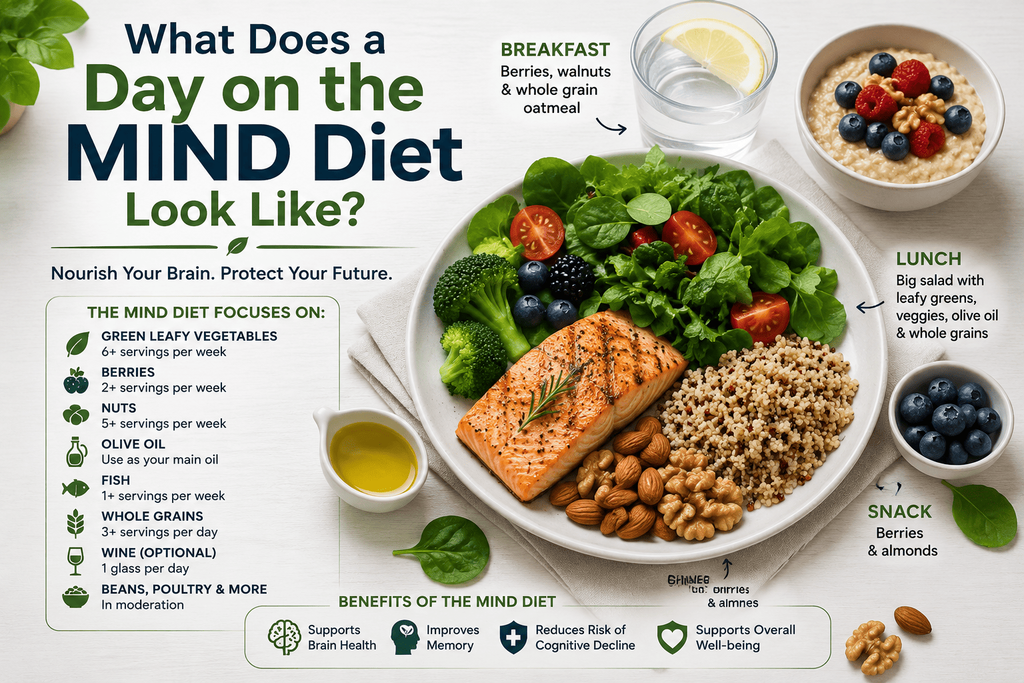
A MIND-style day can be simple.
For breakfast, try oatmeal topped with blueberries, strawberries, walnuts, and a small amount of plain yogurt. For lunch, a large salad containing leafy greens, beans, vegetables, and olive-oil-based dressing can provide fiber and plant nutrients.
Dinner might include grilled salmon, roasted vegetables, and a serving of brown rice or quinoa. Fruit or a small portion of unsalted nuts can serve as a snack.
The key is not to create a perfect menu every day. Instead, build meals around vegetables, whole grains, legumes, nuts, fish, and healthy fats.
What Does the Research Say?
Research has found associations between closer adherence to the MIND diet and better cognitive outcomes in some populations. Observational studies have reported that people whose diets more closely resemble the MIND pattern may have a lower risk of cognitive decline or dementia.
However, it is important to interpret these findings carefully. Much of the evidence is observational, meaning researchers can identify relationships between dietary habits and health outcomes but cannot prove that the diet itself caused a particular outcome.
More research, including well-designed clinical trials, is needed to determine how much the MIND diet itself can reduce the risk of dementia. Brain health is also influenced by many factors beyond diet.
Practical Tips for Following the MIND Diet
The easiest way to adopt the MIND diet is to make gradual changes.
Start by adding one serving of vegetables to a meal each day. Keep berries and unsalted nuts available for snacks. Replace refined grains with whole grains when practical. Choose fish more often and use beans or lentils as a protein source several times a week.
Cooking at home can also make it easier to control the amount of salt, sugar, butter, and highly processed ingredients in meals. Planning meals ahead of time can prevent convenience foods from becoming the default choice.
Most importantly, avoid an all-or-nothing approach. Missing a serving of vegetables or eating dessert does not mean the diet has failed. Long-term consistency matters more than perfection.
Food to eat near me open now?
Here are spots open right now in Sargodha:

TIKKA PURI
4.1 stars rating4.1 · PKR1-PKR1,000
🍽️ Restaurant
Open · Closes 12:00 AM Sun
TIKKA PURI Click to open side panel for more information
A local spot in Satellite Town for quick meals and street food snacks.
- Hours: Open daily from 6:00 AM to 12:00 AM
- Location: Satellite Town, near Bucha Hospital
Quetta Darbar Cafe and Restaurant 1 (QDC&R)
A highly rated spot serving traditional tea, parathas, and local café staples.
- Hours: Open 24 hours
- Location: Stadium Road, Shama Chowk

Mr. Wingg’z Sargodha
4.1 stars rating4.1 · PKR1-PKR4,000
🍽️ Restaurant
Open · Closes 1:00 AM Sun
Mr. Wingg’z Sargodha Click to open side panel for more information
A popular joint for fried chicken, wings, and fast food.
- Hours: Open daily from 10:00 AM to 1:00 AM
- Location: Main University Road, Cheema Colony

chaayé khana Sargodha
3.9 stars rating3.9 · PKR1,000-PKR2,000
🍽️ Restaurant
Open · Closes 12:00 AM Sun
chaayé khana Sargodha Click to open side panel for more information
A cozy restaurant and tea room offering breakfast, light meals, and hot beverages.
- Hours: Open daily from 8:00 AM to 12:00 AM
- Location: Queens Road, near Sher Zaman Town

Premium lounge grill & bakehouse
4.8 stars rating4.8 · PKR1,000-PKR4,000
🍽️ Restaurant
Open · Closes 12:00 AM Mon
Premium lounge grill & bakehouse Click to open side panel for more information
A relaxed spot for grilled dishes, baked items, and lounge dining.
- Hours: Open 24 hours (Tuesday–Sunday)
- Location: Mianwali Road, near Sargodha Garrison
Which specific cuisine or style of food are you looking for today?
The MIND diet is a practical approach to eating that emphasizes vegetables, berries, nuts, beans, whole grains, fish, poultry, and olive oil while reducing foods high in saturated fat, added sugar, and excessive processing.
Its potential benefit for brain health comes from the overall dietary pattern rather than one particular “brain food.” The diet supports many aspects of healthy eating, including cardiovascular health, nutrient intake, and a high consumption of plant-based foods.
For people interested in protecting cognitive health, the MIND diet can be a useful framework—but it should be viewed as one part of a larger healthy lifestyle. Regular physical activity, adequate sleep, social engagement, managing blood pressure and other cardiovascular risks, avoiding smoking, and maintaining overall health are also important.
A simple message captures the approach: eat more plants, choose healthy fats, include fish and whole grains, limit highly processed foods, and make healthy choices consistently over time.