
The Best Diet for Brain Health:Food thats support Memory, Focus, and Long-Term Brain Function
Your brain is one of the most energy-demanding organs in your body. Although it makes up only a small percentage of your total body weight, it requires a steady supply of nutrients and energy to support memory, concentration, mood, learning, and everyday thinking. What you eat can play an important role in providing those nutrients and supporting healthy brain function throughout life.
There is no single food that can instantly make you smarter or prevent every brain-related condition. However, research on dietary patterns suggests that a balanced eating style rich in vegetables, fruits, whole grains, healthy fats, fish, beans, and nuts may be especially beneficial for brain health.
Among the dietary patterns studied for cognitive health, the MIND diet is one of the most widely discussed. MIND stands for “Mediterranean-DASH Intervention for Neurodegenerative Delay.” It combines elements of the Mediterranean diet and the DASH diet, emphasizing foods associated with cardiovascular and brain health while limiting foods that may be less beneficial when eaten frequently.
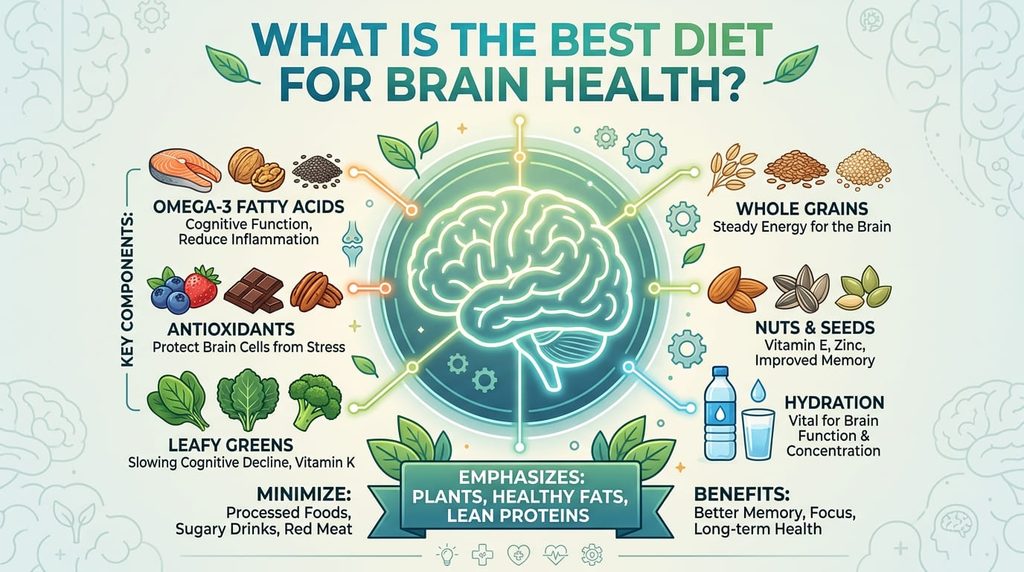
What Is the Best Diet for Brain Health?
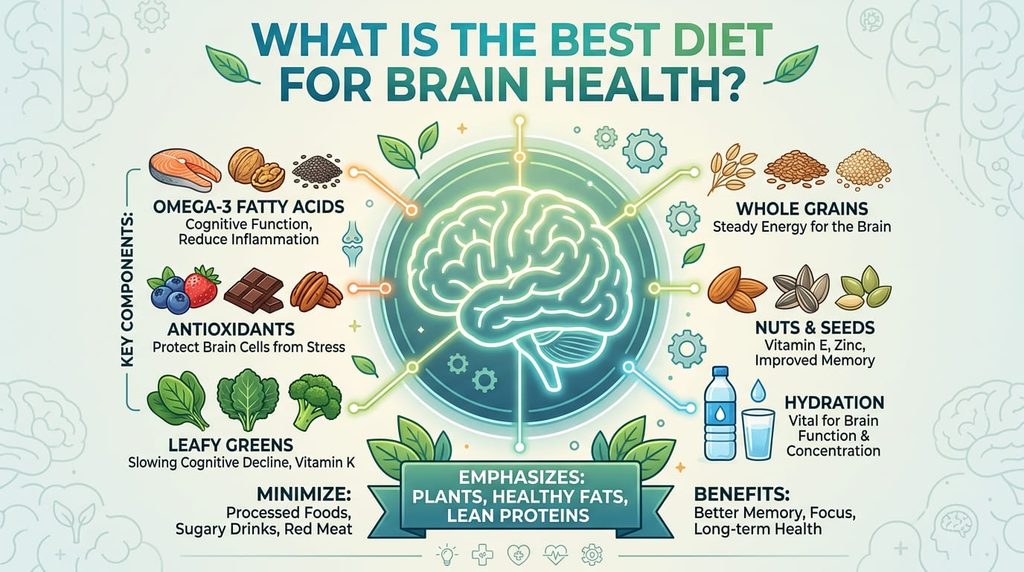
For most people, a Mediterranean-style or MIND-style diet is a strong choice for supporting long-term brain health. These eating patterns emphasize minimally processed foods and provide a variety of nutrients, fiber, antioxidants, and healthy fats.
The MIND diet particularly emphasizes:
- Green leafy vegetables
- Other colorful vegetables
- Berries
- Nuts
- Whole grains
- Beans and legumes
- Fish
- Poultry
- Olive oil
- Moderate amounts of certain dairy foods
- Limited sweets and highly processed foods
Rather than focusing on one “superfood,” the goal is to create an overall eating pattern that regularly supplies the brain with the nutrients it needs.
1. Eat Plenty of Green Leafy Vegetables
Leafy greens such as spinach, kale, collard greens, and other dark green vegetables are excellent additions to a brain-friendly diet. They provide folate, vitamin K, carotenoids, and other plant compounds that contribute to overall health.
Try adding leafy greens to salads, soups, sandwiches, omelets, or smoothies. Eating a variety of vegetables is also important because different vegetables provide different combinations of vitamins, minerals, and protective plant compounds.
A simple goal is to make vegetables a major part of lunch and dinner rather than treating them as an occasional side dish.
2. Make Berries a Regular Choice
Berries are particularly interesting when it comes to brain health. Blueberries, strawberries, raspberries, and blackberries contain polyphenols and other antioxidant compounds.
These compounds help protect cells from oxidative stress, while a diet rich in plant foods may also support healthy blood vessels and overall metabolic health.
You can enjoy berries fresh or frozen. Add them to oatmeal, plain yogurt, whole-grain cereal, or a smoothie. If fresh berries are expensive or unavailable, frozen varieties can be a convenient alternative.
3. Choose Healthy Fats
Your brain contains a large amount of fat, so the type of fat you eat matters. Instead of relying heavily on foods high in saturated and trans fats, choose sources of unsaturated fats.
Extra-virgin olive oil is a central feature of Mediterranean-style eating and can be used for cooking, salad dressings, or drizzling over vegetables.
Other useful sources of healthy fats include avocados, nuts, seeds, and fatty fish.
Healthy fats should still be eaten in appropriate portions because they are calorie-dense. The goal is not to eat unlimited fat but to replace less beneficial fat sources with healthier choices.
4. Eat Fatty Fish
Fatty fish such as salmon, sardines, trout, and mackerel provide omega-3 fatty acids, including DHA and EPA. DHA is an important structural component of the brain.
Fish can be included in meals several times per week as part of a balanced diet. Baked or grilled fish is generally a better everyday choice than heavily fried fish.
For people who do not eat fish, foods such as walnuts, chia seeds, and flaxseeds provide plant-based omega-3 fats. However, the types of omega-3 fats they provide are different from the DHA and EPA found in fish.
5. Add Nuts and Seeds
Nuts are convenient sources of healthy fats, vitamin E, minerals, fiber, and plant compounds. Walnuts are often highlighted for brain health because they contain omega-3 alpha-linolenic acid.
Almonds, pistachios, pecans, and other unsalted nuts can also be part of a healthy eating pattern.
A small handful makes an easy snack. You can also sprinkle chopped nuts over oatmeal, yogurt, salads, or roasted vegetables.
Because nuts are energy-dense, portion size matters. Choosing unsalted varieties can also help reduce excess sodium intake.
6. Choose Whole Grains
Whole grains such as oats, brown rice, barley, quinoa, and whole-grain bread provide fiber and nutrients that are often reduced when grains are highly refined.
Whole grains can support cardiovascular and metabolic health, which is closely connected to brain health. Blood vessels supply the brain with oxygen and nutrients, so protecting cardiovascular health is an important part of protecting cognitive health.
Try replacing refined grains with whole-grain alternatives gradually. For example, choose oatmeal instead of a sugary breakfast pastry or brown rice instead of white rice for some meals.
7. Include Beans and Legumes
Beans, lentils, chickpeas, and other legumes provide fiber, plant-based protein, vitamins, and minerals.
They are versatile and inexpensive foods that can form an important part of a brain-friendly diet. Add beans to soups, salads, chili, grain bowls, or vegetable dishes.
Because they provide both protein and fiber, legumes can also help meals feel satisfying and may make it easier to maintain a balanced eating pattern.
8. Don’t Forget Hydration
Nutrition is only part of brain health. Adequate hydration is also important.
Even mild dehydration can contribute to fatigue and difficulty concentrating in some people. Water should generally be the primary beverage, while unsweetened tea can also be a useful option.
The amount of fluid a person needs varies depending on factors such as activity level, climate, age, and health status. Instead of waiting until you are extremely thirsty, drink fluids regularly throughout the day.
9. Limit Highly Processed Foods and Added Sugar
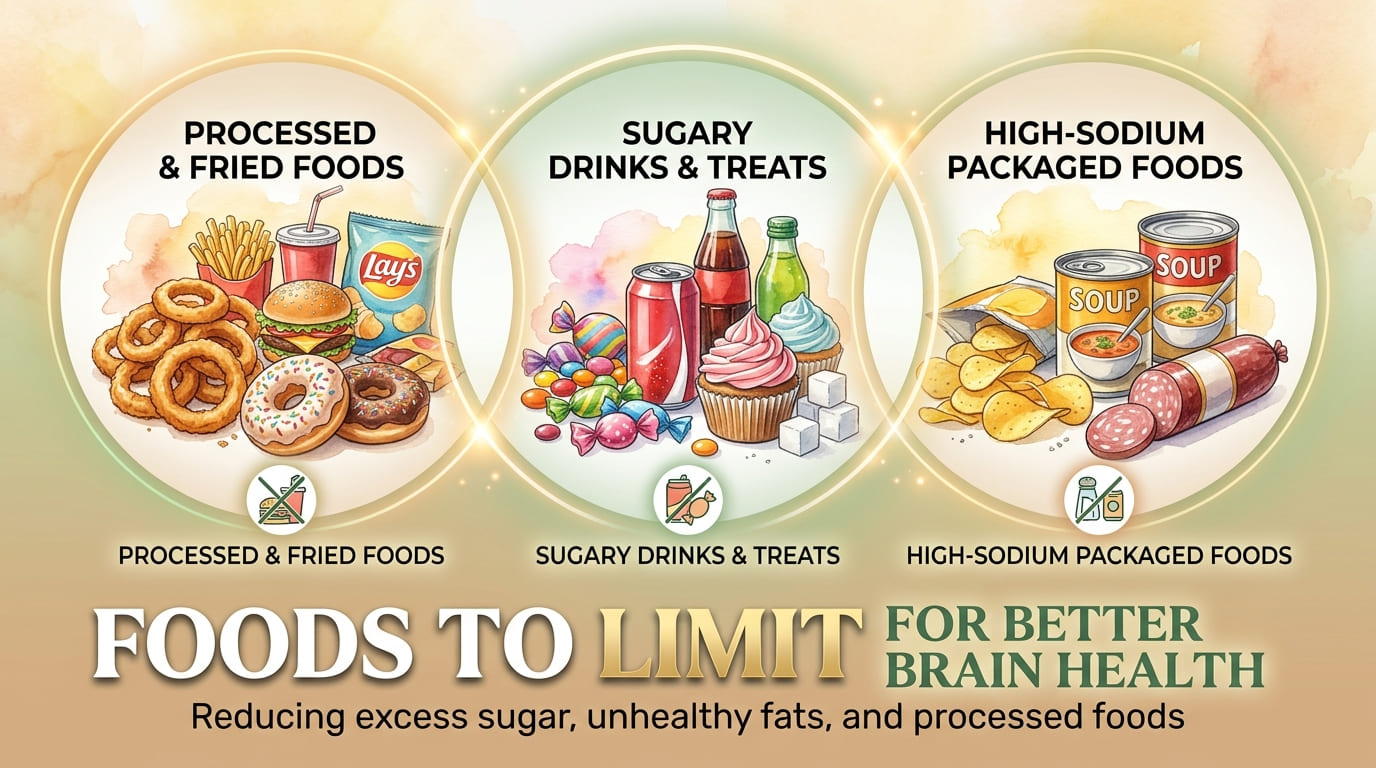
A brain-healthy diet is not only about what you add to your meals. It is also about what you eat less often.
Foods such as sugary drinks, pastries, candy, heavily processed snacks, and many fast-food meals can provide large amounts of added sugar, sodium, and unhealthy fats while offering relatively few beneficial nutrients.
You do not necessarily have to eliminate these foods completely. Instead, think about frequency and portion size. An occasional dessert can fit into an otherwise healthy eating pattern, while a daily diet dominated by ultra-processed foods may make it harder to meet nutritional needs.
10. Limit Excessive Alcohol
Alcohol deserves special attention when discussing brain health. Heavy alcohol consumption can negatively affect the brain and overall health.
For this reason, drinking alcohol should not be presented as a way to improve brain health. If you do not drink, there is no health reason to start drinking for the sake of your brain.
People who drink alcohol should consider discussing their intake with a healthcare professional, especially if they have medical conditions or take medications that may interact with alcohol.
A Simple One-Day Brain-Healthy Meal Plan
Creating a healthy diet does not have to be complicated. Here is an example of what a day of brain-friendly eating could look like:
Breakfast:
Oatmeal topped with blueberries, walnuts, and plain yogurt, along with water or unsweetened tea.
Lunch:
A large salad containing leafy greens, chickpeas, tomatoes, colorful vegetables, olive oil, and a whole-grain food such as whole-grain bread.
Snack:
A small handful of unsalted nuts and a piece of fruit.
Dinner:
Grilled salmon with roasted vegetables and a serving of quinoa or brown rice.
Dessert:
Fresh berries or plain yogurt with fruit.
This is only an example. A healthy diet can be adapted to different cultures, budgets, dietary preferences, and nutritional needs.
Brain Health Is About More Than Diet
Although food is important, it is only one part of maintaining cognitive health. Regular physical activity, sufficient sleep, social connection, stress management, and control of conditions such as high blood pressure and diabetes can also play important roles.
Exercise, for example, supports cardiovascular health and increases blood flow throughout the body. Good sleep is important for memory and many other aspects of cognitive function.
It is also important to remember that diet cannot guarantee that a person will avoid dementia or another neurological condition. Genetics, age, medical history, environment, and many other factors influence brain health.
Frequently Asked Questions (FAQs)
Q: What is “The Hydration Lie”?
A: “The Hydration Lie” refers to the widespread myth that everyone must drink a rigid amount of water daily—typically the “8×8 rule” (eight 8-ounce glasses)—regardless of individual body size, activity level, climate, or diet.
Q: Do I really need to drink 8 glasses of water every day?
A: No. There is no strong scientific evidence backing the standard 8×8 rule for every individual. Hydration needs vary significantly based on sweat rate, physical activity, ambient temperature, and overall health.
Q: Can you drink too much water?
A: Yes. Over-hydration can lead to a condition called hyponatremia (water intoxication), where excess water dilutes essential electrolytes—primarily sodium—in your blood, which can cause severe health complications.
Q: Does coffee or tea count toward daily fluid intake?
A: Yes. While caffeine has a mild diuretic effect, caffeinated beverages like coffee and tea still contribute positively to your total daily fluid intake, especially when consumed regularly.
Q: Do foods contribute to hydration?
A: Absolutely. About 20% of average daily fluid intake comes from food, particularly fruits and vegetables like cucumbers, watermelon, tomatoes, and strawberries.
Q: How do I know if I am drinking enough water?
A: The most reliable indicator for healthy adults is urine color. Pale, straw-colored urine generally indicates adequate hydration, whereas dark yellow or amber urine suggests you should drink more fluid.
Would you like to tailor these FAQs for a specific audience, such as endurance athletes or general wellness readers?
Final Thoughts
The best diet for brain health is not a complicated or restrictive diet. Instead, it is a consistent pattern centered on nutrient-rich, minimally processed foods.
A MIND- or Mediterranean-style eating pattern provides a practical framework: eat plenty of leafy greens and other vegetables, enjoy berries and other fruits, choose whole grains and legumes, include nuts and healthy fats, eat fish regularly, and limit highly processed foods, excessive added sugar, and unhealthy fats.
The most important step is consistency. You do not need to completely change your diet overnight. Start with small improvements, such as adding a serving of vegetables to dinner, replacing refined grains with whole grains, eating berries as a snack, or using olive oil instead of less healthy fats.
Over time, these small choices can become lasting habits. Combined with regular exercise, good sleep, hydration, and routine healthcare, a balanced diet can help support your brain and overall health for years to come.