
Brain Health Diet: The Best Foods to Nourish Your Brain and spport cognitive health
Your brain is one of the most important organs in your body. It controls your thoughts, memory, emotions, movement, concentration, and countless processes that happen every moment of the day. Like every other part of your body, your brain needs the right nutrients to function effectively. What you eat regularly can influence brain function, energy levels, mood, memory, and long-term cognitive health.
A brain health diet is not about following a strict or complicated meal plan. Instead, it focuses on eating a variety of nutrient-rich, minimally processed foods that provide healthy fats, antioxidants, vitamins, minerals, fiber, and other compounds that support the brain. Research on dietary patterns such as the Mediterranean diet and MIND diet has also highlighted the potential benefits of emphasizing vegetables, berries, whole grains, fish, nuts, and other nutritious foods.
How Does Diet Affect Brain Health?
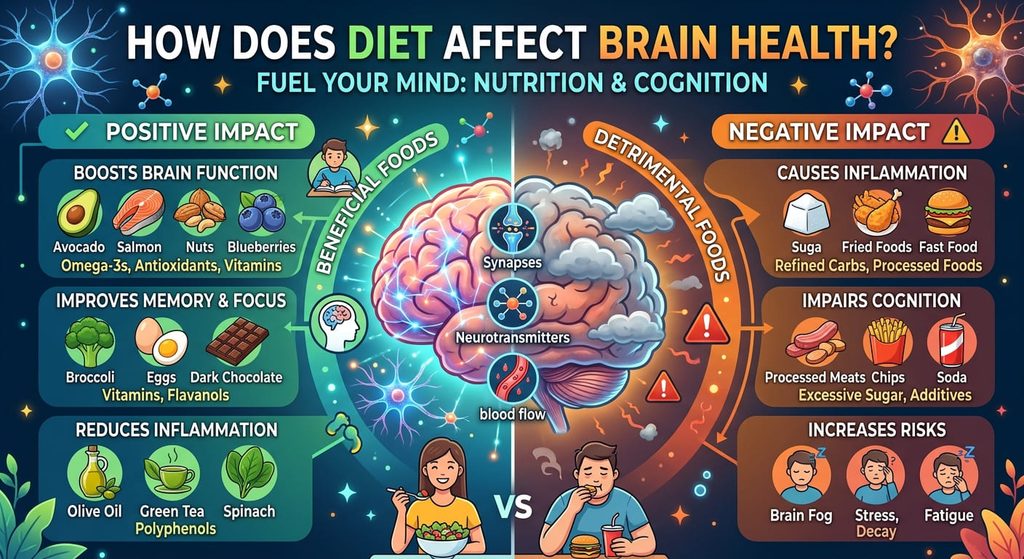
The brain requires a constant supply of energy and nutrients. Although it makes up only a small percentage of total body weight, it uses a significant amount of the body’s energy. This means that the quality of your diet can influence how well your brain performs.
A diet rich in vegetables, fruits, whole grains, legumes, nuts, seeds, and healthy fats supplies nutrients that help support normal brain function. Some foods contain antioxidants that help protect cells from oxidative stress, while healthy fats contribute to the structure of brain cell membranes.
On the other hand, regularly eating large amounts of highly processed foods, added sugars, unhealthy fats, and excessive sodium may contribute to poor overall health and conditions that can negatively affect the brain. A healthy diet should therefore be considered part of a broader lifestyle that includes physical activity, adequate sleep, stress management, and social connection.
1. Fatty Fish and Omega-3 Fatty Acids
Fatty fish is one of the most commonly recommended foods for a brain-supportive diet. Salmon, sardines, trout, mackerel, and anchovies are rich in omega-3 fatty acids, particularly EPA and DHA.
DHA is an important structural component of brain tissue. Including sources of omega-3 fats in a balanced diet can help provide the building blocks the brain needs for normal function.
If you eat fish, consider including fatty fish in your meals regularly. For people who do not eat seafood, plant foods such as walnuts, chia seeds, and flaxseeds provide another type of omega-3 fat called ALA.
2. Berries and Colorful Fruits

Berries are another excellent addition to a brain health diet. Blueberries, strawberries, blackberries, and raspberries contain vitamins, fiber, and plant compounds known as polyphenols.
These compounds have antioxidant properties and may help protect cells from oxidative stress. Berries are also easy to incorporate into everyday meals. Add them to oatmeal, plain yogurt, smoothies, or salads, or simply enjoy them as a snack.
Other colorful fruits can contribute valuable nutrients as well. The goal is not to focus on one “superfood,” but to eat a wide variety of fruits and vegetables.
3. Leafy Green Vegetables
Leafy greens such as spinach, kale, collard greens, and Swiss chard are nutrient-dense foods that can fit easily into a brain-friendly eating pattern.
They provide folate, vitamin K, carotenoids, fiber, and other beneficial plant compounds. Eating leafy greens regularly is a simple way to increase the nutritional quality of your meals.
Try adding spinach to eggs, kale to salads, or cooked greens to soups and grain bowls. If you do not enjoy one variety, experiment with others until you find options you like.
4. Nuts and Seeds
Nuts and seeds provide healthy fats, protein, fiber, vitamins, minerals, and antioxidant compounds. Walnuts are particularly well known for their plant-based omega-3 content.
Almonds, pistachios, pumpkin seeds, sunflower seeds, chia seeds, and flaxseeds can also be valuable additions to a balanced diet.
A small handful of unsalted nuts makes a convenient snack. You can also sprinkle seeds over oatmeal, yogurt, salads, or vegetables. Because nuts are calorie-dense, portion size is worth keeping in mind.
5. Whole Grains
The brain needs a reliable supply of energy, and whole grains can be part of a balanced source of carbohydrates.
Oats, brown rice, quinoa, barley, and whole-grain bread provide carbohydrates along with fiber and other nutrients. Compared with highly refined grains, whole grains generally contain more fiber and retain more of the grain’s natural nutrients.
A bowl of oatmeal topped with berries and walnuts can make a simple brain-friendly breakfast. At lunch or dinner, brown rice or quinoa can replace refined grains in many recipes.
6. Avocados and Healthy Fats
Avocados contain monounsaturated fats, fiber, potassium, and several vitamins. Healthy fats are important because fats play structural and functional roles throughout the body, including in the nervous system.
You can add avocado to whole-grain toast, salads, grain bowls, or sandwiches. Other sources of unsaturated fats include extra-virgin olive oil, nuts, seeds, and some types of fish.
Instead of focusing only on adding individual foods, consider using healthier fats to replace less nutritious choices when possible.
7. Eggs and Other Nutrient-Rich Foods
Eggs provide protein and several important nutrients, including choline and B vitamins. Choline is used by the body to produce acetylcholine, a neurotransmitter involved in memory and other nervous-system functions.
Eggs can be included in breakfast, salads, sandwiches, or dinner dishes. However, brain health does not depend on one particular food. Eggs are best considered one component of a varied diet.
Legumes such as beans, lentils, and chickpeas are also valuable. They provide fiber, plant protein, folate, minerals, and other nutrients while helping create satisfying meals.
8. Dark Chocolate and Green Tea
Dark chocolate containing a high percentage of cocoa can provide flavonoids and other plant compounds. In moderate portions, it can be included as an occasional part of a balanced diet.
Green tea contains polyphenols and caffeine, which may help with alertness and concentration. However, individual responses to caffeine vary, and consuming large amounts, especially late in the day, can interfere with sleep.
The key is moderation. A healthy brain diet should not rely on treats or beverages as primary sources of nutrition.
The Mediterranean and MIND Diets
When discussing brain health, two dietary patterns frequently receive attention: the Mediterranean diet and the MIND diet.
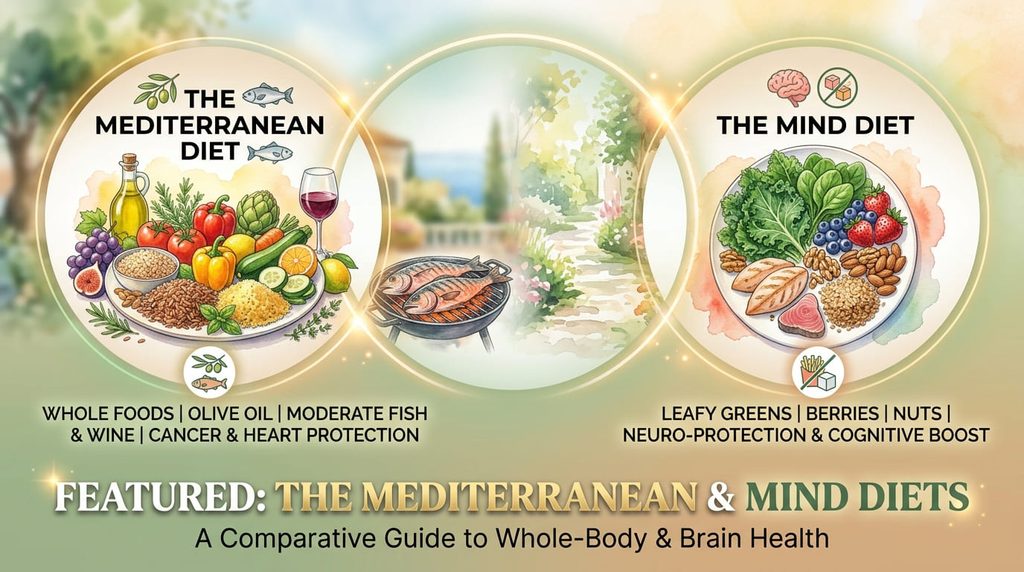
The Mediterranean diet emphasizes vegetables, fruits, whole grains, legumes, nuts, seeds, fish, olive oil, and other minimally processed foods. It generally limits highly processed foods, excessive added sugars, and unhealthy fats.
The MIND diet, or Mediterranean-DASH Intervention for Neurodegenerative Delay, combines elements of the Mediterranean and DASH dietary approaches with a particular emphasis on foods associated with brain health. These include leafy green vegetables, berries, nuts, whole grains, beans, fish, poultry, and olive oil.
Rather than treating these diets as rigid rules, you can use their principles to improve your everyday meals.
Foods to Limit for Better Brain Health
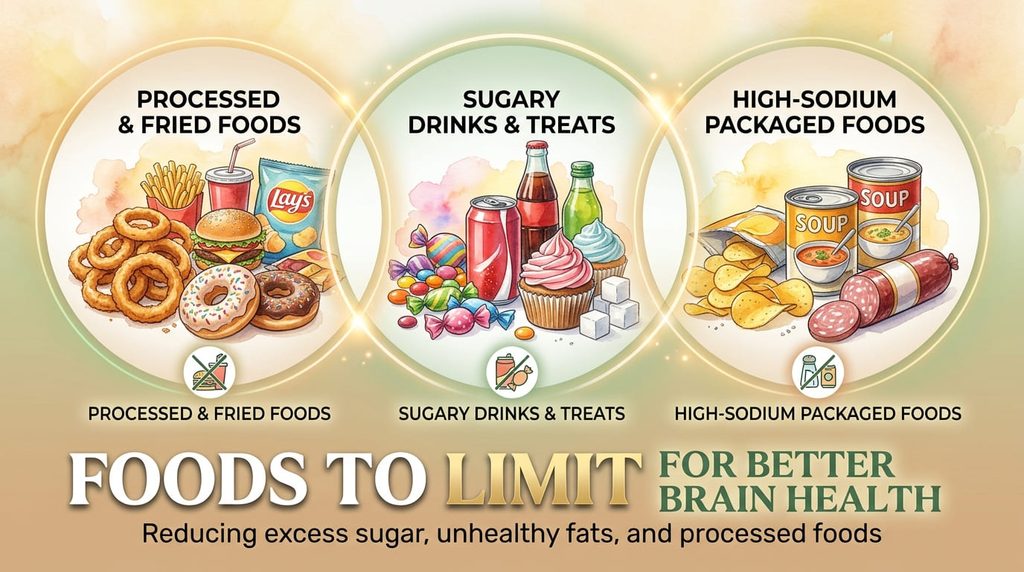
A brain-supportive diet is not only about what you add. It is also about what you consume less frequently.
Try to limit foods that are high in added sugars, refined carbohydrates, excessive sodium, and unhealthy fats. These may include sugary drinks, heavily processed snacks, frequent fast food, refined baked goods, and highly processed meats.
You do not have to eliminate every less-healthy food. Occasional treats can fit into an overall balanced lifestyle. The bigger goal is to make nutritious foods the foundation of your diet most of the time.
Don’t Forget Hydration
Water is essential for normal body function, and even mild dehydration can affect how you feel and perform. Adequate fluid intake supports normal circulation and many processes involved in brain function.
Water should be your primary beverage for hydration. Fruits and vegetables with high water content can also contribute to fluid intake. Individual fluid needs vary depending on factors such as activity, climate, age, and health status.
A Simple Brain-Healthy Day of Eating
A brain-friendly eating pattern does not need to be complicated.
For breakfast, try oatmeal topped with blueberries, walnuts, chia seeds, and plain yogurt.
For lunch, choose a large salad containing leafy greens, chickpeas, avocado, colorful vegetables, and olive oil with a whole-grain side.
For a snack, enjoy a piece of fruit with a small handful of unsalted nuts.
For dinner, try grilled salmon with roasted broccoli, quinoa, and a side salad dressed with olive oil.
If you want something sweet afterward, a small portion of dark chocolate and berries can be a satisfying option.
This type of meal pattern provides a mixture of protein, fiber, healthy fats, complex carbohydrates, vitamins, minerals, and plant compounds.
Lifestyle Matters Too

Food is only one part of brain health. Regular physical activity supports cardiovascular health and healthy blood flow, which are important for the brain. Getting enough quality sleep is also essential for memory, concentration, mood, and overall well-being.
Stress management can be helpful as well. Activities such as walking, meditation, breathing exercises, hobbies, and spending time with friends and family can contribute to a healthier lifestyle.
Keeping your brain active is another valuable habit. Reading, learning new skills, playing music, solving puzzles, and engaging in meaningful conversations can provide mental stimulation.
Conclusion
A brain health diet is ultimately about creating sustainable eating habits rather than searching for a single miracle food. A varied diet built around vegetables, berries, whole grains, legumes, nuts, seeds, fish, healthy fats, and other minimally processed foods can provide the nutrients needed to support normal brain function.
The Mediterranean and MIND dietary patterns offer useful frameworks, but you do not have to follow them perfectly. Start with small changes: add another serving of vegetables, replace refined grains with whole grains, eat fish regularly if it fits your diet, choose nuts instead of highly processed snacks, and drink water throughout the day.
Most importantly, think about your overall pattern rather than individual meals. Consistent healthy choices, combined with regular exercise, adequate sleep, stress management, and social connection, can support both brain health and overall well-being.
A healthy brain starts with a healthy lifestyle—and every nutritious meal is an opportunity to nourish it.Your brain is one of the most important organs in your body. It controls your thoughts, memory, emotions, movement, concentration, and countless processes that happen every moment of the day. Like every other part of your body, your brain needs the right nutrients to function effectively. What you eat regularly can influence brain function, energy levels, mood, memory, and long-term cognitive health.
A brain health diet is not about following a strict or complicated meal plan. Instead, it focuses on eating a variety of nutrient-rich, minimally processed foods that provide healthy fats, antioxidants, vitamins, minerals, fiber, and other compounds that support the brain. Research on dietary patterns such as the Mediterranean diet and MIND diet has also highlighted the potential benefits of emphasizing vegetables, berries, whole grains, fish, nuts, and other nutritious foods.
How Does Diet Affect Brain Health?
The brain requires a constant supply of energy and nutrients. Although it makes up only a small percentage of total body weight, it uses a significant amount of the body’s energy. This means that the quality of your diet can influence how well your brain performs.
A diet rich in vegetables, fruits, whole grains, legumes, nuts, seeds, and healthy fats supplies nutrients that help support normal brain function. Some foods contain antioxidants that help protect cells from oxidative stress, while healthy fats contribute to the structure of brain cell membranes.
On the other hand, regularly eating large amounts of highly processed foods, added sugars, unhealthy fats, and excessive sodium may contribute to poor overall health and conditions that can negatively affect the brain. A healthy diet should therefore be considered part of a broader lifestyle that includes physical activity, adequate sleep, stress management, and social connection.
1. Fatty Fish and Omega-3 Fatty Acids
Fatty fish is one of the most commonly recommended foods for a brain-supportive diet. Salmon, sardines, trout, mackerel, and anchovies are rich in omega-3 fatty acids, particularly EPA and DHA.
DHA is an important structural component of brain tissue. Including sources of omega-3 fats in a balanced diet can help provide the building blocks the brain needs for normal function.
If you eat fish, consider including fatty fish in your meals regularly. For people who do not eat seafood, plant foods such as walnuts, chia seeds, and flaxseeds provide another type of omega-3 fat called ALA.
2. Berries and Colorful Fruits
Berries are another excellent addition to a brain health diet. Blueberries, strawberries, blackberries, and raspberries contain vitamins, fiber, and plant compounds known as polyphenols.
These compounds have antioxidant properties and may help protect cells from oxidative stress. Berries are also easy to incorporate into everyday meals. Add them to oatmeal, plain yogurt, smoothies, or salads, or simply enjoy them as a snack.
Other colorful fruits can contribute valuable nutrients as well. The goal is not to focus on one “superfood,” but to eat a wide variety of fruits and vegetables.
3. Leafy Green Vegetables
Leafy greens such as spinach, kale, collard greens, and Swiss chard are nutrient-dense foods that can fit easily into a brain-friendly eating pattern.
They provide folate, vitamin K, carotenoids, fiber, and other beneficial plant compounds. Eating leafy greens regularly is a simple way to increase the nutritional quality of your meals.
Try adding spinach to eggs, kale to salads, or cooked greens to soups and grain bowls. If you do not enjoy one variety, experiment with others until you find options you like.
4. Nuts and Seeds
Nuts and seeds provide healthy fats, protein, fiber, vitamins, minerals, and antioxidant compounds. Walnuts are particularly well known for their plant-based omega-3 content.
Almonds, pistachios, pumpkin seeds, sunflower seeds, chia seeds, and flaxseeds can also be valuable additions to a balanced diet.
A small handful of unsalted nuts makes a convenient snack. You can also sprinkle seeds over oatmeal, yogurt, salads, or vegetables. Because nuts are calorie-dense, portion size is worth keeping in mind.
5. Whole Grains
The brain needs a reliable supply of energy, and whole grains can be part of a balanced source of carbohydrates.
Oats, brown rice, quinoa, barley, and whole-grain bread provide carbohydrates along with fiber and other nutrients. Compared with highly refined grains, whole grains generally contain more fiber and retain more of the grain’s natural nutrients.
A bowl of oatmeal topped with berries and walnuts can make a simple brain-friendly breakfast. At lunch or dinner, brown rice or quinoa can replace refined grains in many recipes.
6. Avocados and Healthy Fats
Avocados contain monounsaturated fats, fiber, potassium, and several vitamins. Healthy fats are important because fats play structural and functional roles throughout the body, including in the nervous system.
You can add avocado to whole-grain toast, salads, grain bowls, or sandwiches. Other sources of unsaturated fats include extra-virgin olive oil, nuts, seeds, and some types of fish.
Instead of focusing only on adding individual foods, consider using healthier fats to replace less nutritious choices when possible.
7. Eggs and Other Nutrient-Rich Foods
Eggs provide protein and several important nutrients, including choline and B vitamins. Choline is used by the body to produce acetylcholine, a neurotransmitter involved in memory and other nervous-system functions.
Eggs can be included in breakfast, salads, sandwiches, or dinner dishes. However, brain health does not depend on one particular food. Eggs are best considered one component of a varied diet.
Legumes such as beans, lentils, and chickpeas are also valuable. They provide fiber, plant protein, folate, minerals, and other nutrients while helping create satisfying meals.
8. Dark Chocolate and Green Tea
Dark chocolate containing a high percentage of cocoa can provide flavonoids and other plant compounds. In moderate portions, it can be included as an occasional part of a balanced diet.
Green tea contains polyphenols and caffeine, which may help with alertness and concentration. However, individual responses to caffeine vary, and consuming large amounts, especially late in the day, can interfere with sleep.
The key is moderation. A healthy brain diet should not rely on treats or beverages as primary sources of nutrition.
The Mediterranean and MIND Diets
When discussing brain health, two dietary patterns frequently receive attention: the Mediterranean diet and the MIND diet.
The Mediterranean diet emphasizes vegetables, fruits, whole grains, legumes, nuts, seeds, fish, olive oil, and other minimally processed foods. It generally limits highly processed foods, excessive added sugars, and unhealthy fats.
The MIND diet, or Mediterranean-DASH Intervention for Neurodegenerative Delay, combines elements of the Mediterranean and DASH dietary approaches with a particular emphasis on foods associated with brain health. These include leafy green vegetables, berries, nuts, whole grains, beans, fish, poultry, and olive oil.
Rather than treating these diets as rigid rules, you can use their principles to improve your everyday meals.
Foods to Limit for Better Brain Health
A brain-supportive diet is not only about what you add. It is also about what you consume less frequently.
Try to limit foods that are high in added sugars, refined carbohydrates, excessive sodium, and unhealthy fats. These may include sugary drinks, heavily processed snacks, frequent fast food, refined baked goods, and highly processed meats.
You do not have to eliminate every less-healthy food. Occasional treats can fit into an overall balanced lifestyle. The bigger goal is to make nutritious foods the foundation of your diet most of the time.
Don’t Forget Hydration
Water is essential for normal body function, and even mild dehydration can affect how you feel and perform. Adequate fluid intake supports normal circulation and many processes involved in brain function.
Water should be your primary beverage for hydration. Fruits and vegetables with high water content can also contribute to fluid intake. Individual fluid needs vary depending on factors such as activity, climate, age, and health status.
A Simple Brain-Healthy Day of Eating
A brain-friendly eating pattern does not need to be complicated.
For breakfast, try oatmeal topped with blueberries, walnuts, chia seeds, and plain yogurt.
For lunch, choose a large salad containing leafy greens, chickpeas, avocado, colorful vegetables, and olive oil with a whole-grain side.
For a snack, enjoy a piece of fruit with a small handful of unsalted nuts.
For dinner, try grilled salmon with roasted broccoli, quinoa, and a side salad dressed with olive oil.
If you want something sweet afterward, a small portion of dark chocolate and berries can be a satisfying option.
This type of meal pattern provides a mixture of protein, fiber, healthy fats, complex carbohydrates, vitamins, minerals, and plant compounds.
Lifestyle Matters Too
Food is only one part of brain health. Regular physical activity supports cardiovascular health and healthy blood flow, which are important for the brain. Getting enough quality sleep is also essential for memory, concentration, mood, and overall well-being.
Stress management can be helpful as well. Activities such as walking, meditation, breathing exercises, hobbies, and spending time with friends and family can contribute to a healthier lifestyle.
Keeping your brain active is another valuable habit. Reading, learning new skills, playing music, solving puzzles, and engaging in meaningful conversations can provide mental stimulation.
Conclusion
A brain health diet is ultimately about creating sustainable eating habits rather than searching for a single miracle food. A varied diet built around vegetables, berries, whole grains, legumes, nuts, seeds, fish, healthy fats, and other minimally processed foods can provide the nutrients needed to support normal brain function.
The Mediterranean and MIND dietary patterns offer useful frameworks, but you do not have to follow them perfectly. Start with small changes: add another serving of vegetables, replace refined grains with whole grains, eat fish regularly if it fits your diet, choose nuts instead of highly processed snacks, and drink water throughout the day.
Most importantly, think about your overall pattern rather than individual meals. Consistent healthy choices, combined with regular exercise, adequate sleep, stress management, and social connection, can support both brain health and overall well-being.
A healthy brain starts with a healthy lifestyle—and every nutritious meal is an opportunity to nourish it.Your brain is one of the most important organs in your body. It controls your thoughts, memory, emotions, movement, concentration, and countless processes that happen every moment of the day. Like every other part of your body, your brain needs the right nutrients to function effectively. What you eat regularly can influence brain function, energy levels, mood, memory, and long-term cognitive health.
A brain health diet is not about following a strict or complicated meal plan. Instead, it focuses on eating a variety of nutrient-rich, minimally processed foods that provide healthy fats, antioxidants, vitamins, minerals, fiber, and other compounds that support the brain. Research on dietary patterns such as the Mediterranean diet and MIND diet has also highlighted the potential benefits of emphasizing vegetables, berries, whole grains, fish, nuts, and other nutritious foods.
How Does Diet Affect Brain Health?
The brain requires a constant supply of energy and nutrients. Although it makes up only a small percentage of total body weight, it uses a significant amount of the body’s energy. This means that the quality of your diet can influence how well your brain performs.
A diet rich in vegetables, fruits, whole grains, legumes, nuts, seeds, and healthy fats supplies nutrients that help support normal brain function. Some foods contain antioxidants that help protect cells from oxidative stress, while healthy fats contribute to the structure of brain cell membranes.
On the other hand, regularly eating large amounts of highly processed foods, added sugars, unhealthy fats, and excessive sodium may contribute to poor overall health and conditions that can negatively affect the brain. A healthy diet should therefore be considered part of a broader lifestyle that includes physical activity, adequate sleep, stress management, and social connection.
1. Fatty Fish and Omega-3 Fatty Acids
Fatty fish is one of the most commonly recommended foods for a brain-supportive diet. Salmon, sardines, trout, mackerel, and anchovies are rich in omega-3 fatty acids, particularly EPA and DHA.
DHA is an important structural component of brain tissue. Including sources of omega-3 fats in a balanced diet can help provide the building blocks the brain needs for normal function.
If you eat fish, consider including fatty fish in your meals regularly. For people who do not eat seafood, plant foods such as walnuts, chia seeds, and flaxseeds provide another type of omega-3 fat called ALA.
2. Berries and Colorful Fruits
Berries are another excellent addition to a brain health diet. Blueberries, strawberries, blackberries, and raspberries contain vitamins, fiber, and plant compounds known as polyphenols.
These compounds have antioxidant properties and may help protect cells from oxidative stress. Berries are also easy to incorporate into everyday meals. Add them to oatmeal, plain yogurt, smoothies, or salads, or simply enjoy them as a snack.
Other colorful fruits can contribute valuable nutrients as well. The goal is not to focus on one “superfood,” but to eat a wide variety of fruits and vegetables.
3. Leafy Green Vegetables
Leafy greens such as spinach, kale, collard greens, and Swiss chard are nutrient-dense foods that can fit easily into a brain-friendly eating pattern.
They provide folate, vitamin K, carotenoids, fiber, and other beneficial plant compounds. Eating leafy greens regularly is a simple way to increase the nutritional quality of your meals.
Try adding spinach to eggs, kale to salads, or cooked greens to soups and grain bowls. If you do not enjoy one variety, experiment with others until you find options you like.
4. Nuts and Seeds
Nuts and seeds provide healthy fats, protein, fiber, vitamins, minerals, and antioxidant compounds. Walnuts are particularly well known for their plant-based omega-3 content.
Almonds, pistachios, pumpkin seeds, sunflower seeds, chia seeds, and flaxseeds can also be valuable additions to a balanced diet.
A small handful of unsalted nuts makes a convenient snack. You can also sprinkle seeds over oatmeal, yogurt, salads, or vegetables. Because nuts are calorie-dense, portion size is worth keeping in mind.
5. Whole Grains
The brain needs a reliable supply of energy, and whole grains can be part of a balanced source of carbohydrates.
Oats, brown rice, quinoa, barley, and whole-grain bread provide carbohydrates along with fiber and other nutrients. Compared with highly refined grains, whole grains generally contain more fiber and retain more of the grain’s natural nutrients.
A bowl of oatmeal topped with berries and walnuts can make a simple brain-friendly breakfast. At lunch or dinner, brown rice or quinoa can replace refined grains in many recipes.
6. Avocados and Healthy Fats
Avocados contain monounsaturated fats, fiber, potassium, and several vitamins. Healthy fats are important because fats play structural and functional roles throughout the body, including in the nervous system.
You can add avocado to whole-grain toast, salads, grain bowls, or sandwiches. Other sources of unsaturated fats include extra-virgin olive oil, nuts, seeds, and some types of fish.
Instead of focusing only on adding individual foods, consider using healthier fats to replace less nutritious choices when possible.
7. Eggs and Other Nutrient-Rich Foods
Eggs provide protein and several important nutrients, including choline and B vitamins. Choline is used by the body to produce acetylcholine, a neurotransmitter involved in memory and other nervous-system functions.
Eggs can be included in breakfast, salads, sandwiches, or dinner dishes. However, brain health does not depend on one particular food. Eggs are best considered one component of a varied diet.
Legumes such as beans, lentils, and chickpeas are also valuable. They provide fiber, plant protein, folate, minerals, and other nutrients while helping create satisfying meals.
8. Dark Chocolate and Green Tea
Dark chocolate containing a high percentage of cocoa can provide flavonoids and other plant compounds. In moderate portions, it can be included as an occasional part of a balanced diet.
Green tea contains polyphenols and caffeine, which may help with alertness and concentration. However, individual responses to caffeine vary, and consuming large amounts, especially late in the day, can interfere with sleep.
The key is moderation. A healthy brain diet should not rely on treats or beverages as primary sources of nutrition.
The Mediterranean and MIND Diets
When discussing brain health, two dietary patterns frequently receive attention: the Mediterranean diet and the MIND diet.
The Mediterranean diet emphasizes vegetables, fruits, whole grains, legumes, nuts, seeds, fish, olive oil, and other minimally processed foods. It generally limits highly processed foods, excessive added sugars, and unhealthy fats.
The MIND diet, or Mediterranean-DASH Intervention for Neurodegenerative Delay, combines elements of the Mediterranean and DASH dietary approaches with a particular emphasis on foods associated with brain health. These include leafy green vegetables, berries, nuts, whole grains, beans, fish, poultry, and olive oil.
Rather than treating these diets as rigid rules, you can use their principles to improve your everyday meals.
Foods to Limit for Better Brain Health
A brain-supportive diet is not only about what you add. It is also about what you consume less frequently.
Try to limit foods that are high in added sugars, refined carbohydrates, excessive sodium, and unhealthy fats. These may include sugary drinks, heavily processed snacks, frequent fast food, refined baked goods, and highly processed meats.
You do not have to eliminate every less-healthy food. Occasional treats can fit into an overall balanced lifestyle. The bigger goal is to make nutritious foods the foundation of your diet most of the time.
Don’t Forget Hydration
Water is essential for normal body function, and even mild dehydration can affect how you feel and perform. Adequate fluid intake supports normal circulation and many processes involved in brain function.
Water should be your primary beverage for hydration. Fruits and vegetables with high water content can also contribute to fluid intake. Individual fluid needs vary depending on factors such as activity, climate, age, and health status.
A Simple Brain-Healthy Day of Eating
A brain-friendly eating pattern does not need to be complicated.
For breakfast, try oatmeal topped with blueberries, walnuts, chia seeds, and plain yogurt.
For lunch, choose a large salad containing leafy greens, chickpeas, avocado, colorful vegetables, and olive oil with a whole-grain side.
For a snack, enjoy a piece of fruit with a small handful of unsalted nuts.
For dinner, try grilled salmon with roasted broccoli, quinoa, and a side salad dressed with olive oil.
If you want something sweet afterward, a small portion of dark chocolate and berries can be a satisfying option.
This type of meal pattern provides a mixture of protein, fiber, healthy fats, complex carbohydrates, vitamins, minerals, and plant compounds.
Lifestyle Matters Too
Food is only one part of brain health. Regular physical activity supports cardiovascular health and healthy blood flow, which are important for the brain. Getting enough quality sleep is also essential for memory, concentration, mood, and overall well-being.
Stress management can be helpful as well. Activities such as walking, meditation, breathing exercises, hobbies, and spending time with friends and family can contribute to a healthier lifestyle.
Keeping your brain active is another valuable habit. Reading, learning new skills, playing music, solving puzzles, and engaging in meaningful conversations can provide mental stimulation.
Conclusion
A brain health diet is ultimately about creating sustainable eating habits rather than searching for a single miracle food. A varied diet built around vegetables, berries, whole grains, legumes, nuts, seeds, fish, healthy fats, and other minimally processed foods can provide the nutrients needed to support normal brain function.
The Mediterranean and MIND dietary patterns offer useful frameworks, but you do not have to follow them perfectly. Start with small changes: add another serving of vegetables, replace refined grains with whole grains, eat fish regularly if it fits your diet, choose nuts instead of highly processed snacks, and drink water throughout the day.
Most importantly, think about your overall pattern rather than individual meals. Consistent healthy choices, combined with regular exercise, adequate sleep, stress management, and social connection, can support both brain health and overall well-being.
A healthy brain starts with a healthy lifestyle—and every nutritious meal is an opportunity to nourish it.