
In recent years, the landscape of group exercise and strength training has shifted toward routines that balance high-intensity sculpting with sustainable physical wellness. Enter Curl Fitness a versatile training philosophy and renowned boutique fitness brand designed to combine progressive resistance, core stability, and low-impact cardiovascular conditioning.
This comprehensive guide explores everything you need to know about Curl Fitness: its core philosophy, key physical benefits, how it compares to traditional workouts, and a curated breakdown of the 10 best locations to experience it firsthand.
What Is Curl Fitness?
Curl Fitness represents a hybrid workout approach that bridges the gap between conventional weightlifting, functional bodyweight movement, and rhythmic endurance training.
At its core, the methodology relies on three main pillars:
- Time Under Tension (TUT): Slowing down movements to maximize muscle fiber activation without needing excessively heavy weights.
- Full-Body Compound Movement: Combining upper-body pulling and pushing mechanics with lower-body stability drills.
Health and Fitness Benefits of the Curl Method
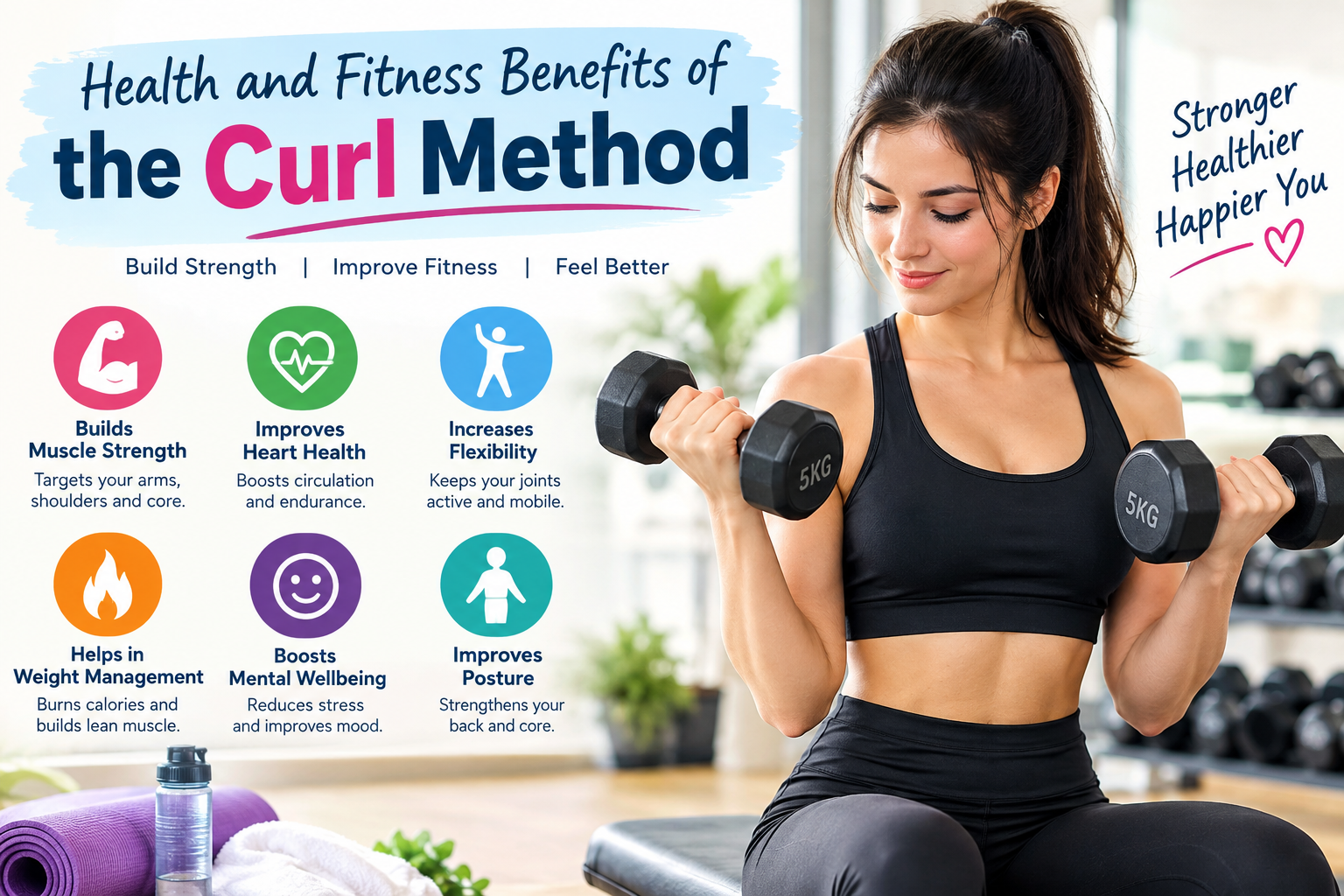
- Targeted Muscle Sculpting: By focusing on controlled eccentric and concentric phases of movement, muscle groups are engaged longer per set, leading to hyper-focused toning and definition.
- Joint-Friendly Stamina: Heavy pounding on pavement or relentless plyometrics can take a toll on knees and lower back joints. Curl Fitness utilizes controlled resistance bands, light-to-medium dumbbells, and bodyweight levers to minimize impact.
- Enhanced Core Stability: Every exercise in a typical Curl Fitness routine demands midsection engagement to maintain alignment, strengthening the transverse abdominis and lower back.
- Improved Mobility and Posture: Counteracting long hours spent sitting at desks, exercises emphasis shoulder external rotation, spinal alignment, and hip flexor mobility.
10 Best Places to Experience Curl Fitness and Premier Wellness
To help you find top-tier facilities, boutique coastal gyms, and luxury fitness sanctuaries offering world-class strength and conditioning, here are 10 of the best locations across the United States and global fitness hubs.
| # | Facility / Sanctuary | Location | Primary Highlight & Specialty | Vibe / Atmosphere |
| 1 | Curl Fitness Newport | Newport Beach, California | Premier coastal boutique studio featuring state-of-the-art ocean-view strength equipment and personalized coaching. | Upscale, energetic, coastal luxury |
| 2 | Equinox Sports Club | Los Angeles, California | Ultra-luxury fitness hub offering hybrid group sculpting classes, recovery spas, and expert personal trainers. | High-end, sleek, professional |
| 3 | Rancho La Puerta | Tecate, Mexico / CA Border | Iconic 3,000-acre fitness resort providing full-body conditioning, trail running, and holistic recovery retreats. | Serene, natural, restorative |
| 4 | Lake Austin Spa Resort | Austin, Texas | All-inclusive fitness sanctuary combining lakefront water conditioning, outdoor training, and wellness dining. | Tranquil, scenic, rejuvenative |
| 5 | Barry’s Bootcamp | New York City, New York | High-intensity interval workouts blending heavy dumbbell work with high-energy cardiovascular conditioning. | High-energy, nightclub lighting, intense |
| 6 | Red Mountain Resort | Ivins, Utah | Southwestern fitness escape featuring red-rock hiking, strength building workshops, and functional movement classes. | Adventurous, grounded, rustic-chic |
| 7 | The Ranch Malibu | Malibu, California | Results-driven luxury fitness retreat emphasizing intense group conditioning, hiking, and organic plant-based nutrition. | Exclusive, challenging, transformative |
| 8 | Canyon Ranch | Tucson, Arizona | World-renowned integrative wellness destination with expert-led biomechanics, custom training, and recovery facilities. | Clinical, peaceful, holistic |
| 9 | Civana Wellness Resort & Spa | Carefree, Arizona | Modern desert sanctuary prioritizing accessible fitness, functional movement circuits, and mindfulness routines. | Minimalist, relaxed, supportive |
| 10 | Golden Door | San Marcos, California | Highly customized fitness retreat offering 1-on-1 personal training, focused strength work, and total body resetting. | Private, serene, personalized |
Core Components of a Curl Fitness Workout
+-------------------------------------------------------------------+
|                        CURL FITNESS CLASS STRUCTURE               |
+-------------------------------------------------------------------+
| 1. Dynamic Warm-Up (8-10 Mins)                                   |
|    - Joint mobility, foam rolling, dynamic hip & shoulder openers |
+-------------------------------------------------------------------+
| 2. Targeted Sculpting Circuits (20-25 Mins)                      |
|    - Time under tension sets (Biceps, Triceps, Delts, Core)      |
+-------------------------------------------------------------------+
| 3. Functional Conditioning (10-15 Mins)                          |
|    - Continuous low-impact cardio work, rowing, or band burnouts  |
+-------------------------------------------------------------------+
| 4. Cool-Down & Mobility (5-8 Mins)                               |
|    - Static stretching, breathwork, and postural resets           |
+-------------------------------------------------------------------+
1. Dynamic Mobility Warm-Up
Sessions begin with targeted activation exercises to prime the nervous system and warm up shoulder capsules, hip flexors, and ankle joints. Movements like inchworms, arm circles, and cat-cows prepare the body for resistance without risking strain.
2. Isolated Time-Under-Tension Circuits
The bulk of the workout revolves around controlled dumbbell or cable exercises. Exercises frequently feature bicep curls, hammer curls with squat holds, overhead tricep extensions, and lateral raises.
3. Core & Lower-Body Integration
it is most impront for fitness.
4. Regeneration & Cool-Down
Ending with light static stretching and guided breathwork lowers cortisol levels and initiates muscle repair right at the end of class.
How Curl Fitness Compares to Other Popular Workouts
Curl Fitness vs. Yoga
- Yoga prioritizes flexibility, isometric balance, and mindfulness through static poses and Vinyasa flows.
Curl Fitness vs. Traditional Heavy Weightlifting
- Heavy Weightlifting focuses on low-repetition, maximum-effort compound lifts (deadlifts, bench presses, squats) aimed at hypertrophy or maximum strength.
- Curl Fitness utilizes lighter load with higher repetitions and strict tempo control, making it much more accessible for beginners and gentler on connective tissues.
HIIT relies on explosive cardiovascular bursts and short rest periods to maximize heart rate and post-exercise oxygen consumption (EPOC).
Sample Beginner Curl Fitness Routine to Try at Home
Execution Tip: Perform each exercise for 45 seconds, followed by 15 seconds of rest. Complete the entire circuit 3 to 4 times.
- Tempo Bicep Curl to Overhead Press
- How to do it: Stand feet hip-width apart. Take 3 full seconds to curl dumbbells to shoulder height, press overhead, and take 3 full seconds to lower back down.
- Squat Hold with Hammer Curls
- How to do it: Lower into a comfortable parallel squat hold. Keeping your elbows tucked against your ribs, execute smooth hammer curls while maintaining the lower-body isometric hold.
- Plank Shoulder Taps with Drag
- How to do it: Begin in a high plank position with a dumbbell behind your right wrist. Reach across with your left hand, drag the weight to the left side, and alternate without letting your hips tilt.
- Reverse Lunge with Lateral Arm Raise
- How to do it: Step back into a lunge. As you lower your rear knee, raise light dumbbells out to your sides to shoulder height. Return to standing and alternate legs.
- Tricep Kickback Kickstand Squat
- How to do it: Hinge forward at the hips with a flat back. Extend dumbbells behind you while maintaining core contraction, keeping your neck in neutral alignment.
Key Takeaways for Building Your Routine
Aim to incorporate Curl Fitness sessions 2 to 3 times per week, alternating with light cardiovascular recovery days (walking, cycling, or swimming) and adequate protein intake to support muscle recovery.
Average bicep curl weight kg?
Here are the average dumbbell bicep curl weights for men and women, broken down by experience level:
For Men (One Arm, Dumbbell)
- Beginner: 6 kg to 10 kg
- Intermediate: 12 kg to 16 kg
- Advanced: 18 kg to 24 kg+
For Women (One Arm, Dumbbell)
- Beginner: 2 kg to 4 kg
- Intermediate: 5 kg to 8 kg
- Advanced: 10 kg to 14 kg+
Note: These numbers are general guidelines for standard, strict-form reps (8–12 range). Your starting weight should always prioritize proper form over heavy lifting to avoid injury.
What is your current weight or fitness level, and are you looking to build muscle or tone?
Bicep curl progression and regression?
Here is a quick overview of Bicep Curl progressions (making it harder) and regressions (making it easier):
Progression (Increase Difficulty)
- Tempo Curls (Slow Eccentrics): Lower the weight slowly (3–4 seconds down) to increase time under tension.
- Incline Dumbbell Curls: Sit on an inclined bench to stretch the long head of the bicep at the bottom.
- Spider Curls / Preacher Curls: Lean forward on a bench to eliminate momentum and isolate the muscle completely.
Regression (Decrease Difficulty)
- Seated Dumbbell Curls: Sit on a flat bench with back support to remove upper body swinging.
- Resistance Band Curls: Use a light resistance band; peak resistance occurs at the top, easing the joint load at the bottom.
- Hammer Curls (Neutral Grip): Keep palms facing each other to engage the brachialis and forearm, making lifting easier on the elbow/wrist.
- Alternating Curls: Curl one arm at a time to allow short rest intervals between repetitions.
Key Principle: Move down to a regression if your elbows drift forward or your back swings. Move up to a progression once you can complete 12 clean reps with zero momentum.
Bicep curl form dumbbell?
Here are the essential key points for proper Dumbbell Bicep Curl form:
Key Form Checklist
- Elbow Position: Keep your elbows pinned close to your sides; do not let them drift forward or flare out.
- Torso Stability: Stand tall, engage your core, and keep your shoulders down and back—avoid swinging or leaning back.
- Controlled Tempo: Lift smoothly in 1–2 seconds and lower under control for 2–3 seconds (do not drop the weight).
Common Fix: If you need momentum to lift the weight, lower the kilogram weight to keep the tension strictly on your biceps.
Best bicep curl?
The single “best” bicep curl depends on your main fitness goal:
Top Variations by Goal
The Verdict: For a complete workout, combine Incline Curls (for maximum stretch) with Hammer Curls (for arm thickness).