
Korean skin care has become popular around the world because of its focus on hydration, gentle ingredients, consistency, and maintaining a healthy skin barrier. Instead of relying only on heavy makeup or harsh treatments, a well-planned Korean skin care routine encourages people to care for their skin every day. The goal is not necessarily to achieve “perfect” skin, but to keep the skin clean, hydrated, comfortable, and healthy-looking.
There are countless Korean skin care products available today, including cleansers, toners, essences, serums, moisturizers, sunscreens, and masks. However, choosing the right products can feel overwhelming, especially for beginners. The best routine depends on your skin type, concerns, climate, and personal preferences. A person with dry skin may need richer moisturizing ingredients, while someone with oily or acne-prone skin may prefer lightweight and non-comedogenic formulas.
This article explains the most recommended types of Korean skin care products and ingredients, how to build a simple routine, and how to choose products that work for your individual skin.
Why Is Korean Skin Care So Popular?
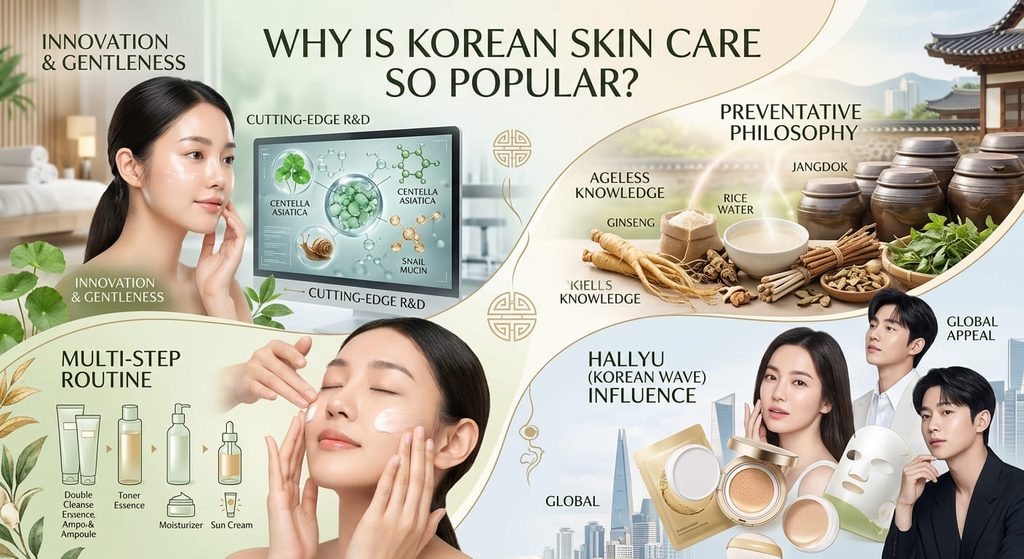
One reason Korean skin care has gained worldwide attention is its focus on prevention and long-term skin health. Rather than waiting for a major skin concern to appear, many routines focus on regular cleansing, moisturizing, sun protection, and gentle treatment.
Another important feature is layering. Korean skin care routines often use several lightweight products instead of applying one heavy cream. For example, a person might begin with a gentle cleanser, followed by a hydrating toner, serum, moisturizer, and sunscreen during the day.
However, a longer routine is not always better. You do not need ten or more products to take care of your skin. A simple routine with products that suit your skin can be just as effective.
Step 1: Start with a Gentle Cleanser
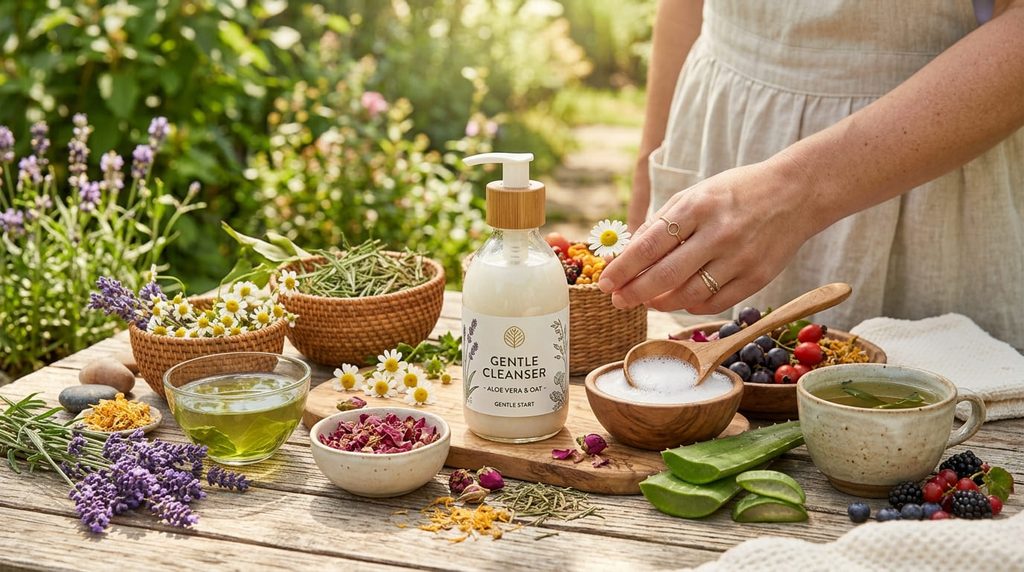
Cleansing is the foundation of every skin care routine. During the day, your skin collects sweat, excess oil, sunscreen, makeup, and environmental particles. A gentle cleanser helps remove these without making the skin feel excessively dry or tight.
Korean cleansers are available in different forms, including foam cleansers, gel cleansers, cream cleansers, and oil cleansers.
For dry or sensitive skin, look for a mild cleanser that does not leave the face feeling stripped. Ingredients such as glycerin, hyaluronic acid, ceramides, and soothing botanical extracts can help support hydration.
For oily skin, a lightweight gel or low-pH cleanser may feel more comfortable. People with acne-prone skin may also choose products containing ingredients that help manage excess oil and clogged pores.
One popular Korean skin care method is double cleansing. This usually involves using an oil-based cleanser first to remove sunscreen and makeup, followed by a water-based cleanser to clean the skin. Double cleansing can be useful at night, especially if you wear makeup or water-resistant sunscreen. However, it may not be necessary for everyone.
Step 2: Use a Hydrating Toner
Modern Korean toners are often designed to add hydration rather than simply remove leftover dirt. A good hydrating toner can help the skin feel fresh, soft, and comfortable after cleansing.
Recommended ingredients to look for include:
- Hyaluronic acid
- Glycerin
- Centella asiatica
- Panthenol
- Green tea
- Rice extract
- Heartleaf extract
People with dry skin may enjoy applying several thin layers of a hydrating toner. This technique allows moisture to be added gradually without making the skin feel heavy.
For oily skin, a lightweight and refreshing toner may be a better choice. Avoid using harsh alcohol-based products if they cause dryness, irritation, or excessive tightness.
Step 3: Try an Essence for Extra Hydration

Essence is one of the best-known categories in Korean skin care. It is generally lighter than a serum but may provide more targeted benefits than a basic toner.
A hydrating essence can be especially useful for people whose skin feels dehydrated, dull, or rough. Many formulas contain ingredients designed to support moisture and improve the appearance of smoothness and radiance.
Ingredients commonly found in Korean essences include fermented extracts, snail mucin, rice extract, hyaluronic acid, and soothing plant ingredients.
You do not have to use an essence if your routine already contains a hydrating toner and serum. However, some people enjoy the extra layer of lightweight moisture.
Step 4: Choose a Serum Based on Your Skin Concerns
Serums are usually designed to address specific skin concerns. This means your choice should depend on what you want to improve.
For dull-looking skin, vitamin C and niacinamide are commonly used ingredients. They may help improve the appearance of uneven tone and support a brighter-looking complexion.
For dry or dehydrated skin, look for hyaluronic acid, glycerin, panthenol, and other moisture-supporting ingredients.
For sensitive or irritated skin, calming ingredients such as centella asiatica, mugwort, and heartleaf are popular in Korean skin care products.
For acne-prone skin, ingredients such as niacinamide and salicylic acid may be useful depending on your skin’s needs. However, it is important not to introduce too many active ingredients at once.
A simple approach is best. Start with one new serum and use it consistently before adding additional treatments.
Step 5: Moisturize Every Day
Moisturizer is important for nearly every skin type, including oily skin. The right moisturizer helps support the skin barrier and reduces moisture loss.
People with oily skin may prefer lightweight gel creams or lotions. Ingredients such as hyaluronic acid and glycerin can provide hydration without feeling overly heavy.
People with dry skin may benefit from richer creams containing ceramides, squalane, fatty acids, or nourishing plant oils.
Combination skin may benefit from a medium-weight moisturizer or different application amounts on different areas of the face.
The key is to choose a formula that leaves your skin feeling comfortable rather than greasy, dry, or irritated.
Step 6: Never Skip Sunscreen

Sunscreen is one of the most important parts of any recommended Korean skin care routine. Daily sun protection can help protect the skin from ultraviolet exposure, which contributes to premature signs of aging and uneven pigmentation.
Many Korean sunscreens are popular because they are lightweight and comfortable for daily use. Some formulas provide a moisturizing finish, while others are designed to feel more natural on oily skin.
Choose a broad-spectrum sunscreen with appropriate SPF protection and apply it as the final step of your morning skin care routine. Reapply when necessary, especially during prolonged outdoor exposure.
Remember that sunscreen is needed even if you use expensive serums, moisturizers, and other treatment products. Consistent sun protection supports the benefits of the rest of your routine.
Recommended Korean Skin Care Ingredients
When choosing Korean skin care products, understanding ingredients can be more useful than simply following trends.
Centella Asiatica
Centella asiatica is one of the most popular soothing ingredients in Korean beauty products. It is often used in products designed for sensitive or stressed skin.
Snail Mucin
Snail mucin is commonly found in Korean essences and serums. Many people use it for hydration and to support smoother-looking skin. As with any ingredient, it may not suit everyone.
Niacinamide
Niacinamide is a versatile ingredient often used for uneven-looking skin tone, excess oil, and barrier support.
Hyaluronic Acid
Hyaluronic acid is a well-known hydrating ingredient that helps attract water to the skin. It is available in many Korean toners, serums, and moisturizers.
Ceramides
Ceramides are important components associated with the skin barrier. Products containing ceramides may be especially useful for dry or compromised-feeling skin.
Rice Extract
Rice-based skin care products are popular for their hydrating and brightening appearance. They are commonly found in toners, essences, masks, and creams.
Green Tea
Green tea is frequently used in lightweight products designed to provide antioxidant and soothing benefits.
Korean Skin Care for Different Skin Types
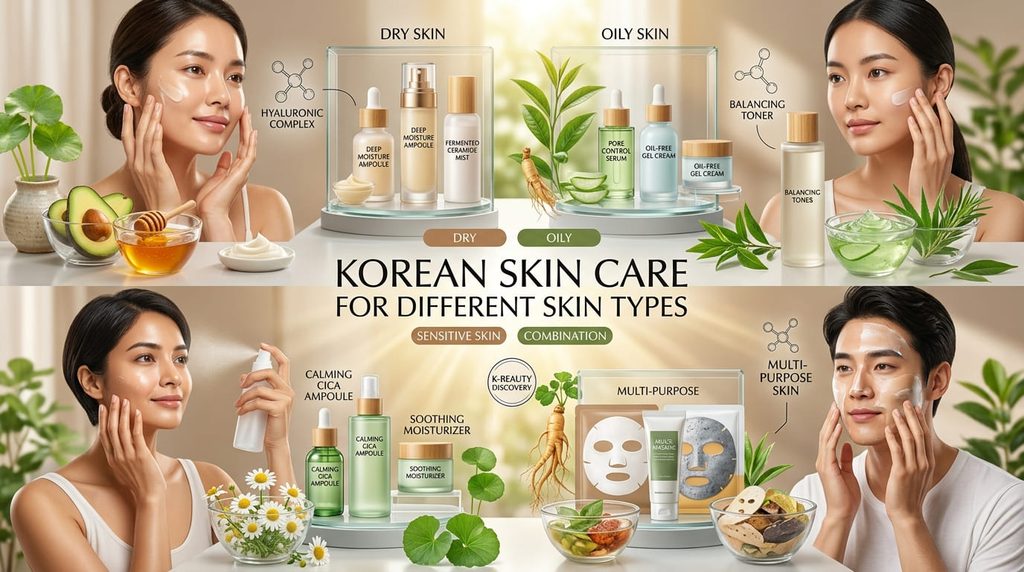
For Dry Skin
Focus on hydration and barrier support. A recommended routine may include:
- Gentle cream or gel cleanser
- Hydrating toner
- Essence or hydrating serum
- Rich moisturizer
- Sunscreen during the day
Look for ingredients such as ceramides, hyaluronic acid, glycerin, and squalane.
For Oily Skin
Oily skin still needs hydration. A simple routine can include:
- Gentle low-pH cleanser
- Lightweight toner
- Niacinamide or hydrating serum
- Lightweight gel moisturizer
- Non-greasy sunscreen
Avoid over-cleansing, as excessively stripping the skin can cause discomfort and may encourage increased oiliness.
For Combination Skin
Combination skin may be oily in the T-zone and dry on the cheeks. Use balanced, lightweight products and adjust the amount of moisturizer according to different areas of the face.
For Sensitive Skin
Sensitive skin usually benefits from a minimal routine. Choose fragrance-free or low-irritation products when possible and introduce only one new product at a time.
A gentle cleanser, soothing moisturizer, and sunscreen may be enough at first. Products containing centella asiatica or panthenol may also be suitable for some people.
For Acne-Prone Skin
Acne-prone skin requires a careful approach. Avoid using multiple strong treatments at the same time. Choose gentle cleansing, lightweight hydration, and products that do not feel overly heavy on your skin.
If acne is persistent or severe, consulting a dermatologist is recommended.
A Simple Korean Skin Care Routine
You do not need an expensive or complicated routine. Here is a simple example.
Morning Routine
- Cleanse with water or a gentle cleanser.
- Apply a hydrating toner.
- Use a serum if needed.
- Apply moisturizer.
- Finish with sunscreen.
Evening Routine
- Remove makeup and sunscreen.
- Cleanse your face.
- Apply toner.
- Apply essence or serum.
- Use moisturizer.
You can add exfoliation or a face mask occasionally, but avoid overdoing it. Too many active products can damage the skin barrier and cause irritation.
How to Introduce New Korean Skin Care Products
One of the biggest mistakes people make is buying many products and using all of them on the same day. If irritation occurs, it becomes difficult to identify which product caused the problem.
Instead, introduce one product at a time. Test it carefully and observe how your skin reacts over several days.
Patch testing can also be helpful, especially for people with sensitive skin or a history of allergic reactions.
Be patient. Skin care results usually take time, and constantly changing products may make it difficult to understand what works for your skin.
Common Korean Skin Care Mistakes to Avoid
Do not assume that expensive products are automatically better. A simple and affordable product may work perfectly for your skin.
Avoid copying someone else’s routine exactly. Your favorite influencer may have a completely different skin type, climate, lifestyle, or skin concern.
Do not exfoliate too frequently. Excessive exfoliation can cause dryness, redness, sensitivity, and barrier damage.
Finally, do not skip sunscreen. Sun protection is one of the most valuable long-term habits you can include in your daily routine.
Final Thoughts
Recommended Korean skin care is not about using the largest possible number of products. The best routine is one that matches your skin type and that you can follow consistently.
Start with the basics: a gentle cleanser, a suitable moisturizer, and daily sunscreen. Then add products such as hydrating toners, essences, and targeted serums based on your individual concerns.
Popular ingredients such as centella asiatica, snail mucin, niacinamide, ceramides, rice extract, and hyaluronic acid can be useful additions, but there is no single ingredient that works perfectly for everyone.
Healthy-looking skin usually comes from consistency, gentle care, proper hydration, and protection from the sun. Take time to understand your skin, introduce products gradually, and avoid following every new beauty trend. With a simple and personalized Korean skin care routine, you can build habits that support comfortable, hydrated, and radiant-looking skin over time.
Note: If you have persistent acne, severe irritation, eczema, or another skin condition, consult a qualified dermatologist before starting new active skin care treatment.