
If you have scrolled through social media recently, chances are you have seen videos of people floating through the air, diving toward the floor, and effortlessly springing back up into suspended push-ups. It looks part circus act, part dance routine, and entirely fun.
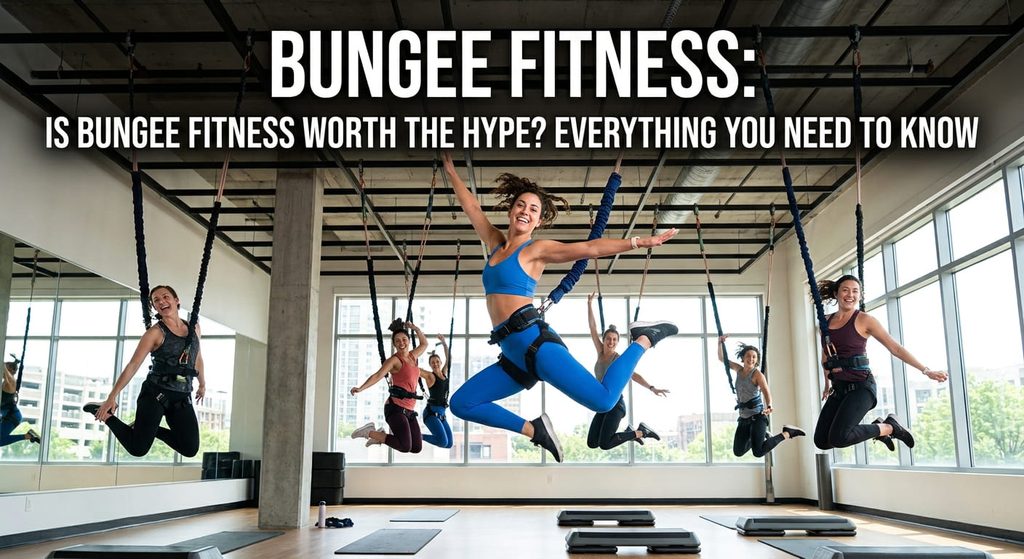
This is bungee fitness one of the fastest-growing trends in the global health and wellness industry.
While it might look like pure play, bungee fitness is a serious full-body workout designed to build core strength, burn high amounts of calories, and improve cardiovascular endurance without the harsh impact on your joints that traditional cardio creates.
Whether you are looking to break out of a boring gym routine, recovering from a joint injury, or simply curious about what it feels like to exercise in high-velocity zero gravity, here is the complete guide to everything you need to know about bungee fitness.
What Is Bungee Fitness?
At its core, bungee fitness is a low-impact, high-intensity group exercise class that combines elements of cardiovascular training, resistance work, dance, and gymnastics.

Participants wear a specialized, padded harness secured around their waist and thighs. This harness is attached to a heavy-duty, commercial-grade bungee cord anchored securely to an overhead structural beam.
The bungee cord acts as a supporting system. By taking on a portion of your body weight—typically anywhere from 20% to 50% depending on the cord’s tension and setup—it reduces the gravitational pull on your lower body. This allows you to perform explosive movements (like leaps, squats, burpees, and dives) with a fraction of the joint impact normally associated with those exercises.
How Bungee Fitness Works: The Mechanics Behind the Bounce
The magic of bungee fitness lies in physics. Traditional weight resistance relies on gravity pulling down on iron or cables. Bungee workouts utilize elastic resistance.
       [ Ceiling Anchor Point ]
                  │
                  │
           [ Bungee Cord ]  ◄── Provides upwards tension & buoyancy
                  │
             [ Swivel ]     ◄── Enables 360-degree rotation
                  │
          [ Padded Harness ]
                  │
           [ Participant ]  ◄── Reduced gravitational force on joints
When you move away from your anchor point—whether by jumping into the air, lunging forward, or falling toward the floor—the bungee cord stretches, storing kinetic energy. When you return to the center, that stored energy assists your movement.
This creates a dynamic push-and-pull relationship:
- The Assistance Phase: The cord lifts and supports you, easing stress on your knees, hips, ankles, and lower back.
- The Resistance Phase: Moving against the cord’s tension forces your muscles to work harder to stretch the bungee out.
Because the system is constantly pulling you off-center, your core muscles (abdominals, obliques, and lower back) must stay continuously engaged to keep you balanced.
Key Benefits of Bungee Fitness

Why are fitness enthusiasts and beginners dropping traditional treadmills for bungee cords? The physical and psychological benefits speak for themselves.
1. High Intensity with Zero-to-Low Joint Impact
High-intensity interval training (HIIT) is famous for burning calories and improving heart health, but exercises like jump squats, box jumps, and burpees can be brutal on your joints. Bungee fitness gives you all the cardiovascular benefits of HIIT while taking the heavy impact off your cartilage and connective tissues. It is ideal for individuals with osteoarthritis, previous knee surgeries, or chronic back pain.
2. Full-Body Core Engagement
Because you are tethered to an elastic cord that constantly tries to pull you off balance, your core muscles cannot take a second off. Every move—even a basic walk across the floor—requires stabilizing through your abdomen and glutes.
3. Accelerated Calorie Burn
Because bungee classes maintain a fast pace and require continuous stabilization, calorie expenditure is remarkably high. An average 45-to-60-minute class can burn anywhere between 400 to 700 calories, depending on your weight, effort level, and the class intensity.
4. Improved Lymphatic Drainage & Circulation
The continuous bouncing motion stimulates the lymphatic system, which relies on muscle contraction and body movement to circulate fluid and clear waste from tissues. Increased lymphatic movement boosts immunity and reduces fluid retention.
5. High Dopamine & Stress Relief
Exercise should be effective, but it should also be engaging. The sensation of weightlessness triggers the release of endorphins and dopamine. Many participants report that bouncing and flying across the room feels more like playing on a playground than working out, making it easier to stick with long-term.
Bungee Fitness vs. Other Popular Workouts
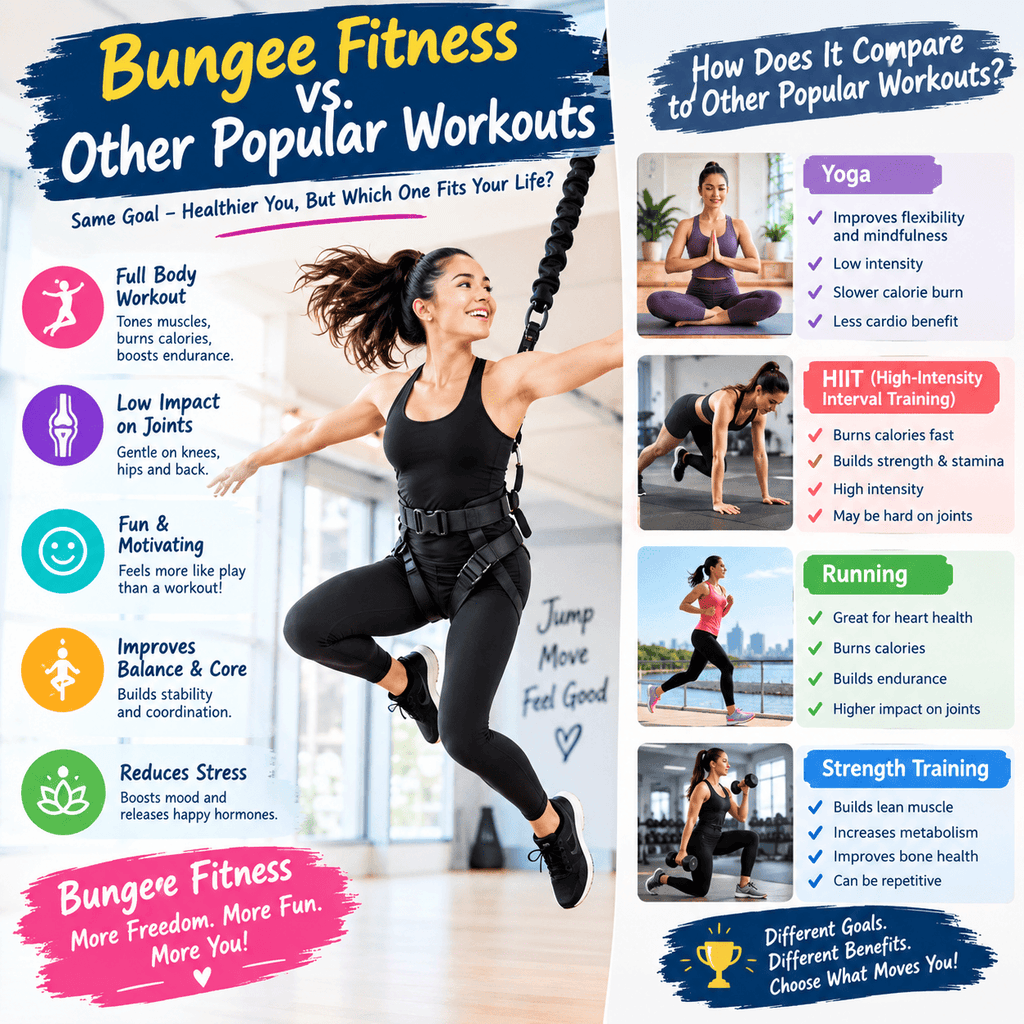
To see where bungee fitness fits into your routine, here is how it compares to other low-impact or high-energy workouts:
| Feature | Bungee Fitness | Rebounder / Trampoline | Aerial Yoga / Silks | Traditional HIIT / Gym |
| Primary Focus | Cardio, Core & Agility | Lower Body Cardio | Flexibility & Grip Strength | Strength & Endurance |
| Joint Impact | Extremely Low | Low to Moderate | None | High |
| Grip / Upper Strength Req. | Minimal | None | Moderate to High | Low to High |
| Calorie Burn (per hr) | 400 – 700 | 300 – 500 | 200 – 400 | 400 – 600 |
| Fun / Play Factor | Very High | High | Moderate | Low to Moderate |
Article main 10 Best Bungee Fitness Places/Studios in the USA ki table section append kar di gayi hai. Yahan table aur uske context ki wording di gayi hai jise aap article ke end par ya “What to Expect” section ke baad include kar sakte hain:
Top 10 Bungee Fitness Studios in the USA
If you are looking to try this low-impact, high-flying workout firsthand, here are 10 of the best and most popular bungee fitness locations across the United States:
| Studio Name | Location (City, State) | Key Highlights & Specialty |
| Tough Lotus | Chandler, Arizona | Pioneer studio in the US; offers specialized Bungee Foundations & Aerial courses. |
| BungeeONE Studios | Fort Worth & Colleyville, Texas | High-energy community workouts, multi-location premier studio setup. |
| Air Fit Bungee | Burbank, California | Known for fun adult/kids group classes, aerial yoga, and FitSprings Pilates. |
| Studio Bungee | Marietta, Georgia | First official bungee fitness studio in Georgia; beginner-friendly focus. |
| Fling Bungee Fitness | Noblesville, Indiana | Indianapolis area’s premier studio offering bungee cardio, pole, and aerial fitness. |
| Lift Me Up Bungee Fitness | Berkeley, California | Specialized Bay Area studio offering low-impact full-body resistance training. |
| Fly Fitness | Hattiesburg, Mississippi | Combines high-intensity bungee workouts with yoga, boxing, and Pound sessions. |
| Impulse Bungee Fitness | Colorado Springs, Colorado | Focuses on fat-burning HIIT bungee choreography and core stabilization. |
| Bungee Fit | Wichita, Kansas | High-energy group classes designed for joint recovery and active weight loss. |
| All Fit Bungee | Clinton, Utah | Beginner to advanced level bungee routines with specialized resistance training. |
What to Expect in Your First Bungee Fitness Class
Stepping into a studio for the first time can feel intimidating, but beginner classes are structured specifically to build confidence and safety.
┌─────────────────────────────────────────────────────────────┐
│                 TYPICAL CLASS STRUCTURE                     │
├──────────────┬──────────────────────────────────────────────┤
│ 00–10 Mins   │ Harness Fitting & Weight/Tension Calibration  │
├──────────────┼──────────────────────────────────────────────┤
│ 10–20 Mins   │ Warm-Up & Basic Bungee Mechanics             │
├──────────────┼──────────────────────────────────────────────┤
│ 20–45 Mins   │ Main Cardio/Strength Choreography            │
├──────────────┼──────────────────────────────────────────────┤
│ 45–50 Mins   │ Cool Down & Deep Stretching                  │
└──────────────┴──────────────────────────────────────────────┘
1. Weigh-In and Harness Setup
Before class starts, the instructor will discreetly measure your weight or ask for your current weight. This is pure safety engineering. Bungee cords are configured using customized combinations of elastic bands based on precise weight brackets. If there are too few cords, you won’t get enough support; if there are too many, you won’t have enough tension to push against.
2. Fitting the Harness
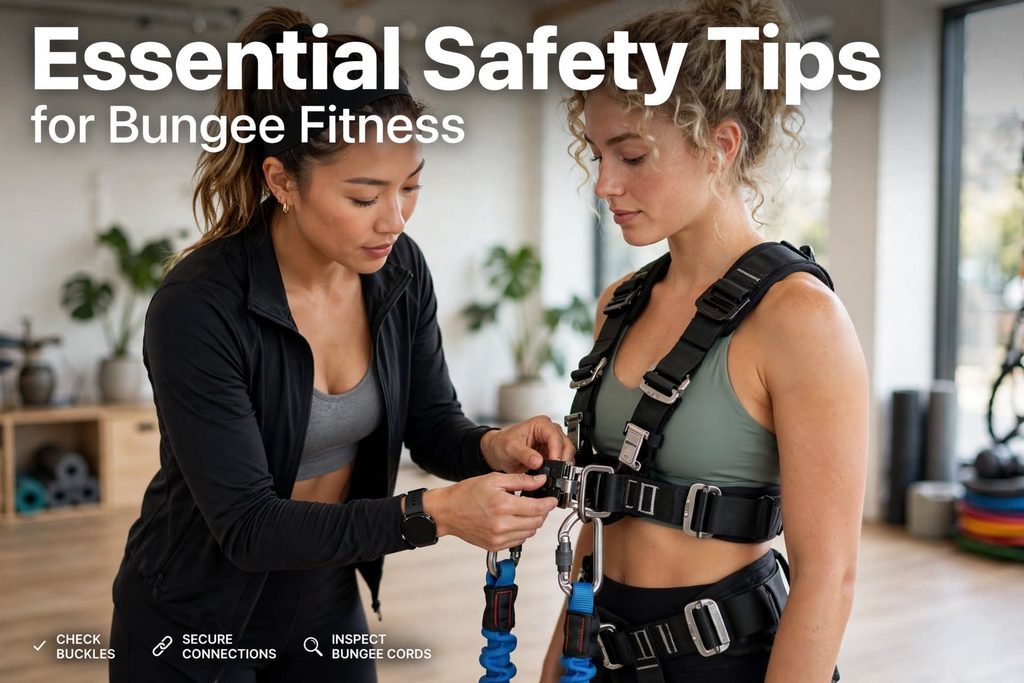
You will step into a heavy-duty harness that fits snugly around your waist and upper thighs. It should feel firm—similar to a rock climbing harness. Instructors will check the buckles to ensure there is no slack.
3. Learning the Basic Moves
Before jumping into music routines, you will learn foundational moves:
- The Fly: Running forward until the bungee catches you, then leaning into the tension to float in the air.
- The Diving Push-Up: Falling forward toward the floor, catching yourself in a push-up position, and springing back up.
- The Squat Jump: Squatting low and using the bungee’s elasticity to launch vertically into the air.
- The Star Jump: A high-leaping jack where you float at the peak of the jump.
4. The Main Workout
Once the basics are locked down, the instructor will combine these movements into fast-paced, music-driven routines. You will turn 360 degrees, sprint across the floor, dive, leap, and hover, keeping your heart rate elevated throughout.
Essential Safety Tips & Clothing Guidelines
Because bungee fitness involves harness resistance and suspended flight, proper preparation makes a major difference in your comfort.
What to Wear
- Form-Fitting Leggings: Wear thick, high-waisted leggings or bike shorts. Avoid slick, slippery fabrics or loose sweatpants. The harness fits tightly around your hips and inner thighs, and fitted pants prevent chafing.
- Supportive Sports Bra: High-impact support is essential for women due to the vertical bouncing motion.
- Padded Tops / Layers: Consider tucking in your shirt so the harness doesn’t rub directly against bare skin around your waist.
- Grip Sneakers: Wear clean, supportive athletic shoes with good rubber traction to prevent slipping when pushing off the floor.
Pre-Class Preparation
- Avoid Heavy Meals: Eat a light snack 1 to 2 hours before class. Suspended inversions and bouncing on a full stomach can lead to nausea.
- Hydrate Well: You will sweat heavily despite the weightlessness sensation. Bring a water bottle.
- Arrive Early: First-timers should arrive 15 minutes early to complete safety waivers and get fitted correctly.
Who Should (and Shouldn’t) Try Bungee Fitness?
Bungee workouts are remarkably adaptable, making them accessible to a broad population, but they aren’t for everyone.
Great For:
- People returning to exercise after an extended hiatus.
- Individuals with mild-to-moderate joint pain or arthritis.
- Runners or athletes seeking a low-impact active recovery workout.
- Anyone who gets bored easily on traditional gym equipment.
Consult a Doctor / Avoid If:
- Pregnancy: The tight harness pressure around the waist and abdomen makes bungee fitness unsafe during pregnancy.
- Recent Major Surgeries: Especially abdominal, hip, or spinal procedures.
- Severe Vertigo or Motion Sickness: The constant rotation, flying, and bobbing motion can trigger dizziness in sensitive individuals.
- Exceeding Studio Weight Limits: Commercial bungee systems have hard weight safety ceilings (typically between 250 to 300 lbs depending on the equipment manufacturer). Always check your local studio’s guidelines.
Final Thoughts: Fly Into Your Fitness Routine
Exercise doesn’t have to feel like a chore. Bungee fitness strips away the monotony of traditional workouts and replaces it with pure motion, flight, and fun—all while delivering an intense core and cardio session that protects your joints.
If you are ready to defy gravity, search for a certified bungee fitness studio near you, strap into a harness, and experience what it feels like to fly your way to a healthier body.