
When to Seek Professional Advice
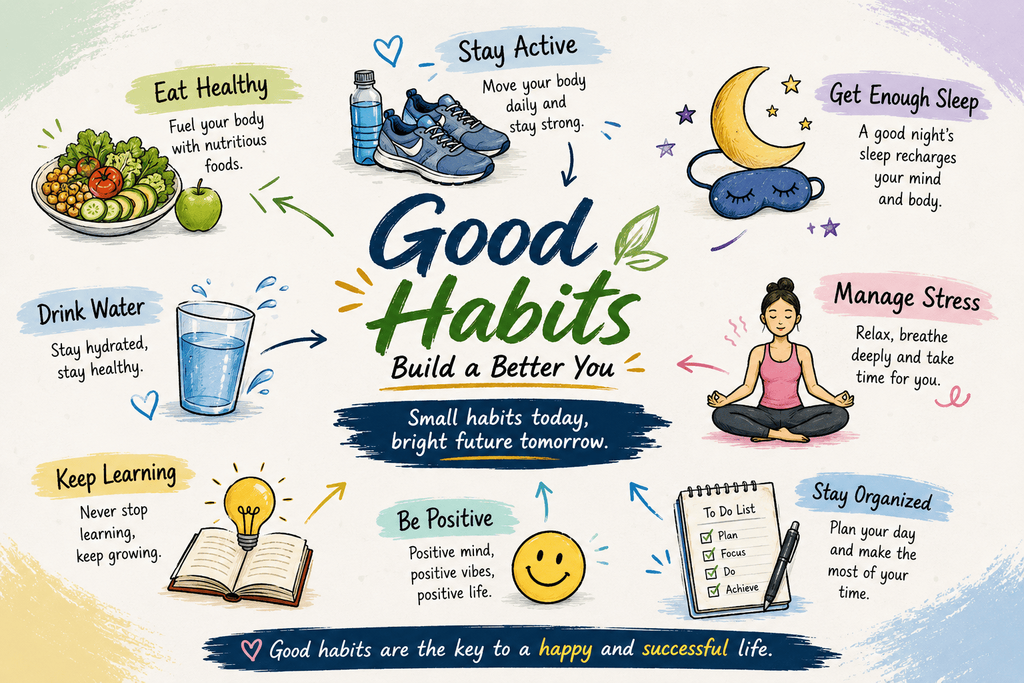
Good Habits: Small Changes That Create a Better Life
Good habits are the foundation of a healthy, successful, and meaningful life. They may seem simple, but the small things we do every day gradually shape our health, personality, relationships, productivity, and future. A person does not become successful through one great action alone. Instead, success is usually the result of repeated positive choices made over a long period of time.
Good habits can improve almost every part of our lives. Waking up on time, eating nutritious food, exercising regularly, reading, staying organized, managing time, being respectful, and thinking positively are examples of habits that can make a significant difference. The important thing is not to become perfect overnight, but to make steady progress.
The Importance of Good Habits
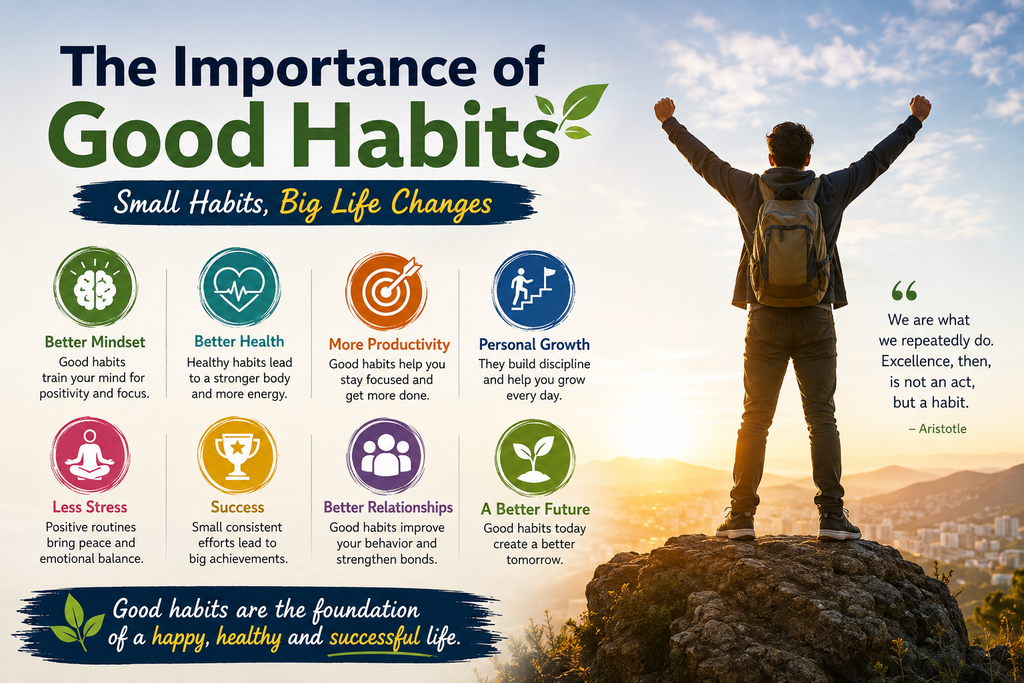
Our daily routines influence who we become. If we repeatedly practice positive behaviors, they eventually become natural parts of our lives. For example, a student who develops the habit of studying for a short period every day may find learning easier than a student who waits until the night before an examination.
Good habits also save time and energy. When useful actions become routine, we do not have to make the same decision repeatedly. A person who prepares clothes and school or work materials the night before can begin the next morning with less stress.
In addition, good habits help us develop self-discipline. Discipline means doing what needs to be done even when we do not feel motivated. Motivation can change from day to day, but a strong routine can keep us moving forward.
1. Wake Up Early and Start the Day Well

One of the most useful habits is maintaining a consistent sleep and waking schedule. Getting enough sleep allows the body and mind to recover and prepares us for the day ahead.
Starting the morning calmly can also improve productivity. Instead of immediately becoming distracted by social media or unnecessary notifications, we can spend the first part of the day getting organized, drinking water, stretching, preparing for the day, or reviewing important tasks.
Waking up early is not about sleeping less. It is about creating a healthy routine that gives us enough time to complete important activities without rushing.
2. Eat Healthy Food
Food provides the energy our bodies need to work, study, exercise, and think clearly. Developing healthy eating habits can support physical and mental well-being.
A balanced diet should include a variety of nutritious foods such as fruits, vegetables, whole grains, protein sources, and appropriate amounts of healthy fats. Drinking enough water is also an important habit.
Healthy eating does not mean that we can never enjoy our favorite foods. Instead, it means learning to make balanced choices most of the time. Small changes, such as adding more vegetables to meals or replacing sugary drinks with water, can become valuable habits over time.
3. Exercise Regularly
Physical activity is another important habit. Exercise helps keep the body strong and can improve mood, energy, and overall fitness.
People do not necessarily need complicated workout programs. Walking, cycling, swimming, stretching, dancing, playing sports, or doing simple exercises at home can all contribute to an active lifestyle.
The key is consistency. Twenty or thirty minutes of regular activity can be more sustainable than exercising intensely once and then stopping for several weeks.
4. Read Every Day
Reading is a powerful habit because it expands knowledge and encourages curiosity. Books can introduce us to new ideas, cultures, experiences, and perspectives.
Students can benefit from reading textbooks and educational materials, while adults can read biographies, novels, history, science, personal development books, or other subjects that interest them.
Even reading for fifteen minutes a day can make a difference. Over months and years, those small periods of reading can add up to many books and a great deal of knowledge.
5. Manage Time Wisely
Time management is an essential habit for students, professionals, parents, and anyone with responsibilities. Everyone receives the same basic amount of time each day, but people use it differently.
A simple way to manage time is to create a list of important tasks and decide which ones should be completed first. Breaking large tasks into smaller steps can also make them less overwhelming.
Avoiding unnecessary distractions is equally important. Phones, social media, television, and entertainment can consume large amounts of time when they are not used intentionally.
Good time management does not mean working constantly. Rest and recreation are also important. The goal is to create a healthy balance between responsibilities and relaxation.
6. Keep Your Environment Organized
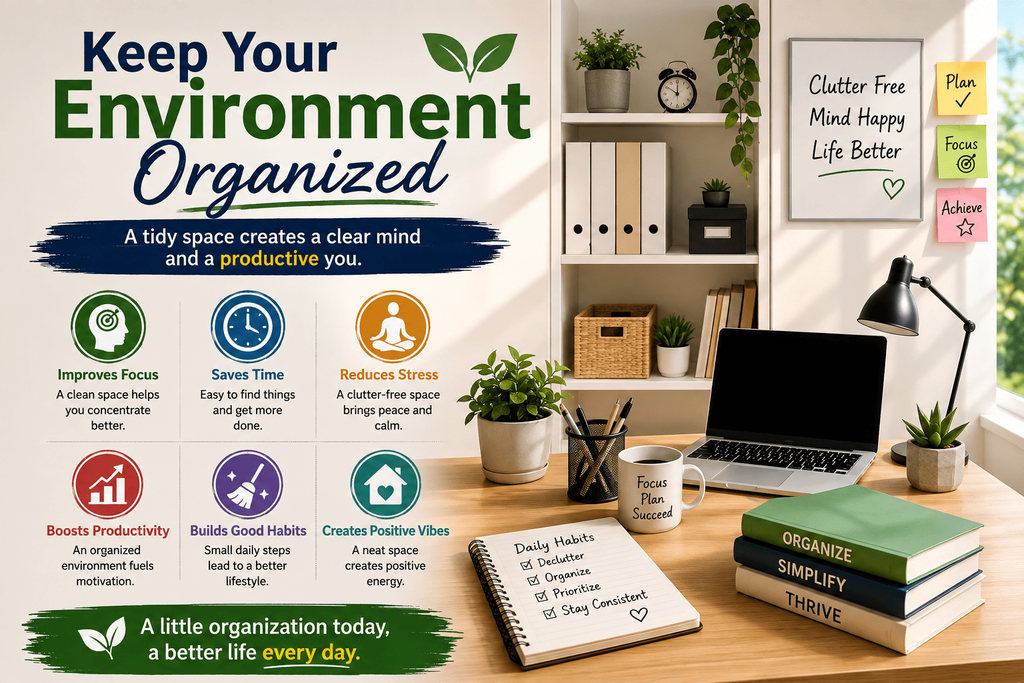
An organized environment can make everyday life easier. Keeping a room, desk, bag, or workspace clean helps us find things quickly and reduces unnecessary stress.
Organization can begin with very small actions. Put things back after using them, clean your workspace at the end of the day, and prepare important items in advance.
A clean environment does not need to be perfect. The goal is to create a space that supports concentration, comfort, and productivity.
7. Practice Good Personal Hygiene
Personal hygiene is another essential habit. Regular bathing, brushing teeth, washing hands, wearing clean clothes, and maintaining basic cleanliness help protect health and make us feel confident.
Handwashing is especially important because hands can carry germs from surfaces to the mouth, nose, and eyes. Simple hygiene practices can therefore play an important role in preventing illness and protecting other people.
8. Be Respectful and Kind
Good habits are not limited to physical health and productivity. The way we treat other people is equally important.
Speaking politely, listening carefully, saying thank you, helping others, and respecting differences can strengthen relationships. Kindness does not always require a major sacrifice. A friendly greeting, a sincere compliment, or helping someone with a difficult task can brighten another person’s day.
Respect also means understanding that other people have different opinions, backgrounds, experiences, and needs. Learning to communicate calmly, especially during disagreements, is an important life skill.
9. Develop a Positive Mindset
A positive mindset does not mean pretending that problems do not exist. Everyone experiences disappointment, failure, stress, and difficult situations. A positive approach means learning to respond to challenges constructively.
Instead of saying, “I cannot do this,” we can ask, “What can I do to improve?” Instead of viewing every mistake as proof of failure, we can see mistakes as opportunities to learn.
Practicing gratitude can also help. Taking a few moments each day to recognize things we appreciate—such as family, friends, health, opportunities, or simple moments of happiness—can encourage a healthier perspective.
10. Limit Unhealthy Habits
Building good habits also means reducing behaviors that negatively affect our lives. Spending excessive time on social media, procrastinating, constantly checking notifications, neglecting sleep, or avoiding responsibilities can gradually become difficult patterns.
The goal should not be to eliminate every form of entertainment. Relaxation is necessary. Instead, we should become aware of how we spend our time and make sure that temporary pleasures do not prevent us from achieving important goals.
One useful strategy is to replace an unhealthy habit with a positive alternative. For example, instead of spending every free moment scrolling on a phone, a person could take a walk, read a few pages, talk with family, or practice a hobby.
How to Build Good Habits
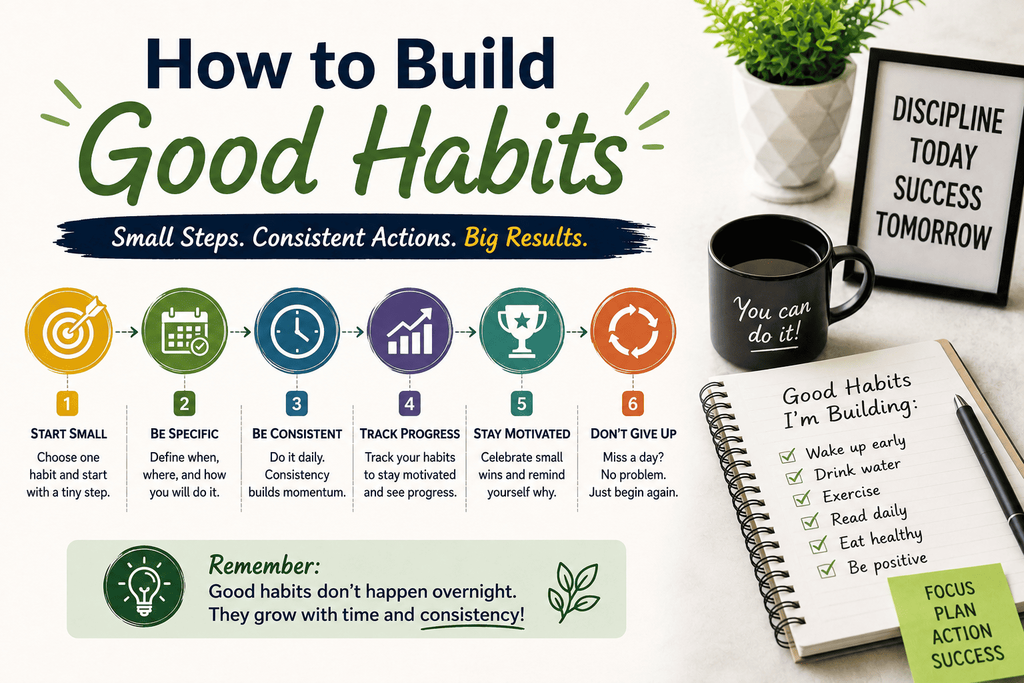
Creating a new habit can be difficult at first. Many people become excited about changing their lives and try to change everything at once. Unfortunately, this approach often becomes overwhelming.
A better method is to start small. Choose one habit and make it simple. If you want to read more, start with five or ten pages a day. If you want to exercise, begin with a short walk. If you want to become organized, clean one small area at a time.
Consistency is more important than perfection. Missing one day does not mean that the entire effort has failed. The important thing is to return to the routine rather than giving up.
It can also help to connect a new habit to an existing routine. For example, after brushing your teeth in the morning, you might spend five minutes planning your day. Over time, the two activities can become connected.
Keeping track of progress can provide motivation. A simple calendar or habit tracker can show how consistently you are following your routine.
The Long-Term Benefits of Good Habits
The greatest benefit of good habits is that their effects accumulate. One healthy meal may not transform a person’s health. One day of studying may not guarantee success. One act of kindness may seem small.
However, repeated actions can produce significant results.
A student who studies consistently can gradually build knowledge. A person who exercises regularly can improve fitness. Someone who saves a small amount of money regularly can develop better financial discipline. A person who practices kindness can build stronger relationships.
This is why habits are so powerful: they turn small actions into long-term outcomes.
Conclusion
Good habits are simple behaviors that can have a powerful effect on our lives. They help us become healthier, more disciplined, organized, productive, confident, and considerate.
The most important lesson is that positive change does not have to happen all at once. Start with one small habit. Practice it regularly. When it becomes comfortable, add another. Over time, these small improvements can create a completely different lifestyle.
A better future is often built through ordinary actions repeated every day. By choosing good habits today, we invest in the person we want to become tomorrow