
Navigating college life presents unique challenges: balancing lectures, late-night study sessions, dynamic social calendars, and tight budgets. Stress, irregular sleep patterns, cafeteria food, and environmental shifts often trigger unpredictable acne breakouts. When searching the pharmacy aisles, two skincare giants dominate the conversation: La Roche-Posay and Neutrogena.
Deciding between Nivea vs. Vaseline comes down to whether your skin needs deep hydration or heavy-duty barrier protection. While both brands are staples for affordable body care, their primary functions differ significantly.
Nivea excels at daily, deep nourishment. Formulated with rich emollients, glycerine, and vitamin E, Nivea lotions and creams actively hydrate the skin, leaving it soft, smooth, and supple. They are ideal for everyday use on normal to dry skin types.
Vaseline relies heavily on 100% pure petroleum jelly to act as a powerful occlusive agent. Rather than adding moisture, it creates a protective barrier that seals existing water into the skin. This makes Vaseline the go-to choice for healing severely cracked heels, chapped lips, or compromised skin barriers.
| Feature | Nivea | Vaseline |
|---|---|---|
| Primary Function | Hydrates & conditions | Locks in moisture & protects |
| Best Used For | Everyday dry skin | Cracked or flaking skin |
| Texture | Rich, creamy cream/lotion | Thick, protective jelly |
For optimal results, use Nivea daily post-shower for hydration, and layer Vaseline over severely dry patches to lock that moisture in overnight.
Are you looking to treat a specific skin concern like eczema, or building an everyday routine?
Determining which brand is superior for acne-prone skin requires evaluating active formulations, skin barrier health, sensitive skin tolerance, and overall value for a student budget.
The Science of Breakouts: What Acne-Prone Skin Needs
Acne develops when excess sebum (oil), dead skin cells, and Cutibacterium acnes bacteria clog hair follicles. Effectively managing acne requires a routine that addresses three key areas:

- Clearing Pores: Utilizing chemical exfoliants like Salicylic Acid (BHA) to dissolve oil within pores.
- Targeting Bacteria: Applying antibacterial agents like Benzoyl Peroxide to reduce acne-causing bacteria.
- Protecting the Moisture Barrier: Supporting the skin’s barrier with Ceramides, Niacinamide, and gentle hydrating agents to prevent irritation.
Striking a balance between treating breakouts and preventing skin irritation is essential. Over-treating with harsh products can damage the moisture barrier, leading to increased redness, inflammation, and rebound oil production.
Brand Overview: La Roche-Posay vs. Neutrogena
1. La Roche-Posay (The Dermatological Approach)

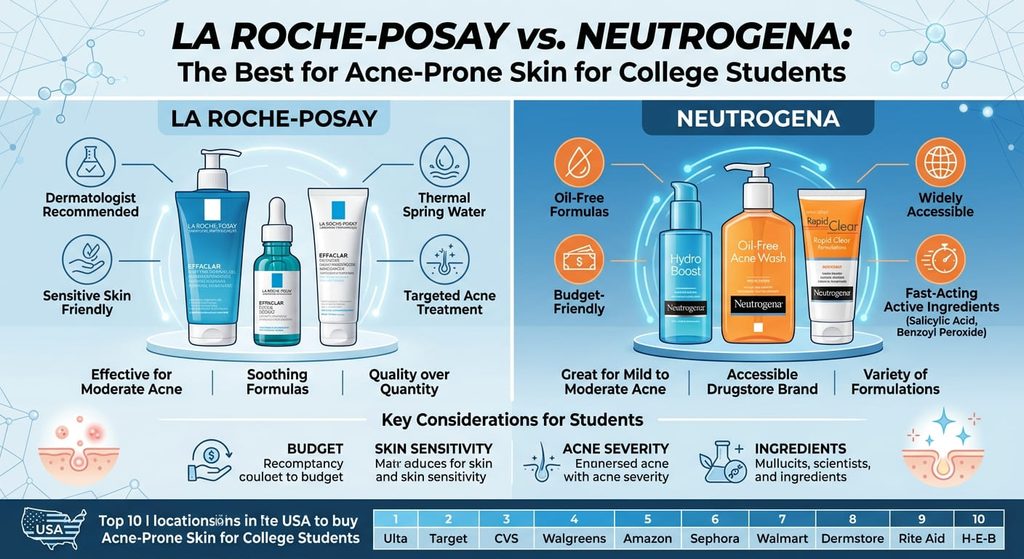
La Roche-Posay is a French pharmacy brand backed by extensive dermatological research. Its formulas incorporate selenium-rich Thermal Spring Water and prioritize skin barrier repair alongside active acne ingredients. The flagship Effaclar line specifically targets oily and acne-prone skin while minimizing irritation.
- Core Strengths: Barrier-first formulations, suitability for sensitive skin, elegant textures, and long-term tolerance.
- Price Point: Mid-range ($15.00 – $38.00 USD).
2. Neutrogena (The Accessible Classic)
Neutrogena is an American drugstore staple known for reliable, active-driven skincare. Lines like Oil-Free Acne Wash, Stubborn Acne, and Hydro Boost offer targeted ingredients at accessible price points.
- Core Strengths: High accessibility, affordable price points, potent active percentages, and immediate oil control.
- Price Point: Budget-friendly ($7.00 – $22.00 USD).
Head-to-Head Comparison for Acne-Prone Skin
| Category | La Roche-Posay | Neutrogena | Winner |
| Active Ingredients | Salicylic Acid, LHA, Micronized Benzoyl Peroxide, Niacinamide | Salicylic Acid, Micronized Benzoyl Peroxide, Hyaluronic Acid | Tie |
| Barrier Support | High (Thermal Water, Ceramides, Niacinamide) | Moderate (Hydro Boost range features Hyaluronic Acid) | La Roche-Posay |
| Sensitive Skin Tolerance | Excellent; tested on allergy-prone and reactive skin | Moderate; traditional acne lines may dry out sensitive skin | La Roche-Posay |
| Affordability for Students | Moderate investment per bottle | Extremely budget-friendly | Neutrogena |
| Oil Control | Balanced matte finish | Strong deep-cleansing focus | Neutrogena |
Key Product Comparisons
Cleansers: Effaclar Purifying Foaming Gel vs. Oil-Free Acne Wash
- Neutrogena Oil-Free Acne Wash: Contains 2% Salicylic Acid. Effective for clearing clogged pores and controlling shine, though traditional fragrance additions may dry out delicate skin over time.
- La Roche-Posay Effaclar Purifying Foaming Gel: Uses Zinc PCA to cleanse oil and clear impurities while maintaining the skin’s natural pH balance. Less prone to stripping moisture, making it suitable for daily use.
Spot & Acne Treatments: Effaclar Duo vs. Stubborn Acne AM Treatment
- Neutrogena Stubborn Acne AM Treatment: Formulated with 2.5% Micronized Benzoyl Peroxide to eliminate acne bacteria rapidly.
- La Roche-Posay Effaclar Duo: Combines 5.5% Micronized Benzoyl Peroxide with exfoliating Lipo-Hydroxy Acid (LHA) to target breakouts and refine texture simultaneously.
Hydration: Toleriane Double Repair vs. Hydro Boost Water Gel
- Neutrogena Hydro Boost Water Gel: Uses Hyaluronic Acid in a lightweight gel format that hydrates without clogging pores.
- La Roche-Posay Toleriane Double Repair Moisturizer: Combines Ceramide-3, Niacinamide, Glycerin, and Thermal Water to hydrate while repairing compromised skin barriers.
Where to Buy: Top 10 Skincare Retail Locations Across the USA
Finding these products near campus is straightforward. Below is a reference guide for locating La Roche-Posay and Neutrogena products across major U.S. retail destinations:
| # | Retailer Name | Availability Focus | Student Perks / Notes | Store Availability |
| 1 | Target | Both Brands | 5% off with Target RedCard; strong beauty aisle selection | Nationwide |
| 2 | CVS Pharmacy | Both Brands | ExtraCare rewards points & frequent digital coupons | Nationwide |
| 3 | Walgreens | Both Brands | Balance Rewards; frequent “Buy 1, Get 1 50% Off” sales | Nationwide |
| 4 | Ulta Beauty | Both Brands | Ultamate Rewards points; extensive testing samples | Suburbs & Major Cities |
| 5 | Walmart | Both Brands | Lowest baseline retail pricing for Neutrogena lines | Nationwide |
| 6 | Sephora | La Roche-Posay | Beauty Insider points; higher-end skincare focus | Major Malls & Standalone |
| 7 | Rite Aid | Both Brands | Convenient campus-adjacent neighborhood locations | East & West Coasts |
| 8 | Amazon (Official Stores) | Both Brands | Prime 1-to-2 day shipping directly to dorm rooms | Online Nationwide |
| 9 | Dermstore | La Roche-Posay | Authorized medical-grade skincare distributor | Online Nationwide |
| 10 | Campus Bookstores | Select Neutrogena | Convenient location, higher convenience markup | College Campuses |
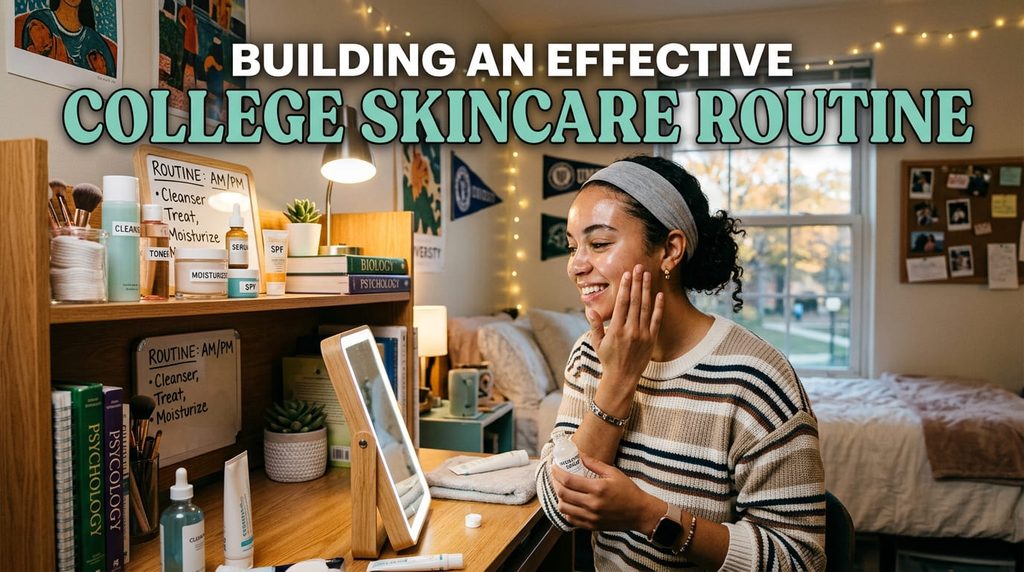
Building an Effective College Skincare Routine
Consistency is key when managing breakouts. Below are sample routines tailored to different budgets and skin priorities:
Option A: The Budget-Conscious Neutrogena Routine
- Morning:
- Cleanse with Neutrogena Hydro Boost Gentle Cleanser.
- Hydrate with Neutrogena Hydro Boost Water Gel.
- Apply broad-spectrum SPF 30+.
- Evening:
- Cleanse with Neutrogena Oil-Free Acne Wash (2% Salicylic Acid).
- Spot treat with Neutrogena Stubborn Acne AM/PM Treatment.
- Moisturize with Neutrogena Hydro Boost Night Gel.
Option B: The Barrier-Repair La Roche-Posay Routine
- Morning:
- Cleanse with La Roche-Posay Toleriane Hydrating Gentle Cleanser.
- Apply La Roche-Posay Effaclar Mat Moisturizer.
- Apply La Roche-Posay Anthelios Clear Skin Sunscreen SPF 60.
- Evening:
- Cleanse with La Roche-Posay Effaclar Purifying Foaming Gel.
- Treat with La Roche-Posay Effaclar Duo.
- Moisturize with La Roche-Posay Toleriane Double Repair Face Moisturizer.
Option C: The Hybrid Strategy (Maximum Value)
Combining products from both brands offers a balanced approach for student budgets:
- Use Neutrogena for affordable basic cleansing and hydration (Hydro Boost Water Gel).
- Use La Roche-Posay for targeted active treatments (Effaclar Duo) and sun protection (Anthelios SPF).
Final Verdict: Which Is Better for College Students?
Neither brand is universally superior; the ideal choice depends on your specific skin type and budget:
- Choose La Roche-Posay if: You have sensitive, reactive, or dry acne-prone skin, or if traditional acne treatments leave your face feeling tight, red, or irritated. It provides gentle, long-term barrier support.
- Choose Neutrogena if: You have resilient, oily skin that requires active oil control, and you want an affordable routine that yields quick results without straining a student budget.
For many students, starting with a hybrid approach delivers effective acne care while maintaining budget flexibility.
FAQs
What is a good, quick skincare routine for college students on a budget?
A basic, effective 3-step routine is all you need:
Morning (Protect)
- Cleanser: Gentle face wash (or a splash of water).
- Moisturizer: Lightweight lotion.
- Sunscreen (SPF 30+): Non-negotiable for walking across campus.
Night (Repair)
- Cleanser: Wash away sweat, dirt, and sunscreen.
- Treatment (Optional): Salicylic acid for breakouts (2–3x a week).
- Moisturizer: Lock in hydration overnight.
Quick Tip: Stick to affordable drugstore staples like CeraVe, Cetaphil, or The Ordinary—consistency matters far more than expensive products.
What is the 4-2-4 rule in skincare?
The 4-2-4 rule is a 10-minute Japanese/Korean cleansing technique designed to deep-clean pores and boost circulation.
Oil cleansing technique steps. Source: Conscious Chemist
The 3 Steps
- 4 Minutes (Oil Cleanse): Massage cleansing oil over dry skin to dissolve makeup, sunscreen, and sebum.
- 2 Minutes (Foam Cleanse): Layer a water-based foam cleanser directly on top and massage to remove remaining impurities.
- 4 Minutes (Rinse): Rinse with warm water for 2 minutes to clear pores, then cold water for 2 minutes to tighten them.
Key Benefit: Helps clear stubborn blackheads and improves skin radiance without over-stripping moisture.
Why is my skin breaking out so bad in college?
College breakouts are usually caused by a mix of lifestyle shifts and environmental triggers that spike oil production and clog pores.
How pimples and breakouts form. Source: Neolayr Pro
Main Culprits
- High Stress: Spikes cortisol, which signals your glands to produce excess pore-clogging oil.
- Sleep Deprivation: Late-night studying disrupts skin repair and triggers inflammation.
- Diet Changes: High-glycemic dining hall foods, sugary coffee drinks, and alcohol can spark acne flare-ups.
- Dorm Hygiene: Unwashed pillowcases, shared showers, and touching your face while studying transfer bacteria.
- Water & Environment: Moving to a new location with different tap water hardness or air quality can irritate your skin barrier.
Quick Fix: Wash pillowcases weekly, stay hydrated, and use a simple salicylic acid (BHA) cleanser to clear clogged pores.