
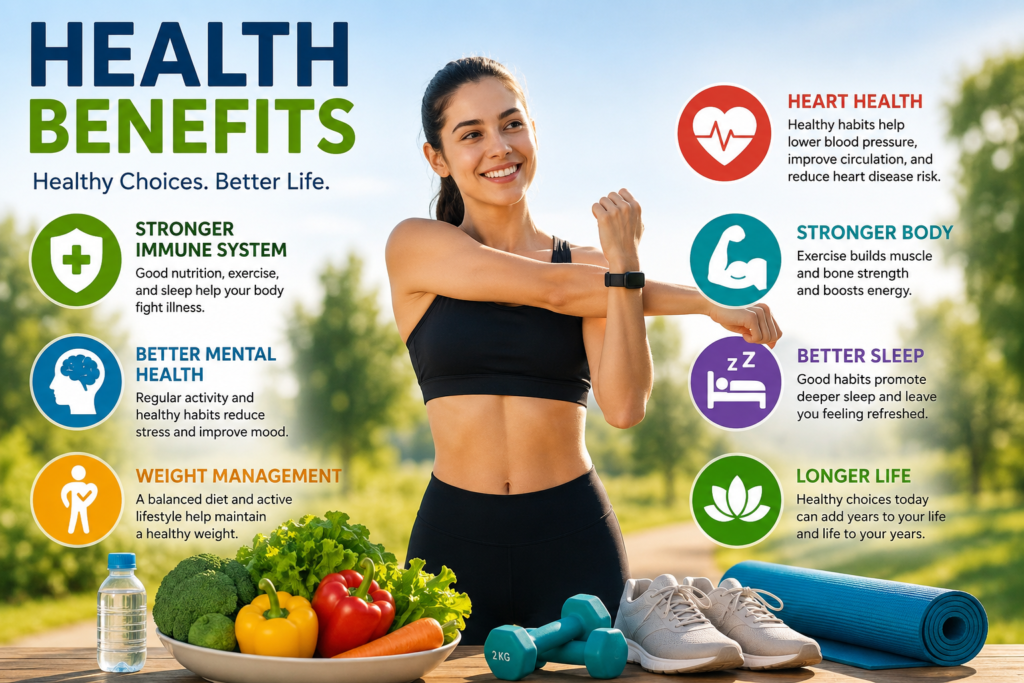
The Many Health Benefits of a Healthy Lifestyle
Good health is one of the greatest foundations for a happy and fulfilling life. It affects how we feel, how much energy we have, how well we work and think, and how effectively our bodies handle everyday challenges. Although genetics and circumstances play important roles, many aspects of health can be influenced by the choices we make each day.
A healthy lifestyle does not require perfection. It is built through consistent habits such as eating nutritious foods, staying physically active, getting enough sleep, managing stress, drinking enough water, and avoiding harmful habits. Even small improvements can create meaningful benefits over time.
Why Health Benefits Matter
Health is more than simply being free from illness. It includes physical strength, emotional well-being, mental clarity, energy, healthy relationships, and the ability to participate in activities that make life meaningful.
Taking care of your health can help you feel better today while also supporting your well-being in the future. Healthy habits may reduce the risk of several chronic diseases, support healthy aging, improve daily functioning, and contribute to a better overall quality of life.
The most important point is that healthy living is a long-term process. You do not need to change everything overnight. Small, realistic improvements can gradually become habits.
1. Better Physical Health
One of the most obvious benefits of a healthy lifestyle is improved physical health. Regular movement and nutritious food provide the body with the resources it needs to function properly.
Physical activity strengthens muscles and bones, supports cardiovascular fitness, improves mobility, and can help with maintaining a healthy body weight. A nutritious diet provides protein, vitamins, minerals, fiber, healthy fats, and other nutrients required for normal body functions.
Over time, these habits can contribute to better fitness and help the body remain strong and capable.
2. Improved Heart Health
The heart works continuously to circulate blood throughout the body, so protecting cardiovascular health is an important part of overall wellness.
Regular physical activity, a balanced diet rich in vegetables and fruits, whole grains, legumes, nuts, seeds, and healthy fats can support cardiovascular health. Limiting excessive sodium, added sugars, saturated fats, and highly processed foods can also contribute to a healthier eating pattern.
Avoiding tobacco is another important step because smoking can seriously damage the cardiovascular system.
3. Stronger Mental Well-Being
Physical health and mental health are closely connected. Regular exercise, nutritious meals, adequate sleep, and healthy social connections can all contribute to emotional well-being.
Physical activity may help reduce feelings of stress and improve mood. Spending time outdoors, practicing relaxation techniques, maintaining supportive relationships, and making time for enjoyable activities can also help people manage everyday pressures.
A healthy lifestyle is not a substitute for professional mental-health care when it is needed, but healthy habits can be an important part of a broader approach to well-being.
4. More Energy and Vitality
Feeling tired throughout the day can make work, exercise, family responsibilities, and hobbies more difficult. Healthy lifestyle habits can support steady energy levels.
Eating balanced meals rather than relying heavily on highly processed foods can provide the body with consistent sources of nutrients. Regular physical activity may also improve fitness and make everyday tasks feel easier.
Sleep is equally important. When people consistently get enough quality sleep, they may feel more alert and better prepared to handle the demands of the day.
5. Healthy Weight Management
A healthy lifestyle can support maintaining a body weight appropriate for an individual’s health and circumstances.
Rather than focusing only on restrictive diets, healthy weight management emphasizes nutritious food choices, appropriate portions, regular movement, adequate sleep, and sustainable habits.
Foods such as vegetables, fruits, whole grains, beans, lean proteins, and nuts can be part of satisfying meals. The goal is to develop an eating pattern that can realistically be maintained over time.
6. Better Sleep
Sleep is an essential part of health, not a luxury. During sleep, the body and brain carry out important processes that support physical and mental functioning.
Adults generally need around seven or more hours of sleep per night, although individual needs vary. Maintaining a consistent sleep schedule, creating a comfortable sleeping environment, limiting stimulating activities before bedtime, and exercising regularly can support good sleep habits.
Better sleep can contribute to improved concentration, mood, energy, and daily performance.
7. Stronger Immune Support
The immune system protects the body from infections and other threats. It depends on many interconnected systems and requires adequate nutrition, sleep, and overall health.
A varied diet containing vegetables, fruits, whole grains, legumes, protein-rich foods, nuts, and seeds provides many nutrients needed for normal immune function. Adequate sleep and regular physical activity are also important components of general health.
No single food or supplement can guarantee protection from illness. A balanced lifestyle is a more reliable foundation for supporting normal immune function.
8. Better Brain Function and Focus
Healthy habits can also support the brain. Good nutrition, physical activity, quality sleep, and stress management all contribute to overall cognitive well-being.
Regular exercise increases blood flow throughout the body and may support brain health. Adequate sleep helps with attention, memory, learning, and emotional regulation.
Eating a balanced diet that includes vegetables, fruits, whole grains, fish or other healthy protein sources, nuts, and seeds can provide nutrients important for normal brain function.
9. Reduced Risk of Chronic Disease
Healthy habits can play an important role in reducing the risk of several chronic health conditions.
Regular physical activity and a nutritious diet can support healthy blood pressure, cholesterol, blood sugar, and body weight. These factors are associated with conditions such as cardiovascular disease and type 2 diabetes.
Other lifestyle choices matter as well. Avoiding tobacco, limiting excessive alcohol consumption, managing stress, and getting appropriate preventive healthcare can all contribute to long-term health.
Healthy habits cannot eliminate every risk, but they can be powerful tools for improving overall health.
10. Better Digestive Health
The digestive system benefits from a diet containing adequate dietary fiber and fluids.
Fiber is found in foods such as vegetables, fruits, beans, lentils, whole grains, nuts, and seeds. It supports normal digestion and can help maintain regular bowel movements.
Increasing fiber gradually and drinking enough fluids can make dietary changes easier for the digestive system to tolerate. A diverse diet also exposes the gut to a broad range of nutrients and plant compounds.
11. Stronger Bones and Muscles
Strong bones and muscles help us move, maintain balance, and perform everyday activities.
Weight-bearing and resistance exercises can help maintain muscle strength and support bone health. Nutrients such as protein, calcium, vitamin D, and other vitamins and minerals also contribute to normal bone and muscle function.
Combining nutritious eating with regular strength and mobility exercises can be particularly valuable as people grow older.
12. Healthier Relationships and Social Life
Health is not only about food and exercise. Social well-being matters too.
Spending time with family, friends, colleagues, and community groups can provide emotional support and a sense of belonging. Healthy relationships can encourage positive habits and help people cope with difficult periods.
Making time for meaningful conversations, shared activities, hobbies, and community involvement can therefore be an important part of a healthy lifestyle.
Key Pillars of Healthy Living
A balanced approach to health can be built around several simple pillars:
Nutritious eating: Choose a variety of minimally processed foods and make vegetables, fruits, whole grains, and healthy protein sources regular parts of meals.
Regular physical activity: Move your body regularly and include activities that improve cardiovascular fitness, strength, flexibility, and balance.
Quality sleep: Create a consistent sleep routine and make sufficient rest a priority.
Stress management: Use healthy strategies such as walking, breathing exercises, meditation, hobbies, social connection, or time outdoors.
Hydration: Drink water regularly and limit sugary beverages.
Avoid harmful habits: Avoid smoking and other tobacco products, and discuss alcohol use with a healthcare professional if you have concerns.
Preventive healthcare: Regular checkups, screenings, vaccinations, and appropriate medical care can help identify problems early and keep health goals on track.
How to Start Making Healthier Changes
The biggest mistake people often make is trying to change everything at once. A better approach is to start with one or two realistic goals.
For example, you could begin by adding a serving of vegetables to dinner each day. After that becomes routine, you might add a daily walk, improve your sleep schedule, or replace sugary drinks with water.
Track your progress rather than demanding perfection. If you miss a workout or have an unhealthy meal, simply return to your routine at the next opportunity.
Consistency matters more than perfection.
The Ripple Effect of Healthy Choices
Healthy habits often influence one another. Regular exercise may help you sleep better. Better sleep may improve your energy and make exercise easier. Nutritious meals can support energy and concentration, while reduced stress may make it easier to make thoughtful food choices.
This creates a positive cycle in which small improvements can reinforce other healthy behaviors.
Final Thoughts
The health benefits of a healthy lifestyle extend far beyond appearance or weight. Nutritious eating, physical activity, adequate sleep, stress management, hydration, healthy relationships, and preventive healthcare can support the body and mind in countless ways.
You do not need to become a completely different person to improve your health. Start where you are, choose one manageable change, and build from there.
A healthier life is created one choice, one meal, one walk, and one good habit at a time.