
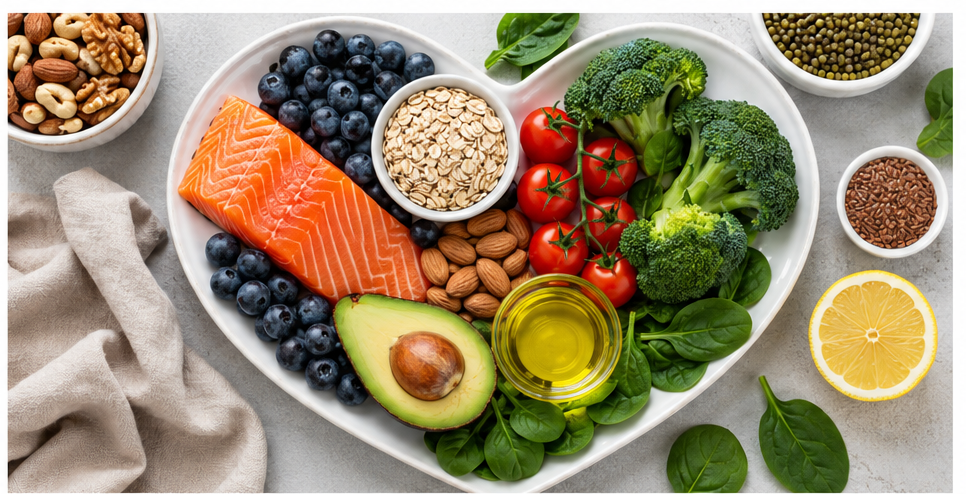
The Cardiac Diet: A Practical Guide to Eating for a Healthier Heart
Heart health begins with the choices we make every day, and food is one of the most powerful places to start. A cardiac diet is an eating pattern designed to support the heart and blood vessels by emphasizing vegetables, fruits, whole grains, lean proteins, healthy fats, and foods naturally low in sodium and added sugars.
A heart-healthy diet is not about following a strict menu or giving up everything you enjoy. Instead, it is about building sustainable habits that can help manage important cardiovascular risk factors, including high blood pressure, unhealthy cholesterol levels, excess weight, and high blood sugar.
What Is a Cardiac Diet?
A cardiac diet, sometimes called a heart-healthy diet, focuses on foods that provide plenty of nutrients while limiting ingredients that may negatively affect cardiovascular health.

The basic principles are simple:
- Eat plenty of vegetables and fruits.
- Choose whole grains instead of refined grains.
- Include fish, poultry, beans, lentils, nuts, and seeds.
- Choose unsaturated fats more often than saturated fats.
- Reduce sodium, especially from processed foods.
- Limit added sugars and highly processed foods.
- Pay attention to portion sizes.
- Drink water regularly and limit sugary beverages.
This approach can be adapted to different cultures, budgets, dietary preferences, and cooking styles.
Why Diet Matters for Heart Health
The cardiovascular system depends on healthy blood vessels, balanced blood pressure, and appropriate cholesterol and blood sugar levels. Diet can influence each of these areas.
Eating more fiber-rich foods, for example, can support healthy cholesterol levels and digestion. Fruits and vegetables provide potassium and other nutrients that contribute to overall cardiovascular health. Replacing foods high in saturated fat with sources of unsaturated fat can also help improve the overall quality of the diet.
Sodium deserves special attention because excessive sodium intake can contribute to higher blood pressure in many people. Much of the sodium in modern diets comes not from the salt shaker but from packaged, restaurant, and processed foods.
A cardiac diet therefore emphasizes minimally processed foods and encourages people to prepare more meals at home, where ingredients and portion sizes are easier to control.
Best Foods for a Cardiac Diet
1. Vegetables and Fruits
Vegetables and fruits should form a major part of a heart-healthy eating pattern. They provide fiber, vitamins, minerals, antioxidants, and other beneficial plant compounds.
Try to include a variety of colors throughout the week. Leafy greens, broccoli, tomatoes, peppers, carrots, berries, oranges, apples, and other fruits and vegetables can all contribute to a balanced diet.
Fresh, frozen, or low-sodium canned produce can be useful choices. If using canned vegetables or beans, rinsing them can help reduce some of the sodium.
2. Whole Grains
Whole grains contain more fiber and nutrients than refined grains because the whole grain is retained during processing.
Good choices include:
- Oatmeal
- Brown rice
- Barley
- Quinoa
- Whole-wheat bread
- Whole-grain pasta
- Whole-grain cereals
Replacing refined carbohydrates with whole-grain alternatives can make meals more filling while increasing dietary fiber.
3. Fish and Other Lean Proteins
Fish can be an excellent source of protein. Fatty fish such as salmon, sardines, trout, and mackerel also provide omega-3 fatty acids.
Other useful protein choices include skinless poultry, beans, lentils, peas, tofu, and other plant proteins.
When eating meat, choose leaner cuts and consider grilling, baking, roasting, steaming, or broiling instead of deep-frying.
4. Nuts and Seeds
Nuts and seeds provide healthy fats, protein, fiber, vitamins, and minerals. Almonds, walnuts, pistachios, chia seeds, flaxseeds, and pumpkin seeds can be nutritious additions to meals and snacks..
Foods High in Saturated Fat
Large amounts of saturated fat can raise LDL cholesterol in many people. Foods that may be high in saturated fat include fatty cuts of meat, processed meats, butter, full-fat dairy products, and some commercially prepared foods.
Consider choosing lean proteins, low-fat dairy products, and plant-based sources of fat more often.
Trans Fats
Artificial trans fats have been associated with increased cardiovascular risk. They have been reduced or removed from many food products, but checking ingredient labels can still be useful.
High-Sodium Foods
Common sources of sodium include processed meats, canned soups, salty snacks, fast food, sauces, instant meals, and many packaged foods.
Try seasoning meals with herbs, spices, garlic, onion, citrus juice, or vinegar instead of relying heavily on salt.
Added Sugars
Sugary drinks, sweets, pastries, desserts, and many highly processed foods can contribute significant amounts of added sugar without providing much nutritional value.
Choose water or unsweetened beverages more often, and enjoy sweets occasionally rather than making them a daily staple.
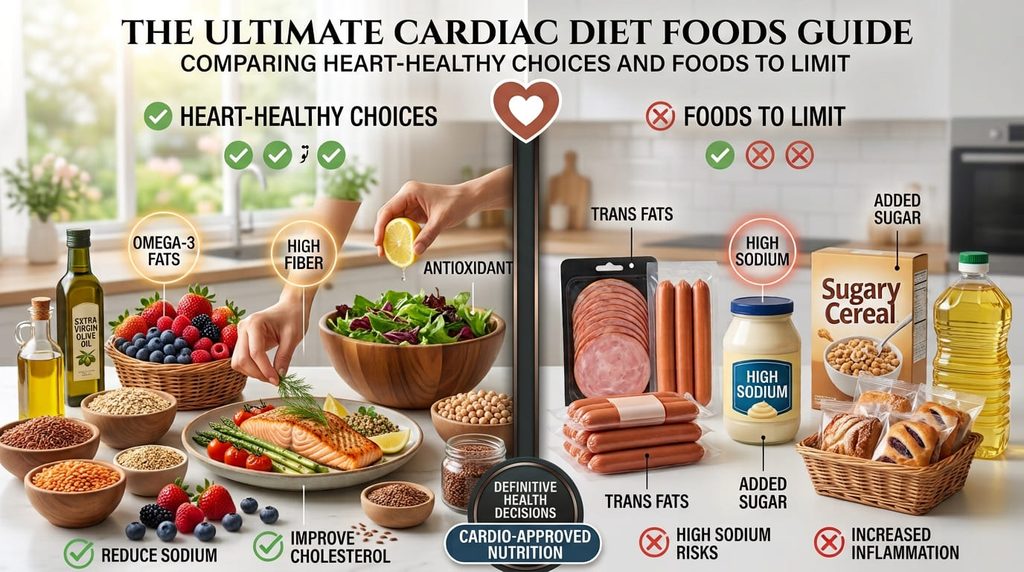
A cardiac (heart-healthy) diet focuses on reducing sodium, unhealthy fats, and added sugarswhile emphasizing nutrient-dense foods that lower blood pressure, improve cholesterol levels, and reduce inflammation.
Core Principles
- Reduce Sodium: Limit intake to under 2,000 mg per day (and ideally under 1,500 mg for high blood pressure) to help lower blood pressure.
- Prioritize Healthy Fats: Replace saturated and trans fats with monounsaturated and polyunsaturated fats to improve cholesterol ratios.
- Increase Dietary Fiber: Aim for 25–35 grams of fiber daily to help clear LDL (“bad”) cholesterol from the bloodstream.
- Limit Added Sugars: Minimize sugary beverages, desserts, and processed snacks to maintain blood sugar control and prevent weight gain.
Foods to Focus On vs. Foods to Limit
| Category | Foods to Include | Foods to Limit or Avoid |
| Proteins | Salmon, mackerel, sardines, skinless poultry, lentils, beans, tofu | Fatty cuts of red meat, bacon, sausage, deli meats, hot dogs |
| Fats & Oils | Extra virgin olive oil, avocados, walnuts, chia seeds, flaxseeds | Butter, lard, palm oil, hydrogenated oils, margarine |
| Grains | Whole oats, quinoa, brown rice, barley, 100% whole wheat bread | White bread, refined pastries, sugary cereals, packaged baking mixes |
| Produce | Leafy greens (spinach, kale), berries, tomatoes, citrus, broccoli | Canned vegetables with added salt, fried vegetables (e.g., french fries) |
| Dairy | Low-fat or fat-free plain yogurt, unsweetened plant milks | Whole milk, heavy cream, high-sodium processed cheeses |
Key Shopping & Preparation Tips
Check Nuance Labels: Look for packaging marked “Low Sodium” (140 mg or less per serving) or “No Salt Added.”
Rinse Canned Goods: Drain and rinse canned beans and vegetables to remove up to 40% of the excess sodium.
Flavor Without Salt: Use fresh garlic, lemon juice, herbs, spices, and vinegars to season dishes instead of salt.
A Sample One-Day Cardiac-Friendly Meal Plan

Breakfast:
Oatmeal topped with blueberries, chia seeds, and a small handful of unsalted walnuts. Serve with water or unsweetened tea.
Lunch:
A large salad containing leafy greens, tomatoes, cucumber, chickpeas, avocado, and grilled chicken or salmon. Use a light olive-oil-and-lemon dressing.
Snack:
An apple with a small serving of unsalted peanut or almond butter.
Dinner:
Baked salmon or another lean protein with roasted vegetables and a serving of brown rice or quinoa.
Dessert:
Fresh berries with plain low-fat or nonfat yogurt.
The exact foods and portions should be adjusted according to individual calorie needs, medical conditions, cultural preferences, and guidance from a healthcare professional or registered dietitian.
Practical Tips for Following a Cardiac Diet
Changing eating habits can be difficult if you try to change everything at once. Small, consistent improvements are often easier to maintain.
Plan meals ahead.
Planning several meals before grocery shopping can reduce the temptation to rely on fast food or highly processed convenience foods.
Read nutrition labels.
Compare products and look at sodium, saturated fat, added sugars, fiber, and serving sizes.
Cook at home more often.
Home cooking gives you greater control over salt, oils, sauces, and portion sizes.
Make vegetables the star of the plate.
Instead of treating vegetables as a small side dish, make them a substantial part of lunch and dinner.
Choose water more often.
Replacing sugary beverages with water can significantly reduce added sugar intake.
Use herbs and spices.
Garlic, ginger, basil, rosemary, pepper, paprika, turmeric, lemon, and vinegar can add flavor without relying heavily on salt.
Practice portion awareness.
Even nutritious foods can contribute excess calories when portions are consistently too large.
The Cardiac Diet Is a Lifestyle, Not a Temporary Diet
One of the biggest advantages of a heart-healthy eating pattern is that it does not need to be temporary. The goal is to create an approach you can maintain for years.
You do not have to eat perfectly. A restaurant meal, birthday celebration, or favorite dessert does not erase healthy habits. What matters most is the overall pattern of eating.
A useful way to think about the cardiac diet is to ask: “What healthy food can I add?” Add vegetables to sandwiches, berries to oatmeal, beans to soups, nuts to salads, and whole grains to meals. These small changes can gradually improve the nutritional quality of your diet.
Regular physical activity, adequate sleep, maintaining a healthy weight when appropriate, avoiding tobacco, and managing stress can complement heart-healthy eating.
Frequently Asked Questions: Cardiac Diet Guide
What is the main goal of a cardiac diet?
A cardiac diet focuses on reducing strain on your heart by lowering blood pressure and cholesterol levels. It emphasizes nutrient-dense, whole foods while reducing sodium, saturated fats, refined sugars, and ultra-processed foods.
What foods are strictly limited or avoided on a cardiac diet?
- High-sodium foods (canned soups, processed meats, salty snacks)
- Saturated and trans fats (fatty cuts of meat, butter, fried foods)
- Refined carbohydrates and added sugars (sugary beverages, pastries, white bread)
- Excessive alcohol and caffeine
What foods should I eat daily for heart health?
- Fiber-rich plant foods: Leafy greens, berries, oats, legumes, and seeds
- Healthy fats: Extra virgin olive oil, avocados, walnuts, and flaxseeds
- Lean proteins: Fatty fish (salmon, mackerel), skinless poultry, and plant proteins (beans, lentils)
How much sodium is allowed per day on a cardiac diet?
Most heart-healthy guidelines recommend keeping daily sodium intake under 2,000 mg per day. For individuals with high blood pressure or heart failure, doctors often suggest limiting sodium to 1,500 mg daily.
Is the Cardiac Diet the same as the DASH diet?
They are closely related. The DASH (Dietary Approaches to Stop Hypertension) diet is a specific, clinically proven cardiac eating plan focused on reducing blood pressure. A general cardiac diet incorporates DASH principles along with American Heart Association (AHA) guidelines.
Can I eat eggs on a cardiac diet?
Yes, in moderation. For most healthy individuals, 1 whole egg per day is fine. If you have high cholesterol or heart disease, limit egg yolks to 3–4 per week and choose egg whites or plant proteins instead.
How quickly can a cardiac diet improve heart health markers?
Changes in dietary habits can begin improving blood pressure levels within 2 to 4 weeks, while noticeable improvements in blood cholesterol levels often occur within 6 to 8 weeks alongside regular activity.
Final Thoughts
A cardiac diet is ultimately about nourishing the body with foods that support cardiovascular health. Build meals around vegetables, fruits, whole grains, beans, fish or other lean proteins, nuts, seeds, and healthy unsaturated fats. At the same time, reduce your reliance on highly processed foods, excessive sodium, added sugars, and foods high in saturated fat.
The most effective heart-healthy diet is one you can realistically follow. Start with one or two changes, make them routine, and gradually build from there.
If you have heart disease, kidney disease, diabetes, high blood pressure, or take medications affected by diet or potassium intake, discuss dietary changes with your healthcare professional or a registered dietitian. Individual nutritional needs can vary considerably.
Your heart works for you every day—nourish it well, one meal at a time.